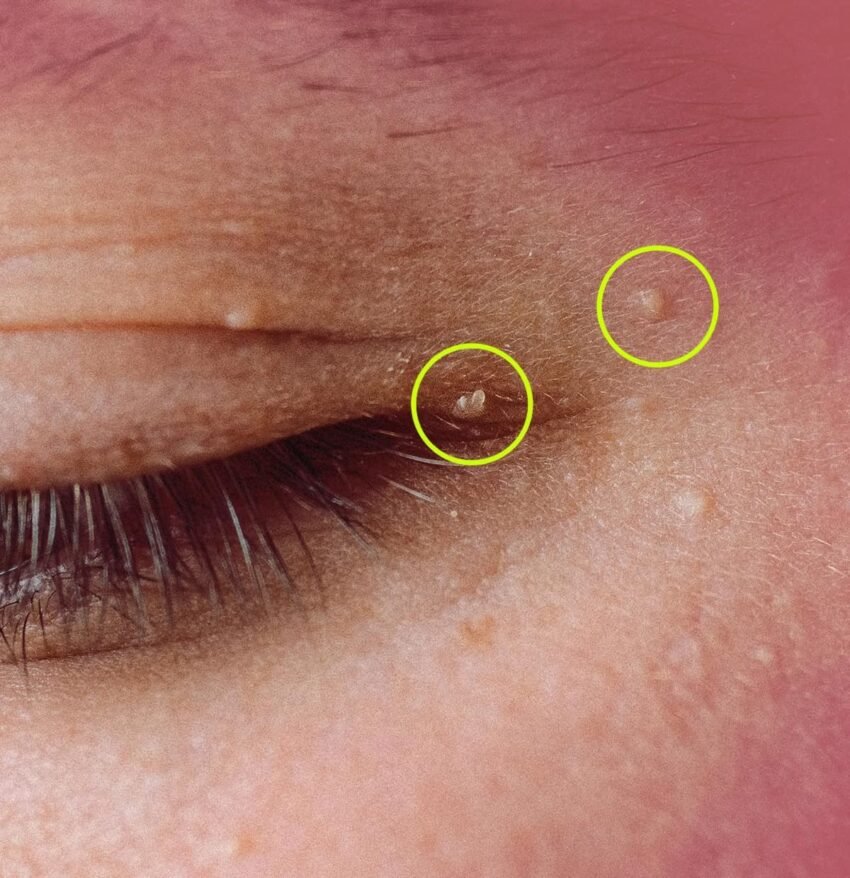
How to Get Rid of Milia: Those Annoying “Fat Cysts” Under Your Skin
You’re washing your face one morning when you feel it — a tiny, stubborn bump under your eye. It doesn’t hurt. It’s not red. It won’t pop. And no matter how many times you exfoliate or apply your favorite serum… it just sits there.
If you’ve ever leaned into the mirror squinting at those small white bumps and wondered, “Why won’t this go away?” — you’re likely dealing with milia.
They’re tiny. They’re persistent. And yes, they can be incredibly frustrating.
But here’s the good news: milia are harmless, common, and treatable — once you understand what they actually are and how to handle them safely.
Let’s break it down.
What Are Milia?
Milia (singular: milium) are small, white or yellowish cysts that form just under the surface of the skin. They’re often mistaken for whiteheads, but they’re completely different.
Unlike acne, milia:
-
Aren’t caused by bacteria
-
Aren’t inflamed
-
Don’t have an opening to the surface
-
Can’t be “popped” like pimples
They form when keratin (a skin protein) becomes trapped beneath the skin instead of naturally shedding.
Think of them as tiny pearls sealed under your skin.
Why Do Milia Happen?
There are several common causes:
1. Dead Skin Build-Up
When skin doesn’t exfoliate properly, keratin can become trapped.
2. Heavy Skincare Products
Thick eye creams and occlusive moisturizers may contribute.
3. Sun Damage
Sun exposure thickens skin over time, making it harder for dead cells to shed.
4. Skin Trauma
Burns, blistering, or aggressive treatments can trigger milia.
5. Newborn Milia
Babies often develop temporary milia — completely normal and harmless.
Where Do Milia Appear?
Most commonly around:
-
Under the eyes
-
Eyelids
-
Cheeks
-
Forehead
-
Nose
They’re especially noticeable in delicate eye areas where skin is thin.
Are Milia Dangerous?
No.
They are:
-
✔ Benign
-
✔ Non-infectious
-
✔ Not cancerous
-
✔ Not contagious
They’re purely cosmetic — but that doesn’t mean they aren’t annoying.
How to Get Rid of Milia (Safely!)
Let’s talk about what actually works.
1. Don’t Try to Pop Them
This is the biggest mistake.
Because milia don’t have a pore opening, squeezing them:
-
Won’t remove them
-
Can damage skin
-
May cause scarring
-
Can introduce infection
Resist the temptation.
2. Gentle Chemical Exfoliation
Exfoliating helps skin shed naturally.
Look for:
-
AHAs (glycolic acid, lactic acid)
-
BHAs (salicylic acid)
-
Mild retinoids
Start slowly — especially around the eye area.
3. Retinol (Game-Changer)
Retinol increases skin turnover.
Use:
-
2–3 times weekly
-
Pea-sized amount
-
At night only
It helps prevent new milia from forming.
4. Professional Extraction (Fastest Method)
A dermatologist or licensed esthetician can remove milia safely using:
-
A sterile needle
-
A tiny incision
-
Gentle extraction
The procedure is quick and leaves minimal marks when done correctly.
If milia are persistent, this is often the best solution.
5. Light Exfoliating Tools
Very gentle options include:
-
Soft facial brushes
-
Mild enzyme peels
Avoid harsh scrubs — especially near eyes.
Treatments That Do NOT Work
-
❌ Popping or squeezing
-
❌ Toothpaste
-
❌ Harsh scrubs
-
❌ Alcohol or hydrogen peroxide
-
❌ Over-drying the skin
These can worsen the situation.
How Long Do Milia Last?
-
In babies: A few weeks
-
In adults: Months (or longer) without treatment
They rarely disappear overnight.
Patience is key.
How to Prevent Milia
Here’s your prevention checklist:
✔ Exfoliate 1–2 times weekly
Gentle chemical exfoliation is best.
✔ Use Lightweight Eye Creams
Avoid overly heavy or greasy formulas.
✔ Apply Sunscreen Daily
Sun damage thickens skin over time.
✔ Remove Makeup Thoroughly
Sleeping in makeup increases buildup.
✔ Introduce Retinol Slowly
Improves cell turnover long-term.
Who Is Most Prone to Milia?
-
People with dry skin
-
Those using thick skincare products
-
Sun-damaged skin
-
Newborns
-
Anyone after skin injury
It’s not about hygiene — even people with excellent skincare routines get them.
FAQs
1. Are milia the same as whiteheads?
No. Whiteheads are clogged pores with oil and bacteria. Milia are keratin cysts without an opening.
2. Can milia go away on their own?
Sometimes, but they often persist for months.
3. Is it safe to remove milia at home?
It’s not recommended. Improper extraction can scar.
4. Does retinol completely cure milia?
It helps prevent and reduce them but may not eliminate existing cysts immediately.
5. Can makeup cause milia?
Heavy, occlusive products may contribute — especially around eyes.
6. Do milia mean I have bad skin?
Absolutely not. They’re extremely common and harmless.
When to See a Dermatologist
Consult a professional if:
-
Milia are spreading rapidly
-
They’re persistent for months
-
They appear after a skin injury
-
You’re unsure whether it’s milia or another condition
A dermatologist can confirm diagnosis and safely treat them.
Final Thoughts
Milia may be tiny — but they can feel huge when you see them staring back at you in the mirror.
The key things to remember:
-
They’re harmless.
-
Don’t squeeze them.
-
Gentle exfoliation helps.
-
Professional removal is quick and effective.
With the right approach, you can smooth your skin safely and prevent new ones from forming.
Have you dealt with milia before?
Did retinol help — or did you opt for professional removal?
Share your experience below — your story might help someone else feel a little less frustrated with their skin today. 💛