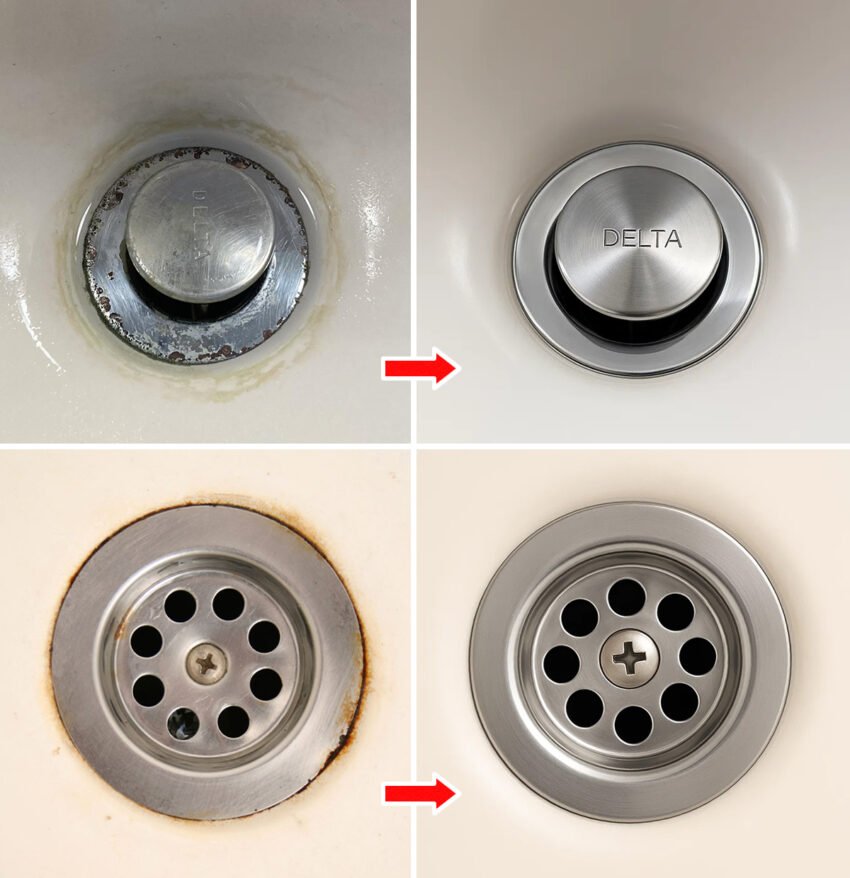
How to Remove the Dark Ring Around Your Faucets (And Keep It from Coming Back)
Tired of that dark ring around your faucet base? Here’s how to remove mineral buildup safely—and prevent it from returning.
Introduction
You scrub the sink.
You wipe the countertop.
Everything looks clean… until you notice it.
That stubborn dark ring around the base of your faucet.
It makes an otherwise spotless bathroom or kitchen look grimy—even when it isn’t.
The good news? That ring is usually easy to remove once you understand what it is and how to treat it safely.
Let’s break down:
-
What causes the dark circle
-
The safest way to remove it
-
When it might signal a bigger issue
-
How to stop it from coming back
What Causes the Dark Ring Around Faucets?
That dark outline is usually one of three things:
1. Mineral Buildup (Hard Water Stains)
If you live in a hard water area, minerals like calcium and magnesium can collect around the faucet base.
Over time, they trap dirt and soap residue—creating a dark, crusty ring.
According to the U.S. Geological Survey, hard water is common across much of the United States, especially in the Midwest and Southwest.
2. Mold or Mildew
If moisture sits around the faucet base (especially in bathrooms), mildew can grow in the tiny gap where the faucet meets the sink.
This often looks:
-
Dark gray
-
Brownish
-
Slightly slimy
3. Deteriorating Caulk or Sealant
Older sinks sometimes have a thin bead of sealant under the faucet.
If it degrades, it can trap grime and discolor over time.
Step-by-Step: How to Remove the Dark Ring
Start with the gentlest method first.
Method 1: White Vinegar (Best for Mineral Buildup)
You’ll need:
-
White vinegar
-
Paper towels
-
An old toothbrush
-
Microfiber cloth
Steps:
-
Soak paper towels in vinegar.
-
Wrap them tightly around the faucet base.
-
Let sit for 30–60 minutes.
-
Remove and scrub gently with a toothbrush.
-
Wipe clean with a damp cloth.
Vinegar dissolves mineral deposits naturally.
Avoid leaving it overnight on natural stone surfaces.
Method 2: Baking Soda Paste (For Stubborn Stains)
If vinegar alone doesn’t work:
-
Mix baking soda with a small amount of water to form a paste.
-
Apply around the faucet base.
-
Let sit 15–20 minutes.
-
Scrub gently.
-
Rinse and wipe dry.
This helps lift embedded grime without scratching.
Method 3: Hydrogen Peroxide (For Mold)
If you suspect mildew:
-
Spray 3% hydrogen peroxide directly on the area.
-
Let sit 10–15 minutes.
-
Scrub gently.
-
Rinse and dry thoroughly.
Hydrogen peroxide can kill surface mold and brighten discoloration.
Method 4: Carefully Clean Under the Base (If Needed)
If the stain won’t budge, buildup may be trapped underneath.
⚠ Only do this if you’re comfortable with basic DIY.
-
Turn off water supply.
-
Loosen faucet nuts underneath sink.
-
Lift faucet slightly.
-
Clean and dry the area.
-
Reseal with waterproof silicone if needed.
If unsure, consider a licensed plumber.
What NOT to Use
Avoid:
-
Steel wool (scratches chrome)
-
Harsh abrasives
-
Bleach on natural stone
-
Mixing vinegar and bleach
-
Razor blades on coated finishes
Scratches make future buildup worse.
How to Prevent It from Coming Back
This is where most people slip up.
1. Dry the Area Daily
After washing hands or dishes, wipe around the base.
Moisture is the main culprit.
2. Seal Gaps Properly
If there’s visible space between faucet and sink, reseal with clear waterproof silicone.
3. Use a Water Softener (If You Have Hard Water)
Hard water accelerates buildup.
If stains return quickly, a whole-house softener may reduce mineral deposits.
4. Weekly Quick Wipe with Vinegar
A 60-second wipe once a week prevents heavy accumulation.
When the Ring Signals a Bigger Problem
Call a professional if you notice:
-
Water leaking under the sink
-
Constant dampness around base
-
Rust forming
-
Soft or spongy countertop
Moisture under the fixture can cause hidden damage.
Pros and Cons of DIY Removal
Pros
✔ Inexpensive
✔ Uses household items
✔ Quick results
✔ Safe when done gently
Cons
✘ May require repeat cleaning
✘ Doesn’t fix plumbing leaks
✘ Hard water may cause recurrence
Frequently Asked Questions
1. Is the dark ring dangerous?
Usually no—it’s cosmetic mineral or mildew buildup.
2. Will vinegar damage chrome?
Short exposure is safe. Rinse thoroughly.
3. Why does it come back so fast?
Likely hard water or trapped moisture.
4. Can I use bleach instead?
Only for mold, and never mix with vinegar.
5. Is it rust?
Sometimes—but rust usually appears orange or reddish.
6. Should I recaulk?
If sealant is cracked or missing, yes.
7. Does this happen in kitchens too?
Yes, especially around dish sinks.
8. Can toothpaste clean it?
Mildly, but baking soda is more effective.
9. How often should I clean it?
Light maintenance weekly prevents buildup.
10. Can hard water filters help?
Yes, they can reduce mineral deposits long-term.
The Bottom Line
That dark ring around your faucet isn’t a sign your sink is permanently stained.
It’s usually:
-
Mineral buildup
-
Mild mildew
-
Trapped moisture
With vinegar, baking soda, and a little consistency, you can restore a clean, polished look in under an hour.
The real secret?
Prevention.
A quick weekly wipe can save you from deep scrubbing later.
If this guide helped you, share it with someone battling stubborn sink stains—or try it tonight and see the difference for yourself.