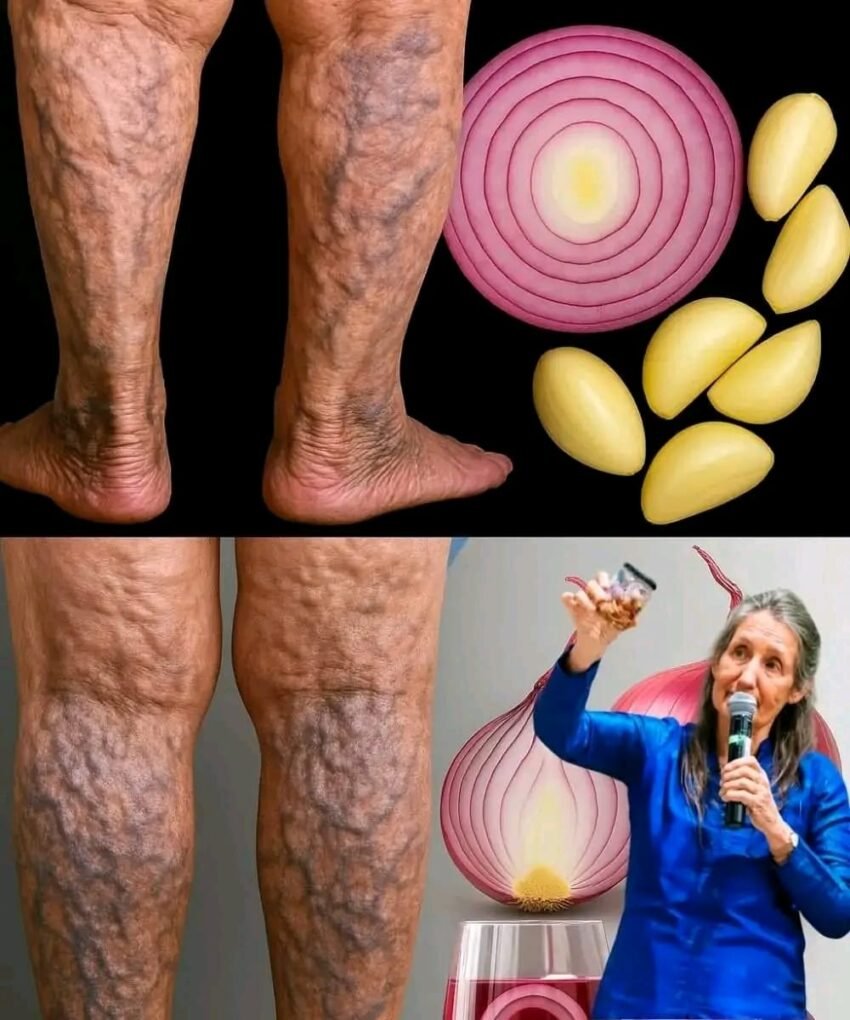
Garlic, Onion & Olive Oil for Varicose Veins: A Natural Approach That Actually Makes Sense
Learn how garlic, onion, and olive oil may support circulation and varicose vein care—safe methods, real expectations, and expert-backed tips.
Varicose veins don’t just show up—they creep in slowly.
At first, it’s just a visible vein. Then come the heaviness, swelling, maybe even discomfort after a long day on your feet. If you’ve been searching for a natural, at-home way to manage varicose veins, you’ve probably seen remedies involving garlic, onion, and olive oil.
But here’s the truth most articles won’t tell you:
These ingredients won’t “erase” varicose veins—but they can support circulation, skin health, and symptom relief when used correctly.
This guide walks you through a realistic, safe, and practical approach—no hype, no false promises.
Understanding Varicose Veins (Why They Happen)
Varicose veins occur when vein valves weaken, causing blood to pool instead of flowing efficiently back to the heart.
Common causes include:
- Prolonged standing or sitting
- Aging
- Genetics
- Pregnancy
- Obesity
What You Might Feel
- Aching or heavy legs
- Swelling
- Burning or throbbing sensation
- Visible, twisted veins
Why Garlic, Onion, and Olive Oil?
These three ingredients are often combined because of their circulation-supporting and anti-inflammatory properties.
Let’s break down what each one actually does.
Garlic: Circulation Support
- Contains sulfur compounds (like allicin)
- May support blood flow
- Known for mild anti-inflammatory properties
Onion: Antioxidant Boost
- Rich in flavonoids (like quercetin)
- Supports vascular health
- May help reduce inflammation
Olive Oil: Skin & Massage Base
- Deeply moisturizing
- Improves skin elasticity
- Ideal carrier oil for massage
What This Remedy Can—and Cannot—Do
What It May Help With
- Mild swelling
- Skin dryness around veins
- Temporary discomfort
- Circulation support through massage
What It Will NOT Do
- Remove or “cure” varicose veins
- Replace medical treatments
- Work instantly
Think of it as supportive care, not a cure.
Step-by-Step: How to Use This Remedy Safely
Method 1: Garlic–Olive Oil Massage Blend
Ingredients:
- 2–3 garlic cloves (crushed)
- 2 tablespoons olive oil
Steps:
- Crush garlic and let it sit for 10 minutes
- Mix with olive oil
- Apply gently to affected area
- Massage upward (toward the heart) for 10–15 minutes
- Leave on for 20–30 minutes
- Rinse with lukewarm water
Frequency: 3–4 times per week
Method 2: Onion Juice Application
Ingredients:
- 1 fresh onion
Steps:
- Extract onion juice
- Apply lightly to skin
- Leave for 15–20 minutes
- Rinse thoroughly
Tip: Always do a patch test first—onion can irritate sensitive skin.
Method 3: Combined Blend (Stronger Version)
Ingredients:
- Garlic paste
- Onion juice
- Olive oil
Steps:
- Mix all ingredients into a smooth blend
- Apply gently
- Massage lightly
- Leave for 15–20 minutes
- Wash off
Important Safety Notes
Before trying this, keep these in mind:
- Do not apply on broken or irritated skin
- Stop immediately if burning or redness occurs
- Avoid tight bandaging after application
- Consult a doctor if veins are painful or worsening
Realistic Results Timeline
- Week 1–2: Skin may feel softer
- Week 3–4: Slight reduction in discomfort (for some people)
- Long-term: Minor supportive benefits only
No visible disappearance of veins should be expected.
Real-World Use Case
Imagine someone who:
- Stands 8+ hours a day (retail worker)
- Experiences leg heaviness in the evening
Using this remedy along with better habits (like leg elevation), they might notice:
- Reduced tightness
- Slight comfort improvement
- Better skin condition
But the veins themselves remain.
What Actually Works Better (When Combined)
Natural remedies work best when paired with proven lifestyle habits.
Combine With:
- Leg elevation (15–20 minutes daily)
- Regular walking
- Compression stockings
- Weight management
- Avoiding prolonged sitting/standing
Pros and Cons
Pros
- Affordable
- Easy to prepare at home
- Uses natural ingredients
- Supports relaxation through massage
Cons
- No permanent results
- Strong smell (especially garlic/onion)
- Possible skin irritation
- Time-consuming
Common Mistakes to Avoid
1. Expecting a Cure
No topical remedy can reverse damaged veins.
2. Applying Too Aggressively
Hard massage can worsen vein pressure.
3. Skipping Patch Tests
Natural doesn’t always mean irritation-free.
4. Ignoring Medical Symptoms
Painful or worsening veins need professional care.
Expert Tips Most People Don’t Know
- Gentle upward massage matters more than ingredients
- Warm (not hot) oil improves comfort
- Consistency beats intensity
- Hydration plays a role in circulation health
When to See a Doctor
Seek medical advice if you notice:
- Severe pain
- Skin discoloration
- Ulcers or sores
- Rapid worsening
Modern treatments (like laser therapy) are far more effective for advanced cases.
FAQs (People Also Ask)
1. Can garlic remove varicose veins permanently?
No, it cannot remove them—it may only support circulation.
2. Is onion safe for skin application?
Yes, but it can irritate—always do a patch test.
3. How long before I see results?
You may notice mild comfort changes within a few weeks.
4. Can I leave the mixture overnight?
Not recommended—may irritate skin.
5. Does olive oil help veins directly?
It mainly supports skin and massage effectiveness.
6. Is this safe for everyone?
Generally yes, but sensitive skin users should be cautious.
7. Can I use this daily?
3–4 times per week is usually enough.
8. Will this work for severe varicose veins?
No—medical treatment is needed for advanced cases.
9. Can I combine this with compression stockings?
Yes, but apply after removing stockings.
10. Is there any scientific proof?
Limited evidence supports topical use for vein reversal.
Action Checklist
Before starting, make sure you:
- ✔ Do a patch test
- ✔ Use gentle massage only
- ✔ Stay consistent (not excessive)
- ✔ Combine with lifestyle improvements
- ✔ Track how your body responds
- ✔ Consult a doctor if symptoms worsen
Conclusion: Natural Support, Not a Miracle Fix
Garlic, onion, and olive oil can play a small, supportive role in managing varicose vein discomfort—but they’re not a cure.
Used wisely, they can:
- Improve skin feel
- Support relaxation
- Encourage better circulation habits
But lasting results come from consistent lifestyle changes and proper medical guidance.
- Natural remedies can help with comfort—not removal
- Massage and habits matter more than ingredients
- Smart expectations = better outcomes
Have you tried natural remedies for varicose veins? Share your experience—what worked, what didn’t, and what you learned along the way.