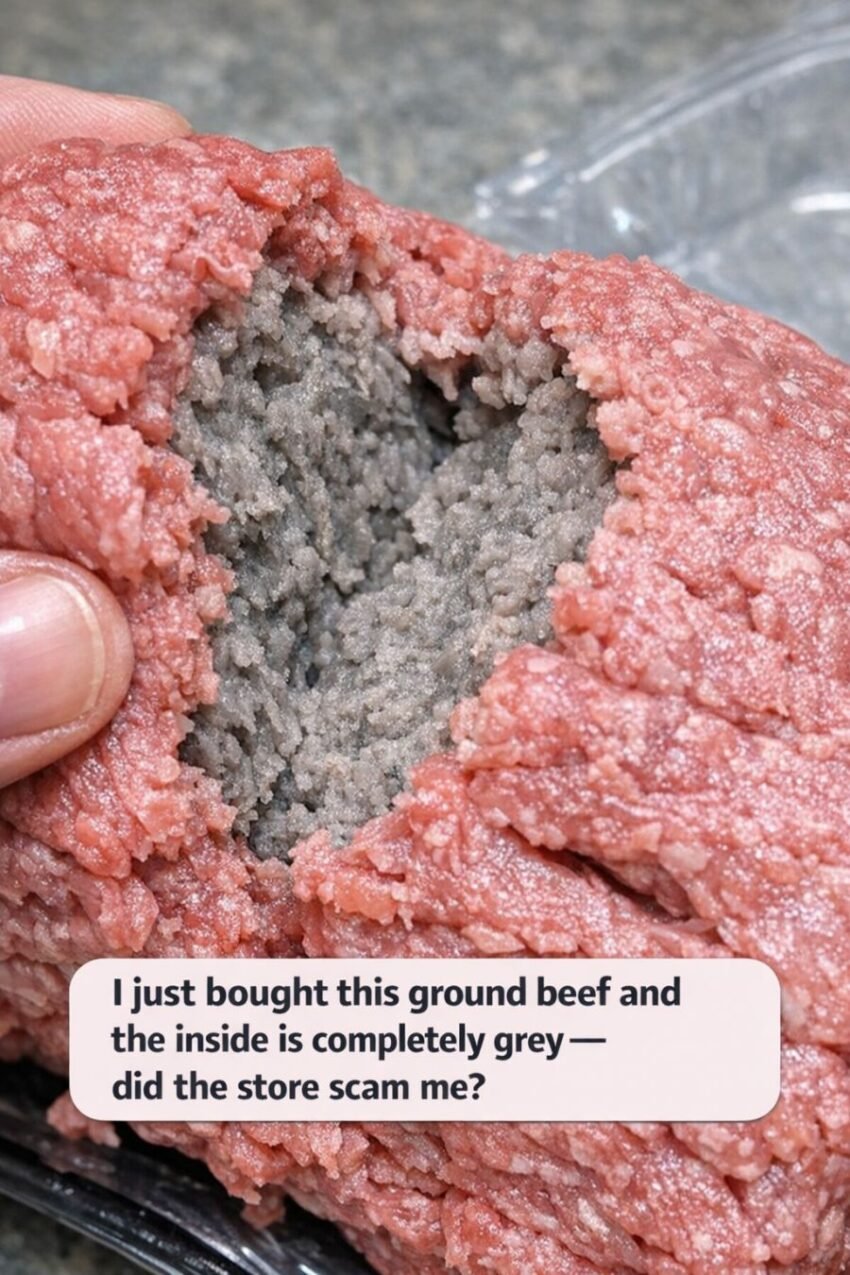
I Just Bought Ground Beef and the Inside Is Completely Grey — Did the Store Scam Me?
Grey ground beef inside the package doesn’t always mean it’s spoiled. Learn why meat turns grey, how to tell if it’s safe, and cooking tips to avoid foodborne illness.
You open your new package of ground beef and notice something alarming: the inside is completely grey.
Your first thought: “Did the store scam me?”
Before panic sets in or you consider returning it, here’s the reality: grey ground beef is often normal and safe to eat. The key is understanding what’s happening inside that package, how to check for spoilage, and how to safely cook it.
Why Ground Beef Turns Grey
1. Oxidation of Myoglobin
Beef gets its bright red color from a protein called myoglobin. When oxygen interacts with myoglobin, it turns red — that’s why the outside of ground beef in a package often looks bright red.
Inside the package, the beef has less oxygen, so the myoglobin can turn grey or brown. This is completely natural and does not necessarily indicate spoilage.
2. Packaging and Storage
-
Vacuum-sealed or tightly wrapped meat may turn grey more quickly inside.
-
Color may improve slightly if the beef is exposed to air for a few minutes before cooking.
-
This is why some stores’ ground beef can appear grey in the center while still being fresh.
3. Age of the Meat
Even if fresh, ground beef naturally darkens over time, especially closer to the “use by” date.
How to Tell If Ground Beef Is Spoiled
Color alone is not a reliable indicator. Check for these signs instead:
-
Smell: Spoiled meat smells sour, rancid, or has an ammonia-like odor.
-
Texture: Sticky, tacky, or slimy meat is unsafe.
-
Expiration date: Always check the “sell by” or “use by” date on the package.
⚠️ If any of these signs are present, do not eat the beef. Throw it away immediately.
Cooking Safety Tips
Even if the meat looks grey, it can be safe if cooked properly:
-
Cook ground beef to an internal temperature of 160°F (71°C).
-
Use a meat thermometer to ensure even cooking.
-
Avoid tasting raw meat to test freshness — bacteria can be present without noticeable signs.
Quick Guide: Fresh vs. Spoiled Ground Beef
| Feature | Fresh | Possibly Spoiled |
|---|---|---|
| Color | Red to brown (surface), grey inside normal | Brown/green with odd spots |
| Smell | Neutral | Sour, rancid, ammonia-like |
| Texture | Firm, slightly moist | Slimy, sticky, tacky |
| Expiration | Within “use by” date | Past “use by” date |
Remember: Grey interior = usually normal. Odor and texture = key indicators.
Common Misconceptions
-
“Grey beef means it’s old.”
Not always — color changes due to low oxygen, not spoilage. -
“The store scammed me.”
Most likely, the beef is fresh; stores package meat tightly to extend shelf life. -
“I should return it immediately.”
Return only if the meat smells bad, has an unusual texture, or is past the expiration date.
Seeing grey inside your ground beef is usually nothing to worry about. It’s a natural result of lack of oxygen and normal aging.
Focus on:
-
Smell
-
Texture
-
Cooking temperature
These are the real indicators of safety.
By understanding this simple science, you can stop worrying about the color inside the package and cook your meals safely — no scam necessary.
If this helped, share it with friends or family who panic over grey ground beef — it might save a lot of unnecessary grocery returns!