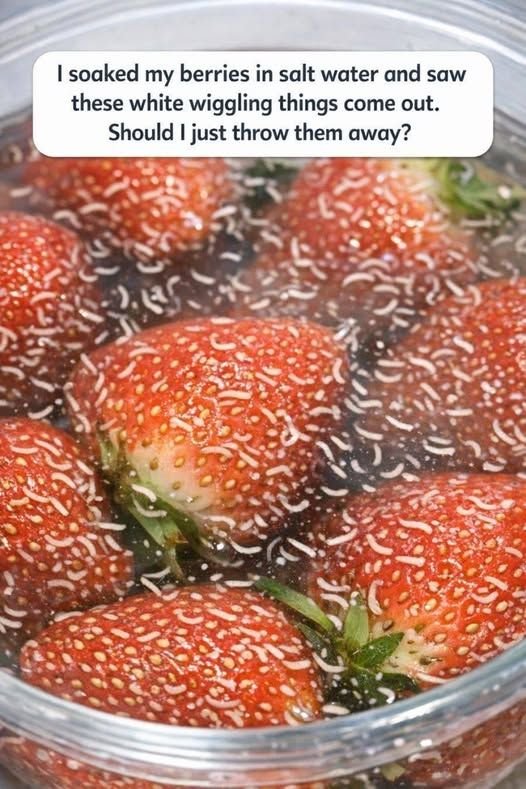
Should You Throw Away Berries After Seeing White Wiggling Things in Salt Water? Here’s What You Need to Know
Found tiny white worms in your berries after soaking them in salt water? Learn why this happens, if the berries are safe, and expert tips for cleaning fruit effectively.
The Shock of Seeing Worms in Your Berries
You just wanted to enjoy a sweet, juicy snack. You soaked your strawberries, blueberries, or raspberries in salt water like you’ve seen online to clean them—and suddenly, tiny white wiggling things appeared.
Your first thought: “Oh no, are these worms? Should I just throw everything away?”
Before tossing your berries, it’s important to understand what you’re seeing, why it happens, and whether your fruit is safe to eat.
Why Tiny White Worms Appear in Berries
Those tiny white creatures are usually fruit fly larvae. Fruit flies lay eggs on ripening fruit, often before it even reaches your kitchen. The eggs are microscopic, but once submerged in salt water, larvae react by emerging from the fruit, creating the wiggling movement you see.
Key points to know:
-
This is more common with soft berries like strawberries, raspberries, and blackberries.
-
It does not mean the fruit is rotten; the fruit can still be healthy and nutritious.
-
Salt or vinegar baths make the larvae leave the berries, which is why they become visible.
Are the Berries Safe to Eat?
Yes—but only if handled carefully. Experts recommend:
-
Rinse thoroughly: Rinse each berry under running water after soaking to remove any remaining larvae or eggs.
-
Inspect visually: Check for soft spots, mold, or other damage. Discard any obviously spoiled pieces.
-
Optional vinegar soak: A 10% vinegar solution (1 part vinegar, 3 parts water) can help kill bacteria and remove additional larvae.
Eating fruit that had larvae is generally considered safe. Cooking or freezing will also kill any remaining organisms.
How to Prevent This From Happening Again
-
Wash immediately after buying: Don’t let berries sit unwashed for days.
-
Keep berries refrigerated: This slows the development of larvae.
-
Inspect before buying: Look for damaged, overly soft, or bruised berries.
-
Consider organic cleaning methods: Salt or vinegar soaks help remove larvae naturally.
Step-by-Step Guide: Cleaning Berries Safely
What You Need:
-
1 cup water
-
1 teaspoon salt (or 1 part vinegar to 3 parts water)
-
A colander or large bowl
Instructions:
-
Fill a bowl with the salt or vinegar solution.
-
Add berries and gently stir. Let sit 5–10 minutes.
-
Watch for larvae that float to the surface.
-
Remove berries and rinse under cold running water.
-
Dry with paper towels or a clean cloth.
When to Throw Berries Away
You should discard berries if:
-
They smell fermented or off
-
Mold is present
-
They are mushy and disintegrating
-
The infestation is excessive
Otherwise, properly cleaned berries are safe to eat.
Quick Real-Life Example
Lisa bought a pack of organic raspberries. She noticed tiny white specks in salt water after a quick soak. Instead of panicking, she rinsed each berry, inspected for soft spots, and ate the clean ones.
She later learned that soft, organic berries often have fruit fly eggs, which are harmless when cleaned properly.
FAQs: People Also Ask
Q1: Can you eat fruit fly larvae?
Yes, they are generally harmless if ingested accidentally.
Q2: Will freezing kill larvae in berries?
Yes, freezing kills larvae but may not remove eggs. Rinsing is still recommended.
Q3: Do organic berries have more larvae?
They can, because organic fruit often doesn’t use pesticides that deter fruit flies.
Q4: Is soaking in salt water safe for all berries?
Yes, but use gentle soaking to avoid damaging soft berries.
Q5: How long should you soak berries in salt water?
5–10 minutes is enough to remove most larvae.
Q6: Can vinegar damage the taste of berries?
A short soak is safe, but rinse thoroughly afterward to remove vinegar flavor.
Q7: Are store-bought berries more likely to have larvae?
Both organic and conventional berries can have larvae, but proper handling and washing reduce risk.
Q8: What if larvae remain after soaking?
Rinse again under running water. Discard damaged or soft berries.
Quick Action Checklist
✔ Inspect berries for soft spots or mold
✔ Soak in salt or vinegar water 5–10 minutes
✔ Rinse thoroughly under running water
✔ Dry and store in the fridge
✔ Discard any obviously spoiled berries
Conclusion: Don’t Panic—Clean and Enjoy
Finding tiny white worms in berries is alarming, but it’s more common than you think, especially with soft or organic fruit.
With proper cleaning and inspection, your berries are safe to eat. A salt or vinegar soak followed by a rinse can remove most larvae, keeping your fruit safe, fresh, and delicious.
-
Tiny white wiggling things in berries are usually fruit fly larvae.
-
Proper washing makes the fruit safe to eat.
-
Discard only spoiled or moldy berries.
-
Prevention is key: refrigerate, inspect, and wash early.
Next time you see those wiggling intruders, remember: your berries are probably fine—and a simple soak will keep them safe.