If You Have These Lines on Your Nails After 40, Here’s What Your Body May Be Telling You
Noticed lines on your nails after 40? Learn what vertical or horizontal ridges really mean, when to worry, and how to improve nail health safely.
You Look Down… and There They Are
You’re pouring coffee.
Typing on your phone.
Clipping your nails.
And suddenly you notice faint lines running down your fingernails.
You’re over 40.
A quiet thought creeps in:
Is this normal? Or is something wrong?
Here’s the truth most people aren’t clearly told:
Nail changes after 40 are extremely common — but some patterns deserve attention.
Before you panic (or ignore it completely), let’s break down what these lines actually mean, when they’re harmless, and when they may signal something deeper.
Why Nails Change After 40
As we age, our nail growth slows. Blood circulation slightly decreases. Keratin production shifts.
According to the American Academy of Dermatology, subtle nail texture changes are considered a normal part of aging — especially after 40.
But not all lines are the same.
Understanding the difference is critical.
The Two Main Types of Nail Lines
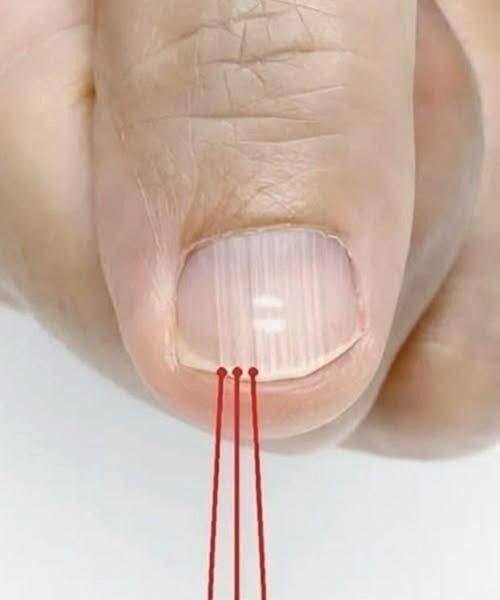
1. Vertical Lines (Longitudinal Ridges)
These run from the cuticle to the tip.
They are:
-
Extremely common after 40
-
Often harmless
-
Usually related to normal aging
Why They Appear
-
Natural keratin changes
-
Mild dehydration
-
Reduced oil production
-
Minor trauma over time
Think of them like fine lines on skin. They’re part of the body’s aging process.
When They’re Usually NOT a Concern
-
They are thin and evenly spaced
-
They appear on multiple nails
-
There’s no pain or discoloration
-
The nail isn’t splitting severely
For most adults over 40, this is simply biological aging — not a disease.
2. Horizontal Lines (Beau’s Lines)
These are different.
They run across the nail — side to side.
And they can mean something more significant.
These are known medically as Beau’s lines.
They may appear after:
-
A severe illness
-
High fever
-
Major stress
-
Surgery
-
Chemotherapy
-
Nutritional deficiencies
Essentially, they form when nail growth temporarily stops.
Your nail records stress the way tree rings record drought.
If you had the flu three months ago and now see a horizontal groove, that may be your body’s timeline showing up on your nail.
When Lines on Nails After 40 May Signal Something More
While most ridges are harmless, certain combinations deserve medical attention.
Watch for:
-
Deep horizontal grooves
-
Sudden appearance on all nails
-
Accompanying fatigue
-
Brittle splitting with hair thinning
-
Pale nail beds
-
Spoon-shaped nails
These patterns can sometimes correlate with:
-
Iron deficiency
-
Thyroid imbalance
-
Protein deficiency
-
Chronic illness
The Mayo Clinic notes that nail changes can occasionally reflect systemic health issues — though they are rarely the only symptom.
Important: Nails are clues, not diagnoses.
Why This Matters in the United States
Americans over 40 face increased risk of:
-
Thyroid disorders
-
Iron deficiency (especially women)
-
Autoimmune conditions
-
Chronic stress
Many people dismiss subtle symptoms.
But early awareness improves outcomes.
The key is knowing the difference between normal aging and warning signs.
A Quick Comparison Table
| Feature | Likely Normal Aging | Possibly Needs Evaluation |
|---|---|---|
| Vertical ridges | Yes | Rarely |
| Thin lines | Yes | No |
| Deep horizontal grooves | No | Yes |
| Nail discoloration | No | Yes |
| Nail pain | No | Yes |
| Sudden change | No | Yes |
| Spoon-shaped nails | No | Yes |
If you’re unsure, a primary care physician or dermatologist can evaluate easily.
Real-Life Scenario
Lisa, 47, from Texas noticed ridges on her nails.
She assumed it was aging.
But she also felt unusually tired.
A simple blood test revealed low iron levels.
After dietary adjustments and supplements under medical guidance, her energy improved — and over time, new nail growth appeared healthier.
The nail wasn’t the problem.
It was the messenger.
Common Mistakes People Make
-
Assuming every ridge means a serious disease
-
Ignoring sudden changes
-
Overusing nail hardeners (which worsen brittleness)
-
Googling worst-case scenarios
-
Self-diagnosing without context
Balanced awareness is smarter than panic.
How to Support Healthy Nails After 40
Even if your ridges are harmless, you can strengthen nail health.
1. Improve Protein Intake
Nails are made of keratin — a protein.
Include:
-
Eggs
-
Fish
-
Lean meats
-
Beans
-
Greek yogurt
2. Check Iron Levels If Symptomatic
Especially if you have:
-
Fatigue
-
Pale skin
-
Shortness of breath
3. Stay Hydrated
Dehydration worsens ridge visibility.
4. Moisturize Cuticles Daily
Dry nail beds exaggerate lines.
5. Limit Harsh Chemicals
Frequent acetone use can weaken nail structure.
6. Ask About Thyroid Testing (If You Have Other Symptoms)
Thinning hair + weight changes + nail changes may justify screening.
Expert Insight Most People Don’t Know
Nails grow slowly.
Fingernails take about 6 months to fully regrow.
So what you see today may reflect what your body experienced months ago.
That’s why timeline matters.
2026 Trend: Preventive Lab Panels After 40
More Americans are requesting:
-
Annual iron screening
-
Thyroid panels
-
Vitamin D testing
Preventive care is increasingly proactive — not reactive.
And subtle body signals are getting more attention.
Frequently Asked Questions
Are vertical lines on nails after 40 normal?
Yes. In most cases, they are a normal aging change.
What do deep horizontal lines mean?
They often reflect a past illness or stress event.
Can stress cause nail ridges?
Yes. Severe stress can temporarily disrupt nail growth.
Do ridges mean vitamin deficiency?
Sometimes — but not always. Context matters.
Should men worry about nail lines?
The causes are similar for both men and women.
Can supplements fix nail ridges?
Only if a true deficiency exists. Otherwise, results are limited.
When should I see a doctor?
If ridges are deep, painful, discolored, or accompanied by other symptoms.
Do nail salons cause ridges?
Aggressive buffing can thin nails and exaggerate lines.
When It’s Probably Just Aging
If you’re over 40 and notice:
-
Mild vertical ridges
-
No pain
-
No color change
-
No health symptoms
It’s very likely normal.
And completely common.
Action Checklist
-
Observe pattern (vertical or horizontal)
-
Note any recent illness
-
Check for fatigue or other symptoms
-
Improve hydration
-
Ensure adequate protein intake
-
Schedule lab work if concerned
-
Avoid over-buffing
Simple awareness beats anxiety.
Final Thoughts
Your body communicates in subtle ways.
After 40, changes happen — in skin, metabolism, hormones, and yes, nails.
Most nail lines are harmless signs of aging.
But sometimes, they’re gentle nudges to pay attention.
Not fear.
Not panic.
Just attention.
If this helped clarify what you’re seeing, consider sharing it with someone who’s been staring at their nails wondering the same thing.
Vertical ridges after 40? Usually normal.
Deep horizontal lines? Worth a second look.
Your nails don’t diagnose disease.
But they can whisper useful information.
The key is knowing how to listen — calmly and wisely.