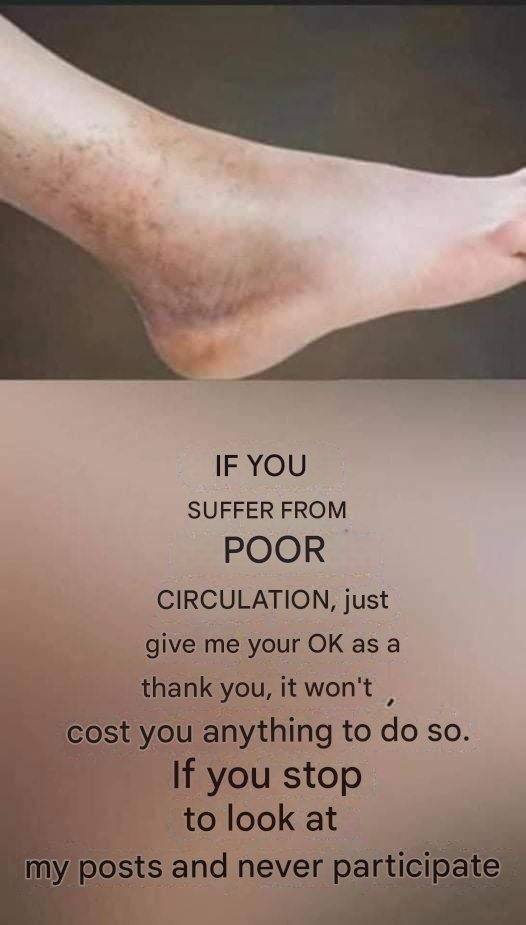
If You Suffer from Poor Circulation and Your Legs Feel Like This, Here’s the Solution
Struggling with cold, numb, or heavy legs? Discover safe, natural ways to improve circulation, boost energy, and relieve discomfort.
Introduction
Do your legs often feel:
-
Cold or numb
-
Heavy or swollen
-
Tingling or restless
If so, you’re not alone. Poor circulation affects millions of Americans, especially women, older adults, and people with sedentary lifestyles.
While it’s a common issue, ignoring it can lead to discomfort, fatigue, or more serious health complications. The good news? There are simple, effective ways to stimulate blood flow, reduce swelling, and protect your vascular health.
In this article, you’ll learn:
-
Why leg circulation declines
-
Warning signs to watch for
-
Safe exercises and stretches
-
Dietary and lifestyle strategies
-
Practical tips to prevent long-term issues
Let’s get your legs feeling energized again.
Understanding Poor Circulation
Poor circulation occurs when blood flow to the extremities is reduced, often affecting legs and feet.
Common Causes:
-
Sedentary lifestyle: Sitting or standing for long periods
-
Varicose veins: Weak or damaged vein valves
-
Peripheral artery disease (PAD): Narrowed arteries restricting blood flow
-
Diabetes: Can damage blood vessels and nerves
-
Smoking: Reduces vascular health
Symptoms You Might Notice:
-
Swelling or puffiness
-
Tingling or pins-and-needles sensations
-
Cold feet and hands
-
Muscle cramps, especially at night
-
Fatigue in the legs
If you experience sudden, severe leg pain, seek medical attention immediately — it could indicate a serious problem like a blood clot.
Why Poor Circulation Feels Uncomfortable
When blood flow slows, tissues in your legs receive less oxygen and nutrients. This can cause:
-
Muscle fatigue
-
Swelling from fluid buildup
-
Numbness or tingling
-
Increased risk of varicose veins
Even mild circulation problems can impact daily life: walking, exercising, and standing for long periods can feel exhausting.
The Solution: Move, Stretch, and Activate
Movement is one of the most effective ways to improve circulation naturally.
1. Simple Leg Exercises
-
Ankle pumps: While sitting or lying down, flex and point your toes 10–15 times per foot.
-
Leg lifts: Lie flat, lift one leg at a time for 10–15 reps.
-
Heel raises: Stand and lift heels off the floor, hold 2–3 seconds, then lower. Repeat 15 times.
These exercises help activate calf muscles, which act as a pump to push blood back to the heart.
2. Stretching for Circulation
-
Hamstring stretch: Sit or lie down and gently stretch the back of your thighs.
-
Quadriceps stretch: Stand and pull your foot toward your glutes.
-
Hip flexor stretch: Kneel and push hips forward to open the front of your legs.
Regular stretching prevents stiffness and improves blood flow.
Dietary and Lifestyle Tips
Your diet plays a big role in circulation. Consider:
1. Eat Circulation-Boosting Foods
-
Garlic and onions — promote vasodilation
-
Citrus fruits — rich in vitamin C for vessel health
-
Fatty fish — omega-3s reduce inflammation
-
Berries — antioxidants support blood vessels
-
Ginger and turmeric — natural anti-inflammatory properties
2. Hydration
-
Dehydration thickens blood and reduces circulation
-
Aim for 6–8 glasses of water daily
3. Avoid Prolonged Sitting
-
Take short breaks every 30–60 minutes to walk or stretch
-
Use a footrest or elevate legs while sitting
4. Compression Stockings
-
Mild compression stockings can improve blood flow and reduce swelling
-
Particularly useful for long flights, office work, or varicose veins
Foot Care and Leg Elevation
Taking care of your legs daily can prevent worsening circulation issues:
-
Elevate legs: Lie down and prop your legs on a pillow above heart level for 15–20 minutes
-
Massage: Gentle leg massages stimulate blood flow
-
Warm baths: Warm water helps relax blood vessels and improve circulation
When to Seek Medical Help
While many circulation problems can be managed naturally, see a doctor if you notice:
-
Persistent swelling or pain
-
Changes in skin color (blue, red, or pale)
-
Numbness or tingling that doesn’t improve
-
Open sores or slow-healing wounds
-
Sudden, severe leg pain
A doctor can evaluate for varicose veins, PAD, or deep vein thrombosis and recommend treatment.
Common Mistakes People Make
-
Ignoring symptoms — Thinking “it’s just fatigue” can worsen problems
-
Sitting too long without breaks — Even 5–10 minutes of movement helps
-
Wearing tight clothing — Can restrict blood flow
-
Over-relying on supplements — Food, movement, and lifestyle are more effective than pills alone
FAQs
1. Can exercise really reverse poor circulation?
Yes, regular movement strengthens muscles that help pump blood, improving circulation.
2. Are hot baths good for circulation?
Warm water relaxes vessels and helps blood flow, but avoid very hot water if you have varicose veins.
3. Can poor circulation cause leg cramps at night?
Yes, lack of oxygen and nutrient flow can cause nighttime cramps.
4. Is compression therapy safe?
Generally, yes — but consult a doctor if you have heart or arterial issues.
5. Can diet alone fix circulation problems?
Diet helps, but movement and lifestyle changes are essential.
6. How long until I notice improvement?
With consistent movement and lifestyle changes, mild circulation problems can improve in a few weeks.
7. Can massage really help?
Yes — it stimulates blood flow and reduces tension in leg muscles.
8. Should I elevate legs every day?
Daily elevation for 15–20 minutes can relieve swelling and improve circulation.
The Bottom Line
Poor circulation in the legs can be uncomfortable and affect daily life, but the solution is often simple:
-
Stay active with gentle exercises
-
Stretch and massage regularly
-
Eat circulation-friendly foods
-
Elevate legs and wear compression stockings when needed
By adopting these habits, you can reduce discomfort, boost energy, and protect vascular health — naturally and safely.
Take Action
Tonight, try this:
-
Lie down and elevate your legs for 15 minutes
-
Follow with ankle pumps or gentle stretches
Notice how your legs feel afterward. Small, consistent steps make the biggest difference in improving circulation and leg health.