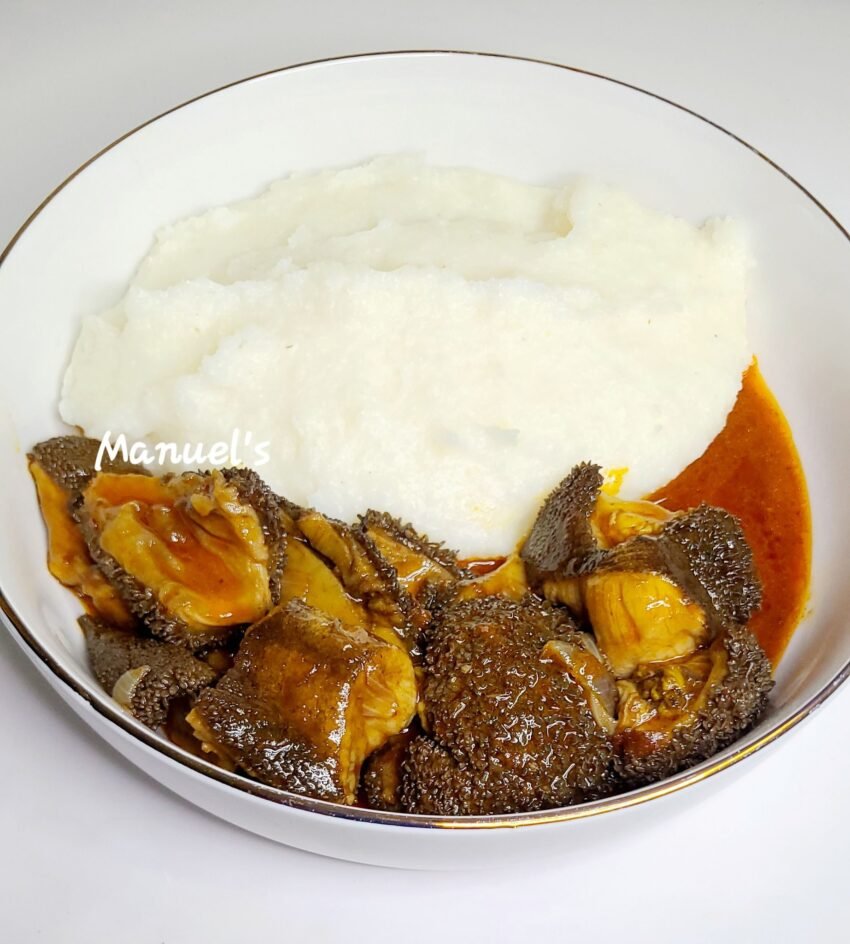
There’s something deeply soulful about sitting down to a plate of pounded yam and rich, spicy stewed tripe—a meal that doesn’t just satisfy hunger, but tells a story. In many Nigerian homes, this dish is more than food; it’s tradition, celebration, and comfort all rolled into one.
Picture this: a steaming mound of soft, stretchy pounded yam, smooth as silk, paired with a deeply flavored stew simmered with tender pieces of shaki (tripe). The aroma alone—smoky, peppery, and rich—fills the room and draws everyone closer. Each bite is an experience: the mild, pillowy yam soaking up the bold, savory sauce, delivering layers of flavor that feel both grounding and indulgent.
Whether it’s a weekend family gathering or a special occasion, this dish brings people together like few others can.
Why You’ll Love This Recipe
-
🇳🇬 Authentic Nigerian Flavor – A true cultural classic
-
🍲 Deeply Satisfying – Rich, hearty, and filling
-
💪 Protein-Rich – Tripe adds a unique nutritional boost
-
👨👩👧 Perfect for Sharing – Ideal for family meals
-
🌶️ Bold & Spicy – Packed with layered flavors
-
🍽️ Customizable – Adjust spice and texture to your taste
Ingredients (With Exact Measurements)
For the Pounded Yam
-
Yam (white puna yam) – 1 kg (2.2 lbs)
-
Water – as needed
👉 Shortcut: Use yam flour (elubo) – 2 cups (240 g / 8.5 oz) + 2½ cups water
For the Stewed Tripe (Shaki)
-
Tripe (cleaned and cut) – 500 g (1.1 lbs)
-
Palm oil – 3 tablespoons (45 ml / 1.5 fl oz)
-
Onion (chopped) – 1 medium (150 g / 5.3 oz)
-
Tomatoes (blended) – 3 medium (300 g / 10.5 oz)
-
Red bell pepper – 1 large (150 g / 5.3 oz)
-
Scotch bonnet pepper – 1–2 (adjust to taste)
-
Garlic – 3 cloves (9 g / 0.3 oz)
-
Ginger – 1 teaspoon (5 g)
Seasonings
-
Stock cubes – 2
-
Salt – 1 teaspoon (6 g)
-
Ground crayfish – 1 tablespoon (10 g)
-
Dried thyme – ½ teaspoon (1 g)
-
Curry powder – ½ teaspoon (1 g)
Optional Add-ins
-
Beef or cow skin (ponmo) – 200 g
-
Spinach or ugu leaves – 1 cup (optional for added nutrition)
Nutritional Information (Per Serving)
(Approximate)
-
Calories: 600 kcal
-
Protein: 28 g
-
Carbohydrates: 65 g
-
Fats: 25 g
-
Fiber: 6 g
Vitamins & Minerals
-
Iron (from tripe)
-
Vitamin A (from peppers)
-
Potassium (from yam)
-
Vitamin C
Dietary Info
-
✅ Gluten-free
-
❌ Not vegan
-
❌ Not keto
-
✅ High-energy, traditional meal
Kitchen Tools Needed
-
Large pot
-
Mortar & pestle (or stand mixer/food processor for pounding)
-
Blender
-
Wooden spoon
-
Knife & cutting board
Step-by-Step Preparation (Detailed)
Part 1: Preparing the Tripe (Shaki)
Step 1: Clean and Boil the Tripe
-
Wash tripe thoroughly with salt and vinegar or lemon
-
Place in a pot with water, onions, salt, and stock cube
-
Boil for 30–40 minutes until tender
👉 Texture Cue: Soft but slightly chewy—not rubbery
Step 2: Blend the Pepper Base
Blend together:
-
Tomatoes
-
Red bell pepper
-
Scotch bonnet
-
Garlic
-
Ginger
👉 Blend until smooth.
Step 3: Cook the Stew
-
Heat palm oil in a pot (medium heat)
-
Add chopped onions and sauté for 3 minutes
-
Pour in blended mixture
-
Cook for 15–20 minutes, stirring occasionally
👉 Pro Tip: Fry until oil begins to rise to the top—this deepens flavor.
Step 4: Add Tripe & Seasoning
-
Add cooked tripe
-
Add crayfish, thyme, curry, and remaining stock cube
-
Simmer for 10–15 minutes
👉 Adjust salt and spice to taste.
Part 2: Preparing the Pounded Yam
Option A: Traditional Method
Step 1: Boil Yam
-
Peel and cut yam into chunks
-
Boil in water for 20–25 minutes until soft
Step 2: Pound the Yam
-
Pound using a mortar and pestle until smooth and stretchy
👉 Texture Cue: Elastic, lump-free, and slightly glossy
Option B: Quick Method (Yam Flour)
Step 1:
-
Boil water in a pot
Step 2:
-
Gradually add yam flour while stirring continuously
Step 3:
-
Stir until thick, smooth, and lump-free
Expert Cooking Tips & Mistakes to Avoid
✅ Tips
-
Clean tripe thoroughly to remove odor
-
Cook stew until oil separates for authentic taste
-
Pound yam while hot for best texture
❌ Mistakes
-
Undercooking tripe → too tough
✔ Fix: Boil longer until tender -
Watery stew
✔ Fix: Cook longer to reduce -
Lumpy pounded yam
✔ Fix: Pound or stir more while hot
Variations & Customizations
🌶️ Spicy Version
-
Add extra Scotch bonnet
-
Include chili powder
-
Use spicy palm oil stew base
🥗 Healthier Version
-
Reduce palm oil
-
Add leafy greens like ugu or spinach
-
Use lean protein mix
🧒 Kid-Friendly Version
-
Reduce pepper
-
Make milder stew
-
Serve smaller portions with soft texture
Storage & Reheating Instructions
🧊 Fridge Life
-
Stew: 3–4 days
-
Pounded yam: 1–2 days
❄️ Freezer Life
-
Stew: Up to 2 months
-
Pounded yam: Not ideal but can freeze for 1 month
🔥 Reheating
-
Stew: Reheat on stovetop with a splash of water
-
Pounded yam: Reheat with steam or microwave covered
Serving Suggestions
Serve hot and fresh:
-
🍲 In a deep bowl with stew poured over or served alongside
-
🥬 With extra vegetables like ugu leaves
-
🥤 Pair with chilled water or traditional drinks
👉 Traditionally eaten with hands—pinch, dip, and enjoy!
FAQs (Frequently Asked Questions)
1. What is tripe (shaki)?
It’s the edible lining of a cow’s stomach, commonly used in African cuisine.
2. Can I substitute pounded yam?
Yes—try fufu, amala, or semolina.
3. How do I remove tripe smell?
Wash with vinegar, salt, or lemon thoroughly before cooking.
4. Is this dish spicy?
Traditionally yes, but you can adjust the heat.
5. Can I mix proteins?
Absolutely—add beef, fish, or cow skin.
6. Why is my pounded yam sticky?
That’s normal—it should be stretchy and smooth.
Pounded yam with stewed tripe is more than just a meal—it’s an experience, a connection to culture, and a celebration of bold, comforting flavors.
If you’ve never tried it before, this is your moment.
💬 Give it a go and tell me how it turned out!
📸 Share your dish and bring a taste of Nigeria to your table.