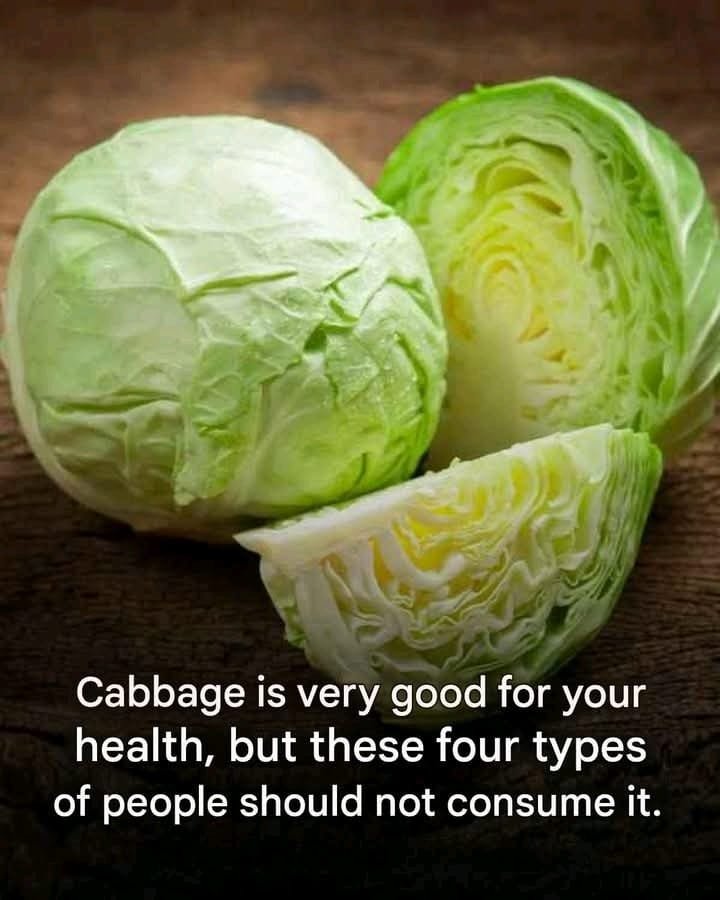
The 4 Types of People Who Shouldn’t Eat Cabbage (Or Should Be Careful)
Cabbage is healthy but not for everyone. Discover the 4 types of people who should limit or avoid cabbage and why.
Introduction
Cabbage is often praised as a super-vegetable.
It’s affordable.
It’s versatile.
It’s packed with fiber and antioxidants.
From coleslaw at summer barbecues to fermented sauerkraut for gut health, cabbage is a staple in many American kitchens.
But here’s something most people don’t realize:
Cabbage isn’t ideal for everyone.
While it offers impressive nutritional benefits, certain individuals may experience digestive discomfort, medication interactions, or metabolic complications if they consume it in large amounts.
This doesn’t mean cabbage is “bad.”
It means context matters.
In this in-depth guide, we’ll explore:
-
The nutritional profile of cabbage
-
The 4 types of people who should limit or avoid it
-
Why certain health conditions change the equation
-
How to eat cabbage safely if you’re sensitive
-
Practical alternatives
Let’s take a balanced, science-informed look.
First: Why Cabbage Is Considered Healthy
Before discussing who should avoid it, let’s understand why cabbage is widely recommended.
Cabbage contains:
-
Vitamin C
-
Vitamin K
-
Fiber
-
Folate
-
Antioxidants
-
Phytochemicals like glucosinolates
It’s low in calories and rich in plant compounds associated with anti-inflammatory and cellular health support.
So why would anyone need to avoid it?
Because even healthy foods can cause issues for certain individuals.
Type 1: People With Thyroid Disorders (Especially Hypothyroidism)
Cabbage belongs to a group of vegetables known as cruciferous vegetables.
These contain natural compounds called goitrogens.
What Are Goitrogens?
Goitrogens can interfere with iodine uptake in the thyroid gland when consumed in very large quantities, particularly in raw form.
For most healthy individuals, this is not a problem.
But people with:
-
Hypothyroidism
-
Iodine deficiency
-
Autoimmune thyroid conditions
May need to be cautious with excessive raw cruciferous intake.
Important Context
Cooking cabbage significantly reduces goitrogenic activity.
Moderation is usually sufficient — total avoidance is rarely necessary.
If you have thyroid concerns, consult your healthcare provider before drastically changing your intake.
Type 2: People Prone to Digestive Sensitivity or IBS
Cabbage is high in certain fermentable carbohydrates known as FODMAPs.
For individuals with:
-
Irritable Bowel Syndrome (IBS)
-
Chronic bloating
-
Gas sensitivity
-
Functional digestive disorders
Cabbage can trigger:
-
Abdominal discomfort
-
Gas
-
Cramping
-
Bloating
Why?
The fiber and fermentable sugars are broken down by gut bacteria, producing gas.
While this fermentation can be beneficial for some, sensitive individuals may struggle.
Tip:
-
Start with small portions.
-
Try cooked instead of raw.
-
Consider low-FODMAP alternatives if symptoms persist.
Type 3: People Taking Blood-Thinning Medications
Cabbage is rich in Vitamin K, a nutrient essential for blood clotting.
This becomes important for individuals taking medications like:
-
Warfarin
-
Certain anticoagulants
Sudden increases or decreases in Vitamin K intake can affect medication effectiveness.
This does NOT mean you must avoid cabbage entirely.
The key is consistency.
If you regularly eat cabbage, maintain stable intake and inform your healthcare provider.
Abrupt dietary changes can cause complications.
Type 4: People With Kidney Stone Risk (Certain Types)
Cabbage contains moderate amounts of oxalates.
While not extremely high, individuals prone to:
-
Calcium oxalate kidney stones
May need to monitor total oxalate intake.
In most cases, cabbage is not the primary concern — but when combined with other high-oxalate foods, intake can accumulate.
Hydration and dietary balance matter more than single foods.
If you have a history of kidney stones, individualized dietary guidance is recommended.
Common Myths About Cabbage
Let’s clear up some confusion.
Myth 1: Cabbage Is “Toxic”
False. For the vast majority of people, cabbage is nutritious and safe.
Myth 2: Cabbage Causes Permanent Thyroid Damage
Only excessive raw intake in iodine-deficient individuals may pose concerns.
Moderate consumption is generally safe.
Myth 3: Fermented Cabbage Is Always Better
Sauerkraut and kimchi can support gut health — but they’re often high in sodium.
Balance matters.
When Cabbage Is Especially Beneficial
For most people, cabbage can:
-
Support digestive regularity
-
Provide antioxidants
-
Contribute to heart-healthy diets
-
Add low-calorie volume to meals
-
Support immune function
It’s affordable and accessible — a major plus in American households.
Raw vs Cooked Cabbage: Does It Matter?
Yes.
Cooking:
-
Reduces goitrogenic compounds
-
Makes fiber easier to digest
-
Lowers bloating potential for some
Raw:
-
Retains certain enzymes
-
Provides crisp texture
-
May cause more gas in sensitive individuals
If you experience discomfort, try steaming or sautéing instead.
Pros and Cons of Eating Cabbage
Pros
-
Nutrient-dense
-
Low-calorie
-
High in fiber
-
Affordable
-
Versatile
-
Supports heart health
Cons
-
May cause gas or bloating
-
High in Vitamin K (important for medication users)
-
Can affect iodine uptake in excess raw form
As with most foods, the issue isn’t cabbage itself — it’s context and quantity.
How to Eat Cabbage Safely
If you fall into one of the four groups:
1. Don’t eliminate without guidance
Sudden removal of nutrient-dense vegetables may not be necessary.
2. Cook it
Light steaming reduces digestive strain.
3. Monitor portions
Large servings may trigger symptoms.
4. Stay consistent
Especially if on blood thinners.
5. Talk to your healthcare provider
Personal medical history matters more than general advice.
Balanced Alternatives
If cabbage doesn’t work for you, consider:
-
Zucchini
-
Carrots
-
Green beans
-
Spinach (monitor if on blood thinners)
-
Bell peppers
There’s no single “must-have” vegetable.
Diversity is key.
FAQs
1. Should people with hypothyroidism avoid cabbage completely?
Usually no. Cooked cabbage in moderate amounts is typically safe.
2. Why does cabbage cause gas?
It contains fermentable fibers that gut bacteria break down, producing gas.
3. Is red cabbage different from green cabbage?
Nutritionally similar, though red cabbage contains additional antioxidants.
4. Can cabbage interfere with medications?
It may affect blood-thinning medications due to Vitamin K content.
5. Is cabbage good for weight loss?
It’s low-calorie and high-fiber, which can support satiety.
6. Does cooking destroy nutrients?
Some Vitamin C is reduced, but cooking improves digestibility.
7. Is sauerkraut healthier than raw cabbage?
It offers probiotics but may contain high sodium.
8. Can children eat cabbage?
Yes, in appropriate portions unless digestive issues arise.
The Bigger Picture
No food is universally perfect.
And no single vegetable is universally harmful.
Cabbage is nutritious for most people — but certain medical conditions or sensitivities require mindful consumption.
Health isn’t about extremes.
It’s about personalized balance.
Final Thoughts
If you’re one of the four groups mentioned:
-
Thyroid disorder
-
Digestive sensitivity
-
Blood thinner use
-
Kidney stone history
Cabbage may require moderation — not fear.
For everyone else, it remains a budget-friendly, nutrient-rich addition to meals.
When in doubt, consistency, moderation, and medical guidance outperform viral food warnings every time.
Your Turn
Have you ever noticed digestive discomfort after eating cabbage?
Or do you tolerate it well?
Understanding how your body responds is more powerful than following blanket rules.
Food works best when it works for you.