The Amazing Benefits of Castor Oil and Epsom Salt Combined (What’s Real & What’s Hype)
Discover the science-backed benefits of combining castor oil and Epsom salt for relaxation, skin care, and muscle relief—plus safe ways to use them.
Introduction: Why Is Everyone Talking About This Combo?
Scroll through wellness forums or social media and you’ll see bold claims:
“Detox your body overnight.”
“Shrink belly fat.”
“Flush toxins instantly.”
The combination of castor oil and Epsom salt has become a popular home remedy across the U.S.
But here’s the truth:
While both ingredients have legitimate uses, they don’t perform miracles. When used properly, however, they can support relaxation, skin health, and muscle comfort in surprisingly effective ways.
Let’s break down what this combination can realistically do — and how to use it safely.
What Is Castor Oil?
Castor oil is derived from the seeds of the plant Ricinus communis.
It contains ricinoleic acid, a fatty acid studied for:
-
Anti-inflammatory properties
-
Moisturizing effects
-
Mild stimulant laxative action (when taken orally under supervision)
For topical use, it’s most known for its thick, deeply hydrating texture.
What Is Epsom Salt?
Epsom salt is not actually salt in the traditional sense.
It’s magnesium sulfate — a naturally occurring mineral compound first discovered in the town of Epsom.
It’s commonly used in:
-
Bath soaks
-
Foot soaks
-
Muscle recovery routines
Magnesium plays a role in muscle relaxation and nerve function.
Why Combine Them?
Castor oil and Epsom salt serve different but complementary purposes:
| Castor Oil | Epsom Salt |
|---|---|
| Deeply moisturizing | Muscle relaxation support |
| May reduce inflammation | Soothing warm soak effect |
| Thick texture ideal for packs | Helps soften water in baths |
Together, they’re often used in:
-
Relaxation baths
-
Abdominal packs
-
Joint comfort routines
-
Skin-smoothing treatments
1. Muscle & Joint Comfort
One of the most common uses is for sore muscles.
How It Works
-
Warm water increases circulation.
-
Epsom salt baths may help relax tense muscles.
-
Castor oil applied afterward helps lock in moisture and may reduce skin dryness from soaking.
While magnesium absorption through skin is still debated in scientific literature, many people report subjective relief after Epsom salt baths.
2. Castor Oil Packs for Abdominal Comfort
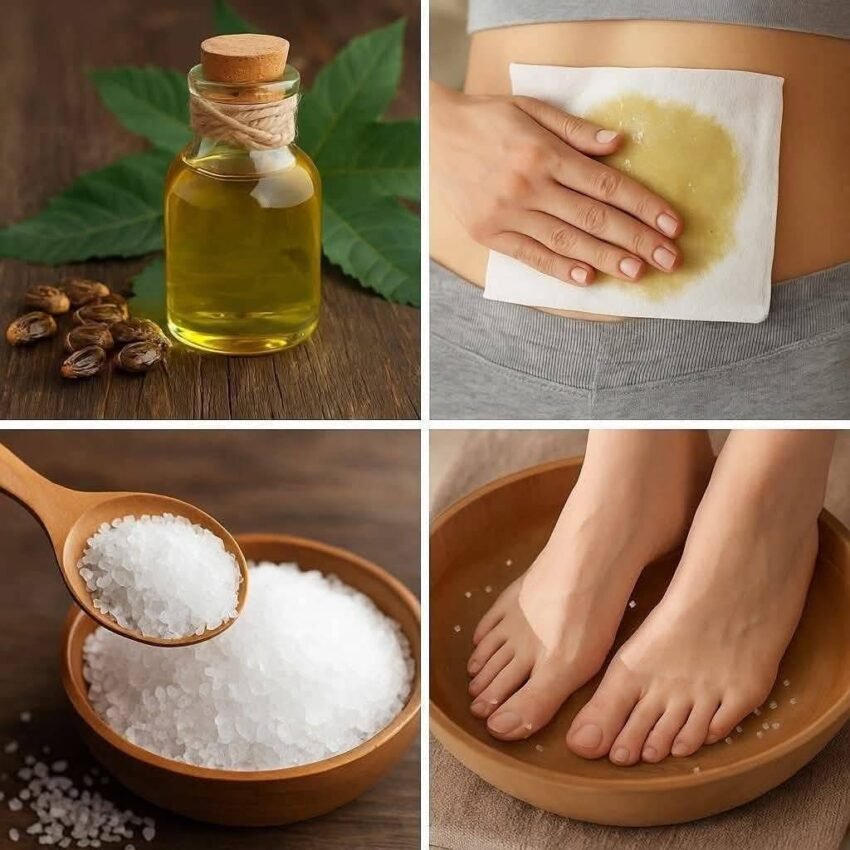
Castor oil packs have been used in traditional wellness practices for decades.
A typical method:
-
Soak a cloth in castor oil.
-
Place it over the abdomen.
-
Apply gentle heat.
-
Leave for 30–60 minutes.
Some individuals use Epsom salt baths before or after to enhance relaxation.
Potential Benefits
-
May support relaxation
-
May ease menstrual discomfort
-
Encourages restfulness
Important: These are supportive practices, not medical treatments.
3. Skin Smoothing & Hydration
Epsom salt can gently exfoliate the skin.
Castor oil then:
-
Seals in moisture
-
Improves softness
-
Enhances skin barrier function
This combination works well for:
-
Rough elbows
-
Dry heels
-
Winter skin care
4. Stress Relief & Sleep Support
Warm baths are proven to:
-
Reduce cortisol
-
Improve sleep onset
-
Calm the nervous system
Adding Epsom salt may enhance relaxation.
Applying castor oil to dry areas afterward creates a soothing nighttime routine.
Sometimes the benefit isn’t chemical — it’s the ritual itself.
5. Digestive Relief? Let’s Clarify
Oral castor oil is an FDA-approved stimulant laxative.
However:
-
It should not be used frequently.
-
It can cause cramping.
-
It’s not for long-term detox.
Epsom salt can also act as a saline laxative when taken orally — but this should only be done under medical supervision.
Using these substances internally without guidance can be risky.
Safe Ways to Use Them Together
Relaxing Bath Method
-
1–2 cups Epsom salt
-
Warm (not hot) bath water
-
Soak for 15–20 minutes
-
After drying off, massage small amount of castor oil onto damp skin
Hydrate afterward.
Foot Soak Method
-
½ cup Epsom salt
-
Warm water basin
-
Soak 15 minutes
-
Apply castor oil to heels and cuticles
Great for nighttime relaxation.
Common Mistakes to Avoid
❌ Overheating the Bath
Extremely hot water can cause dizziness.
❌ Using Excessive Castor Oil
A small amount goes a long way.
❌ Believing It “Flushes Toxins”
Your liver and kidneys handle detoxification.
❌ Taking Internally Without Guidance
Always consult a healthcare provider first.
Who Should Avoid This Combination?
-
Pregnant individuals (without medical advice)
-
People with kidney disease
-
Individuals with open wounds
-
Those with sensitive skin conditions
Patch testing is recommended for topical use.
Frequently Asked Questions
1. Does this combination burn belly fat?
No, it does not reduce body fat.
2. Can it detox heavy metals?
There’s no strong evidence supporting that claim.
3. How often can I use Epsom salt baths?
1–3 times per week is common.
4. Can castor oil clog pores?
It’s thick, so use sparingly on acne-prone skin.
5. Does magnesium absorb through skin?
Research is mixed; evidence is not conclusive.
6. Is it safe for children?
Consult a pediatrician first.
7. Can I mix them directly?
Yes, but many prefer using salt in bath and oil afterward.
8. Will this cure inflammation disorders?
It may provide comfort but is not a cure.
The Bottom Line
Castor oil and Epsom salt aren’t miracle detox agents.
But they can:
-
Support muscle relaxation
-
Improve skin hydration
-
Enhance self-care routines
-
Promote restful sleep
When used safely and realistically, they make a simple, affordable addition to your wellness toolkit.
The real power isn’t in dramatic promises — it’s in consistent, calming habits that support your body over time.
If you found this guide helpful, share it with someone who loves natural self-care routines — and always prioritize safety over trends.