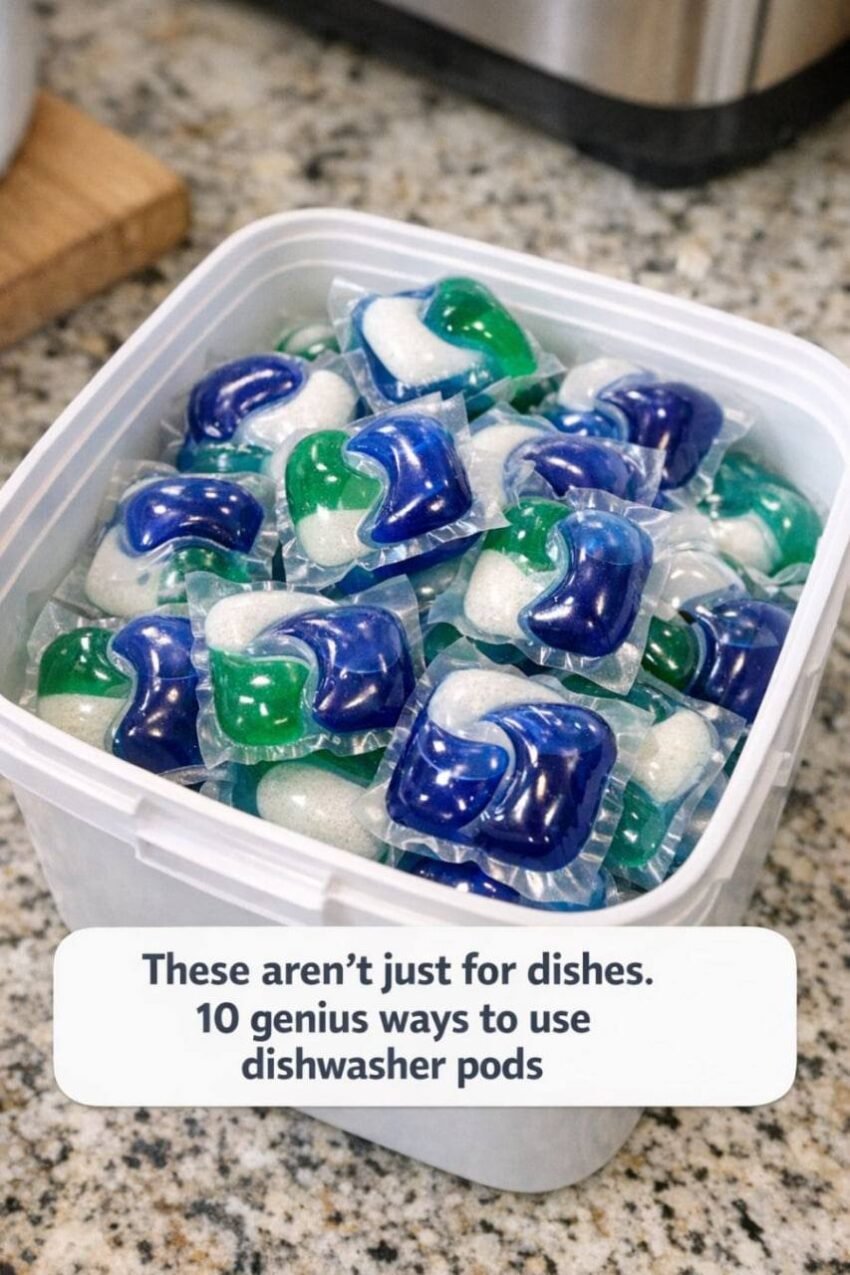
10 Genius Ways to Use Dishwasher Pods Around Your Home (Not Just for Dishes)
Think dishwasher pods are only for dishes? Discover 10 smart, safe, and surprisingly effective ways to use them around your home.
Introduction
Most Americans toss a dishwasher pod into the machine, close the door, and never think about it again.
But what if that little packet under your sink could tackle greasy patio furniture, dingy trash cans, oven buildup, and even grimy sneakers?
Dishwasher pods are concentrated cleaning power wrapped in dissolvable film. They’re designed to break down food, grease, and stains — which means they can do far more than clean plates.
In this guide, you’ll discover 10 practical, real-life ways to use dishwasher pods around your home, plus safety tips, common mistakes to avoid, and when you absolutely should not use them.
Let’s unlock their hidden potential.
Why Dishwasher Pods Work So Well
Dishwasher pods are engineered with:
-
Surfactants (to break down grease)
-
Enzymes (to target food particles)
-
Oxygen-based bleaching agents
-
Water softeners
-
Rinse aids
According to the American Cleaning Institute, automatic dishwashing detergents are formulated specifically to remove protein- and starch-based residues at high temperatures.
That powerful formula makes them surprisingly effective for tough grime elsewhere in your home.
However — and this is important — they are concentrated cleaners and must be used carefully.
Safety First: Important Precautions
Before we dive in, keep these safety rules in mind:
-
Never mix dishwasher pods with other cleaning chemicals.
-
Keep away from children and pets.
-
Avoid direct skin contact with dissolved solution.
-
Do not use on delicate fabrics or untreated wood.
-
Rinse thoroughly after use.
The U.S. Consumer Product Safety Commission has repeatedly warned about accidental ingestion risks. Always store pods in original packaging and out of reach.
Now let’s get to the genius uses.
1. Deep Clean Outdoor Trash Cans
Outdoor bins collect odors, sticky residue, and bacteria — especially during hot U.S. summers.
How to Do It:
-
Fill the trash can halfway with hot water.
-
Drop in one dishwasher pod.
-
Let it dissolve for 30–60 minutes.
-
Scrub and rinse thoroughly.
Why it works: The degreasing agents break down stuck-on food and grime quickly.
Best for: Plastic garbage bins, recycling containers.
2. Remove Baked-On Grease from Oven Racks
Oven racks are notoriously difficult to clean.
Method:
-
Place racks in a bathtub lined with old towels.
-
Fill with very hot water.
-
Add 1–2 pods.
-
Soak overnight.
-
Scrub lightly in the morning.
The enzymes and alkaline ingredients help loosen carbon buildup.
Avoid using on aluminum racks.
3. Restore Cloudy Glass Vases and Candle Holders
Hard water buildup can dull glass.
Try This:
-
Fill the vase with hot water.
-
Add a small piece of a pod (not the entire thing).
-
Let sit for 30 minutes.
-
Rinse thoroughly.
This can dissolve mineral film without heavy scrubbing.
4. Brighten Patio Furniture
Grease, pollen, and dirt collect on outdoor tables and chairs.
Quick Solution:
-
Dissolve one pod in a bucket of hot water.
-
Wipe down plastic or metal furniture.
-
Rinse with hose.
Especially helpful before backyard parties.
5. Clean Washing Machine Drums
Ironically, washing machines need washing too.
According to consumer appliance maintenance recommendations from brands like Whirlpool, periodic drum cleaning helps prevent odor and buildup.
How:
-
Run an empty hot cycle.
-
Add one dishwasher pod directly to the drum.
-
Wipe the seal afterward.
Do not use regularly — occasional deep cleaning only.
6. Degrease Range Hood Filters
Kitchen grease builds up over time.
Steps:
-
Fill sink with very hot water.
-
Add one pod.
-
Submerge metal filter for 30 minutes.
-
Rinse and air dry.
The results can be dramatic.
7. Clean Sneakers (Non-Delicate Materials Only)
For canvas or rubber-soled sneakers:
-
Fill a basin with warm water.
-
Dissolve a small portion of a pod.
-
Scrub gently with a brush.
-
Rinse thoroughly.
Avoid leather or delicate fabrics.
8. Remove Coffee and Tea Stains from Mugs
Those brown rings inside mugs?
Dishwasher pod solution can lift them fast.
-
Dissolve a small amount in hot water.
-
Let mug soak 20 minutes.
-
Rinse well.
Especially helpful for office breakroom mugs.
9. Tackle Greasy Grill Grates
After summer cookouts, grills can get messy.
Method:
-
Remove grates.
-
Soak in hot water with one pod.
-
Scrub with grill brush.
Do not use on cast iron without reseasoning afterward.
10. Clean Plastic Storage Containers
Tomato sauce stains can linger.
-
Fill container with hot water.
-
Add small portion of pod.
-
Soak 30–60 minutes.
-
Rinse thoroughly.
The oxygen-based agents help lift discoloration.
Pros and Cons of Using Dishwasher Pods for Other Cleaning Tasks
Pros
✔ Extremely powerful degreasing
✔ Convenient pre-measured doses
✔ Readily available in most U.S. homes
✔ Cost-effective for heavy cleaning
Cons
✘ Too strong for delicate surfaces
✘ Not eco-friendly in excess
✘ Can damage aluminum or untreated wood
✘ Requires thorough rinsing
Balance is key.
Common Mistakes to Avoid
1. Using on Natural Stone
Granite and marble can be damaged.
2. Applying Directly to Fabric
Always dilute first.
3. Using Full Pods for Small Jobs
They’re concentrated. A partial pod is often enough.
4. Skipping Rinse Steps
Residue can leave surfaces cloudy.
5. Mixing with Bleach or Vinegar
Never mix cleaning chemicals.
Are Dishwasher Pods Environmentally Friendly?
Many major brands are reformulating products to reduce phosphates and environmental impact.
The Environmental Protection Agency regulates certain chemical components used in cleaning agents to limit water pollution.
If sustainability matters to you, look for:
-
Phosphate-free labels
-
Biodegradable packaging
-
Plant-based surfactants
Use only what you need.
Frequently Asked Questions
1. Can dishwasher pods unclog drains?
No. They are not designed for plumbing systems.
2. Are they safe for septic systems?
Most modern formulas are septic-safe in normal dishwasher use, but avoid dumping large amounts down drains.
3. Can I use them on car wheels?
Not recommended. They may damage finishes.
4. Do they disinfect surfaces?
They clean effectively, but they are not EPA-registered disinfectants.
5. Can I use them on hardwood floors?
No. They can strip finish.
6. Are they safe for stainless steel?
Yes, when diluted and rinsed thoroughly.
7. Can I use them in cold water?
They dissolve best in hot water.
8. Are pods better than powder?
Pods offer convenience; performance varies by brand.
9. Can they remove mold?
They may help clean surfaces but are not mold treatment products.
10. How often should I use them for deep cleaning?
Occasionally — not as daily all-purpose cleaner.
When You Should NOT Use Dishwasher Pods
Avoid using them on:
-
Delicate fabrics
-
Silk or wool
-
Natural stone
-
Unfinished wood
-
Electronics
-
Painted walls
They are powerful cleaners, not universal solutions.
Dishwasher pods are small but mighty.
Beyond sparkling plates, they can:
-
Degrease stubborn buildup
-
Freshen neglected spaces
-
Simplify heavy-duty cleaning
Used correctly and safely, they’re one of the most underrated multitaskers in your cleaning arsenal.
Before tossing that next pod into the dishwasher, consider whether another part of your home could benefit first.
Have you tried any of these methods? Share your experience, or pass this list along to someone who loves smart home hacks.