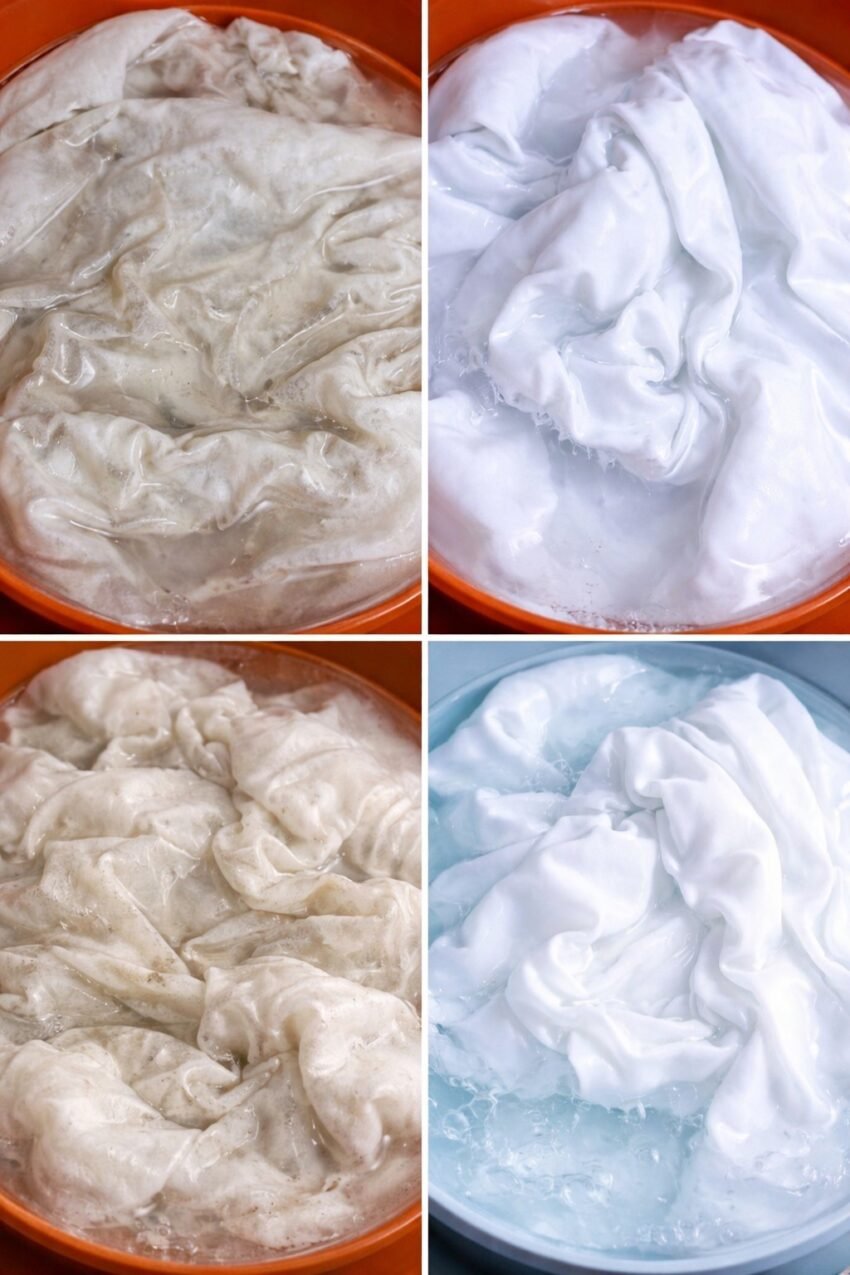
The Simple Vinegar Laundry Trick That Makes Clothes Whiter and Towels Softer (Most People Do It Wrong)
Discover the correct way to use vinegar in laundry for whiter clothes and softer towels. Avoid common mistakes and learn the simple trick most people miss.
The Laundry Secret Sitting in Your Kitchen
Most people have it in their pantry.
They use it for salad dressing, cleaning countertops, or even cooking. But very few realize that ordinary white vinegar can dramatically improve your laundry.
If you’ve ever pulled towels out of the dryer only to find them stiff…
or noticed white shirts slowly turning dull and gray…
there’s a good chance detergent buildup and hard water minerals are the real culprits.
That’s where vinegar comes in.
Used correctly, vinegar can:
-
Restore brightness to white clothes
-
Remove detergent residue
-
Soften towels naturally
-
Eliminate stubborn odors
-
Improve washing machine efficiency
However, here’s the catch.
Most people use vinegar the wrong way, which means they never see the full benefits.
In this guide, you’ll learn exactly how to use vinegar in your laundry the right way, what mistakes to avoid, and why this simple household trick has been trusted for generations.
Why Vinegar Works So Well in Laundry
The secret lies in vinegar’s mild acidity.
White distilled vinegar contains acetic acid, which helps break down alkaline residues left behind by detergent and minerals found in hard water.
Over time, these residues accumulate in fabrics, causing problems like:
-
Rough towels
-
Dingy white clothes
-
Stiff fabrics
-
Lingering odors
Vinegar dissolves these deposits, allowing fabrics to return to their natural softness and brightness.
The result?
Laundry that feels cleaner, smells fresher, and lasts longer.
The Biggest Mistake People Make When Using Vinegar
The most common mistake is pouring vinegar directly onto clothes or mixing it with detergent.
This reduces its effectiveness and can even interfere with how detergent works.
Instead, vinegar should be added during the rinse cycle, when the detergent has already done its job.
Why?
Because the rinse cycle is when residues are removed. Vinegar helps flush out everything the wash cycle leaves behind.
How to Use Vinegar for Whiter Clothes
White fabrics often lose their brightness because detergent residue traps dirt and minerals inside the fibers.
Vinegar helps dissolve this buildup.
Step-by-Step Method
-
Wash clothes as you normally would with detergent.
-
During the rinse cycle, add ½ cup to 1 cup of white distilled vinegar to the fabric softener compartment.
-
Allow the rinse cycle to complete.
-
Dry clothes as usual.
After several washes, many people notice that whites appear brighter and cleaner without harsh chemicals.
How to Make Towels Soft Again
One of the most common laundry frustrations is stiff towels.
Ironically, the problem is often caused by too much detergent or fabric softener.
Fabric softeners coat fibers with waxy substances that reduce absorbency.
Vinegar removes these coatings.
Towel Restoration Method
For towels that have become stiff:
-
Wash towels in hot water with 1 cup of white vinegar and no detergent.
-
Run a second wash using ½ cup baking soda.
-
Dry normally.
This deep-clean process removes residue and restores softness.
Many people are surprised at how much fluffier their towels feel afterward.
Other Laundry Benefits of Vinegar
Vinegar is surprisingly versatile in the laundry room.
Here are several additional ways it can help.
Odor Removal
Vinegar neutralizes odor-causing bacteria.
It works especially well for:
-
Gym clothes
-
Musty towels
-
Pet bedding
-
Smoke smells
Static Reduction
Adding vinegar during the rinse cycle can reduce static electricity in fabrics.
Color Protection
Vinegar helps lock in dye pigments during washing, helping prevent color fading.
Washing Machine Cleaning
Running an empty cycle with vinegar can help dissolve mineral buildup inside the machine.
How Much Vinegar Should You Use?
Using the correct amount is important.
| Laundry Purpose | Vinegar Amount |
|---|---|
| General laundry rinse | ½ cup |
| Brightening whites | 1 cup |
| Restoring stiff towels | 1 cup |
| Odor removal | ½–1 cup |
| Washing machine cleaning | 2 cups |
A little goes a long way.
Types of Vinegar You Should Use
Not all vinegar is suitable for laundry.
The best option is white distilled vinegar.
Avoid:
-
Apple cider vinegar (can stain fabrics)
-
Balsamic vinegar (contains sugars and dyes)
-
Cleaning vinegar above 10% acidity unless diluted
White vinegar is clear, inexpensive, and safe for most fabrics.
Pros and Cons of Using Vinegar in Laundry
Pros
-
Natural alternative to chemical softeners
-
Removes detergent buildup
-
Brightens whites
-
Eliminates odors
-
Affordable and widely available
Cons
-
Strong smell during washing (disappears after drying)
-
Not suitable for delicate fabrics like silk
-
Must be used in correct amounts
When used properly, the advantages far outweigh the drawbacks.
Common Mistakes to Avoid
Even though vinegar is simple to use, several mistakes reduce its effectiveness.
Mixing Vinegar With Bleach
This combination creates toxic chlorine gas and should never be used.
Pouring Vinegar Directly on Clothes
This can cause uneven exposure and reduce cleaning efficiency.
Using Too Much
Excessive vinegar can damage rubber components in washing machines over time.
Using It Every Single Load
While occasional use is beneficial, constant use isn’t always necessary.
A Simple Real-Life Scenario
Imagine washing your favorite white T-shirt week after week.
At first it’s bright and crisp. But after months of detergent, minerals, and fabric softener, it begins to look gray and lifeless.
Instead of throwing it away, you add vinegar to the rinse cycle for several washes.
Gradually, the fibers release trapped residue.
The shirt looks brighter again.
This is the same principle that works for towels, bedding, and everyday laundry.
Expert Tips Most People Don’t Know
A few small adjustments can make vinegar even more effective.
Use Warm or Hot Water
Heat helps vinegar dissolve mineral buildup faster.
Don’t Combine With Fabric Softener
Vinegar already acts as a natural softener.
Try It on New Towels
Washing new towels with vinegar helps remove factory coatings that reduce absorbency.
Use It Monthly for Machine Maintenance
Running a vinegar cleaning cycle can extend washing machine lifespan.
Frequently Asked Questions
Will my clothes smell like vinegar?
No. The smell disappears during the rinse and drying process.
Can vinegar damage my washing machine?
Small amounts used occasionally are generally safe for most modern machines.
Does vinegar replace detergent?
No. It works best as a rinse aid, not a primary cleaner.
Is vinegar safe for colored clothes?
Yes, when used in moderate amounts during the rinse cycle.
Can vinegar remove mildew smells from towels?
Yes. Vinegar is highly effective at neutralizing mildew odors.
Can it replace fabric softener?
For many people, vinegar works just as well as a natural softener.
How often should I use vinegar in laundry?
Once every few washes or when fabrics start feeling stiff.
Does vinegar sanitize laundry?
It helps reduce odor-causing bacteria but is not a full disinfectant.
Can vinegar help with pet hair?
It may loosen fibers slightly, making pet hair easier to remove.
Does vinegar fade colors?
Used correctly, it typically helps preserve colors rather than fade them.
Quick Action Checklist
If you want softer towels and brighter clothes, try this simple routine:
✔ Add ½–1 cup white vinegar during the rinse cycle
✔ Avoid mixing vinegar with bleach
✔ Skip fabric softener when using vinegar
✔ Deep-clean stiff towels with a vinegar wash
✔ Use vinegar occasionally to clean your washing machine
These small adjustments can make a noticeable difference.
Conclusion
Sometimes the most effective laundry solutions aren’t expensive products or complicated routines.
They’re simple household ingredients that have been quietly working for generations.
White vinegar is one of those hidden gems.
Used properly, it can restore softness to towels, brighten dull whites, remove odors, and even help keep your washing machine running smoothly.
The key is using it at the right time — during the rinse cycle — instead of mixing it with detergent.
Once you start using vinegar the correct way, you may be surprised how much better your laundry feels.
A small amount of vinegar can transform your laundry routine.
Softer towels, brighter clothes, and fewer odors — all from something already sitting in your kitchen.
If you try this method, share your experience or pass the tip along. Many people have been doing laundry the same way for years without realizing there’s a simpler solution.