What Does ‘SSSS’ on Your Boarding Pass Mean? (And How to Stay Calm When You See It)
Wondering what “SSSS” on your boarding pass means? Learn why it appears, what to expect at the airport, and tips to stay calm during additional screening.
Introduction: Seeing ‘SSSS’ Can Be Alarming
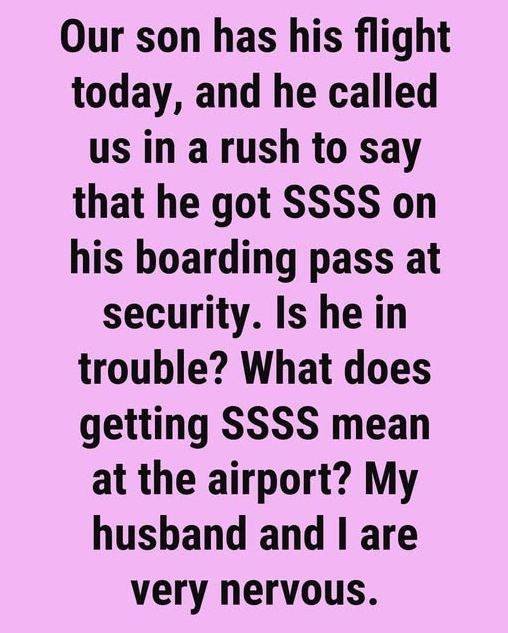
You check in for your flight, glance at your boarding pass, and notice four little letters: SSSS.
Your heart skips a beat. Does this mean something is wrong? Are you in trouble?
First, take a deep breath — you’re not alone, and it doesn’t necessarily mean you’re under suspicion.
“SSSS” simply stands for Secondary Security Screening Selection, a process used by the TSA to enhance security. Millions of travelers have experienced it, and most walks of life go through it without issue.
In this guide, we’ll explain:
-
What SSSS really means
-
Why you might be selected
-
What happens during the additional screening
-
How to stay calm and prepared
By the time you board your next flight, SSSS won’t feel scary — just a small step in keeping everyone safe.
What Does SSSS Mean on a Boarding Pass?
SSSS = Secondary Security Screening Selection.
It’s part of TSA’s security protocols and is used to randomly or selectively flag passengers for additional screening before boarding.
This doesn’t imply wrongdoing. The TSA may select passengers for secondary screening based on:
-
Random security procedures
-
Travel patterns
-
Government watch lists (such as the TSA’s Secure Flight program)
-
Airline or airport security protocols
SSSS is not a criminal marker — it’s a precautionary measure designed to keep flights safe.
Why You Might Be Selected for SSSS
Selection can seem mysterious, but there are several common reasons:
-
Random Selection
The TSA randomly selects a small percentage of passengers for additional screening. -
Name Matches Watch Lists
If your name is similar to someone on a government watch list, it may trigger SSSS. -
International Travel Patterns
Certain routes or travel behaviors can flag you for extra checks. -
Ticketing or Booking Irregularities
Last-minute bookings, one-way tickets, or mismatched personal information may trigger a review.
Remember, millions of travelers are randomly selected each year, and the majority go through smoothly.
What Happens During SSSS Screening
When you see SSSS on your boarding pass, prepare for:
-
Additional ID verification – TSA agents may ask to see multiple forms of ID.
-
Enhanced security screening – This can include a full-body scanner, pat-down, or hand inspection of carry-on items.
-
Questioning – Agents may ask routine questions about travel plans, luggage contents, and destinations.
The process usually adds 10–30 minutes to your airport routine, though it may take longer during busy travel periods.
Tips to Stay Calm and Prepared
1. Arrive Early
Give yourself plenty of time. Arriving 2–3 hours before a domestic flight and 3–4 hours for international flights helps reduce stress.
2. Have Documents Ready
Keep your boarding pass, passport (if applicable), and ID easily accessible.
3. Pack Thoughtfully
Avoid prohibited items, liquids over 3.4 ounces, or large electronics in carry-on bags to speed up the process.
4. Be Polite and Cooperative
Answer questions calmly and follow TSA instructions. Cooperation usually speeds the process.
5. Don’t Panic About the Letters
SSSS does not imply wrongdoing. Millions are randomly selected each year.
Common Myths About SSSS
-
Myth: “SSSS means I’m on a no-fly list.”
Fact: It doesn’t. Only a government watch list match might trigger SSSS, but most selections are random. -
Myth: “SSSS will prevent me from flying.”
Fact: Secondary screening is a process, not a ban. Nearly all selected passengers still board their flight. -
Myth: “It’s illegal or dangerous.”
Fact: TSA screening is routine and legal. It’s a standard security measure for all travelers.
How to Avoid Stress if You’re Flagged
-
Focus on breathing – Slow breaths reduce anxiety.
-
Think of it as extra safety – Remember, it’s a precaution, not a punishment.
-
Bring a small distraction – A book or headphones can help pass the time.
-
Check TSA guidelines beforehand – Knowing what to expect reduces surprises.
What to Expect After Screening
Once SSSS screening is complete:
-
Your boarding pass may be stamped to indicate you’ve cleared secondary screening.
-
You’ll proceed to your gate like any other passenger.
-
You may still experience random additional screenings on future flights — it’s normal and not a reflection on you personally.
Bottom Line
Seeing SSSS on your boarding pass can be alarming at first glance, but it’s a standard TSA security procedure.
It does not imply wrongdoing, and most travelers pass through without incident.
By understanding why it happens, what to expect, and how to stay calm, you can navigate airports with confidence and focus on your trip — not the letters on your boarding pass.
Quick Tips Summary
-
Arrive early and stay calm
-
Keep ID and boarding pass handy
-
Pack carry-ons thoughtfully
-
Cooperate politely with TSA agents
-
Remember SSSS is usually random
With preparation and patience, SSSS becomes just another step in your travel routine — nothing to worry about.