What Is That Weird Serrated Part on Kitchen Scissors For? (9 Genius Uses You’ve Been Ignoring)
Discover the hidden purpose of the serrated section on kitchen scissors—and 9 practical ways to use it like a pro in your everyday cooking.
The Tiny Feature You’ve Been Overlooking (And Why It Matters)
You’ve probably used your kitchen scissors dozens—maybe hundreds—of times.
Cutting herbs. Snipping open packaging. Maybe trimming meat.
But that strange, toothed, serrated section between the handles?
Most people either ignore it… or assume it’s decorative.
It’s neither.
That little feature is actually one of the most functional, time-saving tools in your entire kitchen—and once you understand how to use it, you’ll wonder how you ever cooked without it.
In this guide, you’ll discover:
-
What that serrated section is really for
-
Why it’s especially useful in American kitchens
-
9 practical, real-life uses you can start today
-
Common mistakes to avoid
-
Pro-level tips most home cooks never learn
Let’s unlock the hidden power of your kitchen shears.
What Is the Serrated Section on Kitchen Scissors?
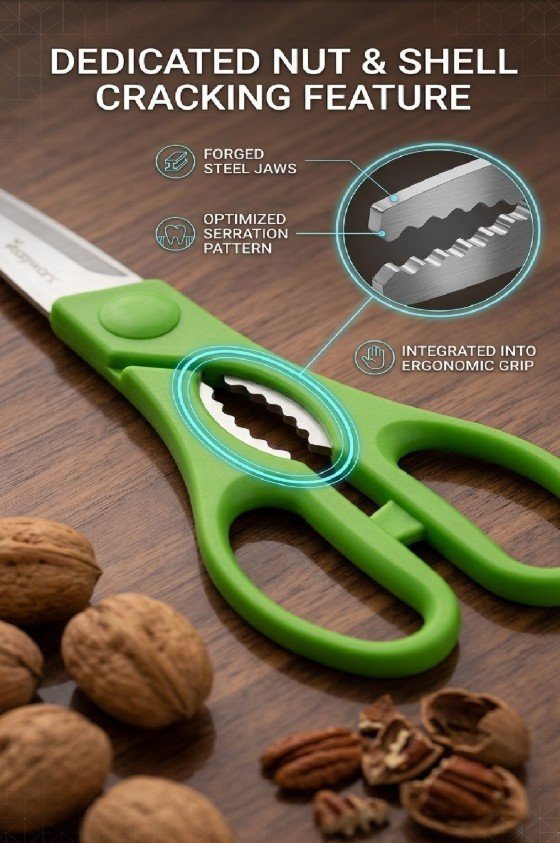
That jagged, ridged area between the handles is typically called a grip or crushing serration.
It’s designed to:
-
Grip slippery or hard objects
-
Apply pressure safely
-
Crack, crush, or twist items that knives can’t handle well
Unlike the cutting blades, this section uses force + friction instead of slicing.
Think of it as a hybrid between:
-
A nutcracker
-
A jar opener
-
A garlic press
-
And a bottle gripper
All built into one simple tool.
Why This Feature Matters in U.S. Kitchens
American kitchens are full of foods and packaging that benefit from this tool:
-
Thick plastic seals on food containers
-
Twist-off bottle caps
-
Hard-shell nuts (like pecans and walnuts)
-
Garlic-heavy recipes (especially in home cooking trends)
-
Pre-packaged meats with stubborn wrapping
Instead of reaching for multiple tools—or struggling with your hands—you can solve all of these with one motion using your kitchen scissors.
It’s about efficiency, safety, and convenience.
9 Genius Uses for the Serrated Section
1. Crack Nuts Without a Nutcracker
This is one of the most underrated uses.
Place a nut (like a walnut or pecan) between the serrated grips and gently squeeze.
Why it works:
-
The ridges hold the nut in place
-
Pressure cracks the shell without crushing the inside
Perfect during holidays or baking sessions.
2. Open Stubborn Bottle Caps
Struggling with a tight soda or sauce bottle?
Grip the cap with the serrated section and twist.
Benefits:
-
Better traction than your hands
-
Less strain on wrists
-
Ideal if your hands are wet or oily
3. Crush Garlic in Seconds
Skip the garlic press.
Place a clove between the serrated grips and squeeze lightly.
What happens:
-
The skin loosens instantly
-
The clove cracks open for easy peeling
-
You get a quick “crush” for cooking
This is a favorite trick among home cooks who want fewer gadgets cluttering their kitchen.
4. Remove Meat from Bones
When working with cooked chicken or fish, use the serrated section to grip bones and pull meat away cleanly.
Why it’s effective:
-
Prevents slipping
-
Gives you control without tearing meat apart
Especially useful for rotisserie chicken.
5. Crack Shellfish Like Shrimp or Crab
The serrated grip can help crack shells without damaging the meat inside.
Use light pressure and adjust as needed.
Best for:
-
Shrimp
-
Crab legs
-
Lobster segments
6. Loosen Jar Lids
We’ve all been there—tight jar lids that won’t budge.
Instead of banging the lid or running hot water, use the serrated grip to twist it open.
Pro tip:
Grip just enough to break the seal, then finish by hand.
7. Break Apart Small Bones
If you’re prepping poultry, the serrated section helps grip and snap smaller bones safely.
Safer than knives because:
-
You avoid slipping
-
You control pressure more easily
8. Grip and Pull Packaging Tabs
Many food packages have tiny tabs that are hard to grab.
Use the serrated section to grip and pull them open without tearing unevenly.
9. Hold Hot or Slippery Items
From baked potatoes to corn on the cob, the serrated grip helps you handle hot foods safely.
It acts like:
-
A mini tong
-
A heat-resistant holder
Step-by-Step: How to Use It Properly
Using the serrated section is simple—but technique matters.
Step 1: Identify the Grip Area
Look between the handles for the ridged section.
Step 2: Position the Item
Place the object (nut, garlic, cap, etc.) inside the serrations.
Step 3: Apply Controlled Pressure
Squeeze gently at first—don’t overdo it.
Step 4: Adjust as Needed
Rotate or reposition for better grip.
Step 5: Clean Immediately After Use
Especially important if used with garlic, meat, or seafood.
Real-Life Scenario: A Busy Weeknight Dinner
You’re making a quick chicken pasta dish.
Instead of juggling tools:
-
Use scissors to cut herbs
-
Use serrated grip to crush garlic
-
Use same tool to open packaging
-
Use grip to pull apart cooked chicken
Result:
-
Less mess
-
Fewer dishes
-
Faster cooking
This is where the tool really shines—efficiency under pressure.
Pros and Cons of Using the Serrated Section
| Pros | Cons |
|---|---|
| Multi-functional tool | Not as powerful as dedicated tools |
| Saves time and space | Can wear down with heavy use |
| Easy to learn | Requires cleaning after messy tasks |
| Reduces need for extra gadgets | Not ideal for very hard materials |
Common Mistakes (And How to Avoid Them)
Using Too Much Force
This can damage both the tool and the item.
Fix: Start light, then increase pressure gradually.
Ignoring Cleaning
Garlic oils, meat residue, and shellfish can linger.
Fix: Wash immediately with warm, soapy water.
Using It for the Wrong Tasks
It’s not meant for extremely hard materials like thick bones.
Fix: Use it within its intended range.
Holding It Incorrectly
If your grip is off, the tool loses effectiveness.
Fix: Keep fingers firm but relaxed.
Expert Tips Most People Don’t Know
1. Look for Detachable Scissors
Some kitchen shears come apart for deep cleaning—especially useful after using the serrated section.
2. Use It as a Mini Clamp
Need to hold something steady while cutting? The serrated section can act like a clamp.
3. Combine with Blade Use
Switch seamlessly between cutting and gripping for maximum efficiency.
4. Upgrade Quality Matters
Higher-end kitchen shears have stronger serrations that last longer.
2026 Kitchen Trends: Multi-Use Tools Are Taking Over
Modern American kitchens are shifting toward:
-
Minimalist setups
-
Fewer single-purpose gadgets
-
Multi-functional tools
Kitchen scissors with serrated grips fit perfectly into this trend.
Consumers are prioritizing:
-
Space-saving solutions
-
Cost efficiency
-
Versatility
This tiny feature aligns with all three.
Future Outlook: Smarter Kitchen Design
Expect future kitchen tools to:
-
Combine even more functions
-
Improve ergonomics
-
Use stronger, longer-lasting materials
The serrated grip is just the beginning of this design philosophy.
Frequently Asked Questions (People Also Ask)
1. What is the middle part of kitchen scissors called?
It’s commonly referred to as a serrated grip or crushing section.
2. Can I use it instead of a nutcracker?
Yes—for small to medium nuts, it works very well.
3. Is it safe for garlic?
Absolutely. It’s one of the easiest ways to crush and peel garlic.
4. Will it damage bottle caps?
No, as long as you use moderate pressure.
5. Can it replace kitchen tools?
For many small tasks, yes—but not heavy-duty jobs.
6. How do I clean it properly?
Use warm water, dish soap, and a brush if needed.
7. Why do some scissors not have this feature?
Lower-cost models often skip it to reduce manufacturing complexity.
8. Is it dishwasher safe?
Check manufacturer instructions—some are, but hand washing is safer.
9. Can it cut bones?
Not directly—but it can help grip and snap small ones.
Action Checklist: Start Using It Today
✔ Identify the serrated section on your scissors
✔ Try crushing a garlic clove
✔ Use it to open a tight bottle
✔ Crack a nut during your next snack
✔ Clean thoroughly after use
✔ Replace low-quality scissors if needed
Conclusion: A Small Detail That Changes Everything
The serrated section on your kitchen scissors isn’t a design quirk—it’s a hidden powerhouse.
Once you start using it intentionally, you’ll:
-
Save time
-
Reduce clutter
-
Cook more efficiently
It’s one of those rare kitchen upgrades that costs nothing—but delivers immediate results.
That “weird” serrated part is actually one of the smartest features in your kitchen.
Use it right, and it replaces multiple tools with one simple motion.
If this changed how you look at your kitchen tools, share it with someone who loves cooking—or drop a comment with your favorite unexpected use.