Soursop Leaf Tea: What to Know About This Traditional Herbal Drink
For generations, people in different parts of the world have prepared herbal drinks from plants growing in their gardens, backyards, and local communities.
Soursop leaves are one example.
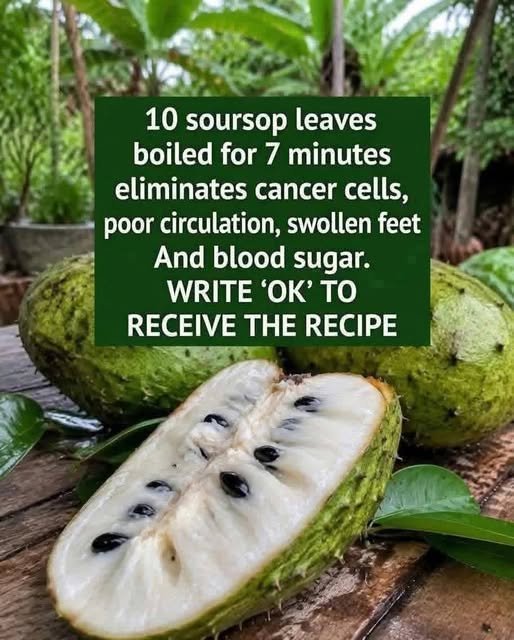
A simple preparation often described online involves simmering several soursop leaves in water for a few minutes and drinking the resulting herbal infusion as part of a wellness routine.
The recipe sounds harmless because the ingredients are natural and familiar.
But there is an important distinction between traditional use and proven medical benefit.
Soursop, also known as graviola or Annona muricata, has attracted scientific interest because it contains a variety of plant compounds. However, evidence from laboratory and animal research does not establish that drinking soursop-leaf tea prevents or treats cancer, diabetes, high blood pressure, infections, or other diseases in humans.
So if you’re curious about this traditional beverage, the most useful approach is to understand both sides: why people drink it, what researchers actually know, and why caution is warranted.
What Is Soursop?
Soursop is a tropical fruit known for its green, spiky exterior and soft, creamy flesh.
Depending on where you live, you may know it as:
- Soursop
- Graviola
- Guanábana
- Annona muricata
The fruit is commonly eaten fresh or used in beverages and desserts.
The leaves have also been used traditionally to prepare herbal infusions.
That traditional use is one reason soursop leaf tea has become popular in wellness circles.
But popularity isn’t the same thing as clinical evidence.
A plant can have interesting chemical compounds and still be unsuitable as a treatment for a specific disease.
Why Do People Drink Soursop Leaf Tea?
People use soursop leaves in traditional herbal practices for a variety of reasons.
Depending on the culture and source, you’ll find claims involving:
- General wellness
- Relaxation
- Digestion
- Blood sugar
- Blood pressure
- Inflammation
- Sleep
- Immune health
Some of these uses have a long history in traditional medicine.
The problem arises when traditional use gets turned into a modern medical promise.
For example, saying:
“People have traditionally used soursop leaves as an herbal drink.”
is very different from saying:
“Soursop leaf tea treats cancer.”
The first describes traditional practice.
The second is a medical claim requiring strong human evidence.
That evidence is currently lacking for many of the claims commonly circulated online.
What Happens When Soursop Leaves Are Boiled?
When plant leaves are placed in hot water, various water-soluble compounds can move from the plant material into the liquid.
Boiling or simmering can also change the concentration and composition of the resulting preparation.
That’s why an herbal tea isn’t necessarily equivalent to eating the plant itself.
The strength of the drink can vary considerably depending on:
- Number of leaves
- Leaf size
- Fresh versus dried leaves
- Amount of water
- Temperature
- Steeping or simmering time
- Whether the leaves are consumed or discarded
This is one reason a recipe such as “10 leaves boiled for seven minutes” shouldn’t automatically be interpreted as a medically established dose.
It is a preparation tradition, not a clinically validated prescription.
What About the Popular “10 Leaves for 7 Minutes” Recipe?
This preparation is widely repeated online, but the specific number of leaves and seven-minute cooking time should not be treated as an evidence-based therapeutic dose.
Leaf size and plant chemistry can vary substantially.
Ten small leaves aren’t necessarily equivalent to ten large leaves.
Fresh leaves aren’t necessarily equivalent to dried leaves.
And the amount of water changes the concentration.
If someone is using soursop leaves simply as a traditional beverage, they should understand that there isn’t a universally established medical standard saying that a specific number of leaves boiled for exactly seven minutes provides a particular health outcome.
That’s an important safety distinction.
Does Soursop Leaf Tea Fight Cancer?
This is probably the most important claim to address.
Soursop has generated scientific interest because laboratory studies have found compounds in the plant that can affect cancer cells under experimental conditions.
But laboratory findings aren’t the same as evidence that a tea cures cancer in people.
A substance can kill isolated cells in a laboratory while failing to work as a treatment in the human body.
Researchers must also consider:
- Effective concentration
- Absorption
- Metabolism
- Toxicity
- Interactions with other medicines
- Effects on healthy cells
- Appropriate dosing
There isn’t reliable clinical evidence establishing soursop leaf tea as a cancer treatment.
Anyone undergoing cancer treatment should not replace chemotherapy, radiation, surgery, immunotherapy, or prescribed medication with soursop tea.
If you’re considering herbal products while receiving cancer treatment, discuss them with your oncologist or pharmacist first.
What About Diabetes and Blood Sugar?
Soursop is also frequently promoted online as a natural way to lower blood sugar.
Some laboratory and animal research has investigated compounds from Annona muricata, but that doesn’t establish that soursop-leaf tea safely treats diabetes in humans.
This matters because lowering blood sugar can become dangerous if it happens unexpectedly in someone taking glucose-lowering medication.
If you have diabetes, don’t substitute herbal tea for prescribed treatment.
Instead, talk with your healthcare professional before regularly consuming concentrated herbal preparations.
Could It Affect Blood Pressure?
You’ll also find claims that soursop leaves can lower blood pressure.
Again, laboratory findings and traditional use don’t establish a safe, predictable effect in humans.
If a person already takes medication for hypertension, an unpredictable effect could potentially complicate blood-pressure management.
That is particularly important for older adults and anyone taking multiple medications.
A natural product isn’t automatically a mild product.
Why “Natural” Doesn’t Always Mean Safe
This is one of the most misunderstood ideas in herbal wellness.
Plants contain chemicals.
That’s part of what makes them useful in cooking, fragrance, traditional medicine, and modern pharmaceutical research.
But those same compounds can sometimes have biological effects that aren’t desirable.
Think about it this way:
Natural describes where something comes from. It doesn’t describe whether it’s safe at every dose.
The same principle applies to concentrated teas, extracts, capsules, tinctures, and supplements.
A food used traditionally in small culinary amounts may be very different from a concentrated medicinal preparation.
Potential Safety Concerns With Soursop
Soursop contains compounds called annonaceous acetogenins, which have attracted scientific attention.
Some researchers have raised concerns about potential neurological effects associated with exposure to these compounds, particularly with repeated or high intake.
Research into the safety of long-term consumption is incomplete, which is another reason not to treat soursop leaf tea as an everyday medicinal necessity.
There are also concerns about possible interactions with medications and effects on blood pressure or blood glucose.
If you’re taking prescription medication, especially for chronic conditions, ask a healthcare professional before regularly consuming soursop-leaf preparations.
Who Should Be Especially Cautious?
Soursop leaf preparations aren’t something to experiment with casually if you fall into a higher-risk group.
Talk with a healthcare professional before using them if you:
- Are pregnant or breastfeeding
- Take medication for diabetes
- Take blood-pressure medication
- Take medication affecting the nervous system
- Have liver or kidney disease
- Have Parkinson’s disease or another neurological condition
- Are receiving cancer treatment
- Take multiple prescription medications
Children should also not be given concentrated herbal preparations without guidance from a qualified healthcare professional.
Traditional Herbal Drinks Can Still Be Meaningful
Being cautious about medical claims doesn’t mean dismissing traditional practices.
Herbal drinks can have cultural, social, and personal significance.
Someone may prepare soursop leaf tea because it was something their grandmother made.
Another person may enjoy the ritual of collecting leaves, preparing the drink, and sitting quietly with a warm cup.
Those experiences are real.
The important thing is not to confuse cultural tradition with medical proof.
You can respect traditional knowledge while still asking modern scientific questions.
How to Think About Herbal Wellness More Realistically
Instead of asking:
“Does this plant cure a disease?”
try asking:
“What do we actually know about it?”
That leads to better questions:
- What has been studied in humans?
- What was the dose?
- How long was it used?
- Were there side effects?
- Could it interact with medications?
- Is the preparation standardized?
- Is there a safer alternative?
Those questions are far more useful than relying on a viral recipe.
The Difference Between a Tea and a Supplement
This distinction is easy to overlook.
A traditional herbal infusion may contain a relatively variable amount of plant compounds.
A supplement or extract may be much more concentrated.
Capsules, tinctures, powders, and extracts can therefore have very different effects from a cup of tea.
Don’t assume:
“If one cup is traditional, a concentrated extract must also be safe.”
That’s not how herbal preparations work.
The form, concentration, preparation, and dose all matter.
If You Still Want to Try It
If you’re a healthy adult and you’re interested in soursop leaves as a traditional beverage rather than a treatment, approach it conservatively.
Use properly identified, clean plant material.
Avoid leaves that may have been exposed to pesticides or other contaminants.
Don’t assume that increasing the number of leaves will increase a supposed health benefit.
And don’t use the drink to replace medical care.
Most importantly, if you’re taking medication or managing a chronic condition, check with a healthcare professional first.
How to Make a Safer Herbal Routine
You don’t need to rely on one powerful-sounding plant to support your overall wellness.
A more dependable routine includes habits with much stronger evidence behind them.
Stay physically active
Choose activities appropriate for your fitness level and health.
Eat a varied diet
Include vegetables, fruits, whole grains, protein sources, and healthy fats according to your individual needs.
Sleep consistently
Aim for a regular sleep schedule and address persistent sleep problems.
Stay hydrated
Water remains one of the simplest and most reliable beverages.
Keep up with medical care
Routine checkups and recommended screenings can detect problems earlier.
Use herbs as food or beverages—not automatic medicine
Enjoy them, but don’t give them powers they haven’t demonstrated.
Common Mistakes People Make With Soursop Leaf Tea
Mistake 1: Treating social-media claims as medical evidence
A recipe repeated thousands of times can still be unsupported by clinical research.
Better approach: Look for human studies and guidance from reputable health organizations.
Mistake 2: Increasing the dose
More leaves don’t automatically mean greater benefit.
Better approach: Don’t experiment with increasingly concentrated preparations.
Mistake 3: Stopping prescribed medication
This can be dangerous.
Better approach: Discuss any herbal product with your healthcare professional before changing treatment.
Mistake 4: Assuming side effects can’t happen
Herbal products can have biological effects and interactions.
Better approach: Pay attention to unexpected symptoms and seek medical advice when necessary.
Mistake 5: Using it for a serious illness
This is particularly risky when evidence-based treatment exists.
Better approach: Use traditional beverages only as complementary lifestyle choices unless your healthcare team advises otherwise.
Frequently Asked Questions
What is soursop leaf tea?
It’s an herbal infusion made from the leaves of the soursop plant, Annona muricata. The leaves are traditionally steeped or simmered in water.
Why do people drink soursop leaf tea?
Traditional practices use soursop leaves for various wellness purposes. However, many of the stronger health claims found online have not been adequately demonstrated in human clinical trials.
Does soursop leaf tea cure cancer?
No. There is insufficient clinical evidence to establish soursop leaf tea as a cancer treatment. It should never replace evidence-based cancer care.
Is boiling 10 soursop leaves for seven minutes a proven dose?
No. That specific preparation is commonly circulated online, but it isn’t an established therapeutic dose supported by clinical evidence.
Can soursop leaf tea lower blood sugar?
Research has explored soursop and blood-glucose effects, but there isn’t sufficient evidence to recommend the tea as a diabetes treatment. People taking diabetes medication should speak with their healthcare professional before using it regularly.
Can you drink soursop leaf tea every day?
Long-term safety isn’t well established, particularly for concentrated or repeated preparations. Regular use should be discussed with a healthcare professional if you have medical conditions or take medications.
Is soursop safe during pregnancy?
Safety during pregnancy hasn’t been established sufficiently for medicinal use. Pregnant people should consult their healthcare professional before using soursop-leaf preparations.
Is soursop the same as graviola?
Yes. Soursop, graviola, and guanábana are common names associated with Annona muricata.
Can children drink soursop leaf tea?
Children should not be given concentrated herbal preparations without advice from their pediatric healthcare professional.
Soursop leaf tea has a genuine place in traditional herbal practices, and there’s understandable curiosity about a plant that has been used for generations.
But curiosity should be accompanied by caution.
The popular recipe of 10 soursop leaves boiled for seven minutes should not be presented as a medically proven formula or guaranteed wellness treatment.
Soursop contains biologically active compounds, and researchers continue to study the plant. At the same time, important questions remain about effectiveness, dosing, long-term safety, and possible interactions.
So enjoy traditional herbal practices thoughtfully—but don’t let an attractive recipe replace medical advice.
A warm cup of herbal tea can be part of a wellness routine. It should never be mistaken for a cure.
When it comes to your health, the strongest approach is usually not one miracle ingredient.
It’s a combination of good nutrition, regular movement, adequate sleep, appropriate medical care, and informed decisions about the herbs and supplements you choose to use.