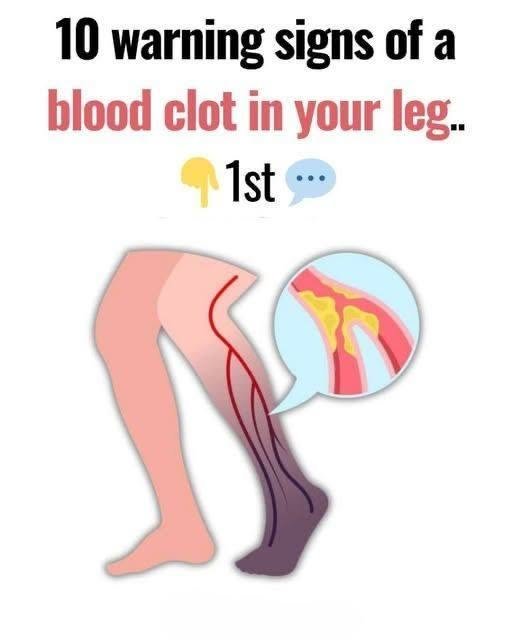
The Hidden Danger in Your Calf: 10 Warning Signs of a Leg Blood Clot You Should Never Ignore
When an unusual ache or swelling develops in your leg after a long flight, a grueling workday, or an injury, it is easy to write it off as a simple muscle cramp or a minor strain. Yet, ignoring the subtle signals your body sends can sometimes lead to a medical emergency.
Medically known as Deep Vein Thrombosis (DVT), a blood clot forms when a clump of blood solidifies from a liquid to a gel-like state inside a deep vein—most commonly in the lower leg, thigh, or pelvis. Recognizing the warning signs early ensures you can seek medical intervention before a localized clot breaks free and travels to the lungs as a life-threatening pulmonary embolism.
The Anatomy of a Blood Clot: Why Legs Are Most Vulnerable
To understand why DVT occurs, you have to look at how blood circulates through your lower extremities. Veins are responsible for pumping deoxygenated blood back up to your heart against gravity. This process relies heavily on the contraction of your calf muscles acting as a natural pump, assisted by one-way valves.
When you sit immobile for hours—whether on a cross-country flight, during prolonged bed rest, or at a desk—blood flow slows down significantly. This stasis, combined with factors like vessel wall damage or hypercoagulability (an increased tendency of the blood to clot), creates the ideal environment for a thrombus to form.
10 Critical Warning Signs of a Leg Blood Clot
DVT symptoms can sometimes mimic everyday issues like soreness or bruising, but specific patterns distinguish a dangerous clot from a normal muscle cramp.
-
Unilateral Swelling: Swelling usually occurs in only one leg, not both. If your right calf balloons up while your left remains normal, it is a major red flag.
-
Localized Pain or Cramping: A persistent, deep-seated ache or cramping sensation that starts in the calf and feels distinct from a standard workout cramp.
-
Skin Discoloration: The skin over the affected area may take on a reddish, bluish, or purplish tint compared to the surrounding tissue.
-
Warmth to the Touch: Because blood flow is restricted and inflammation is localized, the skin directly over the clot often feels noticeably warmer than the rest of the leg.
-
Tenderness Upon Pressure: Pressing gently on your calf muscle elicits sharp, disproportionate tenderness, unlike the dull ache of typical muscle fatigue.
-
Visible Surface Veins: If deep veins are blocked, superficial veins near the surface of the skin may dilate and become visibly prominent as they try to reroute blood flow.
-
Pain When Flexing the Foot: Experiencing a sharp pull or severe pain in the calf when you flex your toes upward toward your shin (known clinically as a positive Homans’ sign, though not always reliable on its own).
-
Heavy or Achy Fatigue: A persistent, heavy feeling in the affected leg that makes standing or walking for extended periods uniquely uncomfortable.
-
Soft Tissue Pitting: When you press a finger firmly into the swollen skin for five seconds, it leaves a noticeable indentation that takes time to bounce back.
-
Sudden Shortness of Breath (The Ultimate Pulmonary Warning): While technically a sign that a clot has traveled to the lungs, sudden breathlessness, rapid heart rate, or sharp chest pain must be treated as an immediate extension of a leg clot emergency.
A Step-by-Step Practical Framework for Risk Management
If you suspect you may be at risk or are noticing unusual symptoms, a clear, proactive approach is essential.
-
Assess Your Risk Factors: Factor in immobility (long flights, car rides), recent surgeries, hormone therapy, smoking, genetic clotting disorders, or active cancer treatments.
-
Check for Asymmetry: Compare both legs side by side in a mirror. True DVT-related swelling and discoloration almost always present unilaterally.
-
Avoid Massaging the Leg: If you suspect a clot, never massage or rub the affected area. Aggressive rubbing can dislodge the clot, sending it upward into your bloodstream.
-
Seek Immediate Professional Medical Imaging: Go to an urgent care center or emergency department immediately for an ultrasound (duplex scan) to visualize blood flow and confirm or rule out a clot.
Real-World Scenarios: Spotting the Signs Early
Consider Sarah, a 34-year-old graphic designer who took a 12-hour flight to Europe. Three days into her trip, her left calf felt unusually heavy, warm, and swollen, though she didn’t remember injuring it. Recognizing the signs of DVT from an online health article, she went to a local clinic immediately. An ultrasound confirmed a mild clot, and she was started on blood thinners before it could cause a pulmonary embolism.
Conversely, Mark ignored a sharp, localized calf ache for a week, assuming it was a running injury. When he suddenly felt dizzy and breathless while walking upstairs, a trip to the ER revealed that a portion of the neglected leg clot had broken off and traveled to his lungs.
Comparison of Leg Pain Sources
| Condition | Primary Onset | Key Differentiating Symptoms | Risk Level |
| Deep Vein Thrombosis (DVT) | Gradual (hours to days) | Unilateral swelling, skin warmth, discoloration, localized tenderness | High / Emergency |
| Muscle Strain / Tear | Immediate (during or right after activity) | Linked to specific movement, bruising from trauma, improves with rest | Low / Moderate |
| Exercise Cramp (“Charley Horse”) | Sudden, sharp burst | Resolves quickly with stretching and hydration | Low |
| Cellulitis (Skin Infection) | Rapid spreading | Fever, chills, surface skin inflammation, rapid redness | Moderate / Requires Antibiotics |
Common Mistakes When Evaluating Leg Pain
-
Assuming you are too young for a clot: Believing that DVT only affects elderly individuals, ignoring the fact that birth control pills, long travel, and genetic factors put young adults at risk too.
-
Massaging a painful cramp: Rubbing a swollen, warm calf vigorously, which can mechanically dislodge a thrombus.
-
Waiting to see if it goes away: Hoping that severe, asymmetric leg swelling will resolve overnight without professional medical testing.
Expert Insights: Vascular Medicine Perspectives
Vascular specialists and hematologists emphasize that early detection of DVT is one of modern medicine’s greatest success stories because treatment with modern anticoagulants is highly effective. Simple preventive measures—such as wearing compression stockings during long-haul flights, walking every hour on extended road trips, and staying well-hydrated—drastically reduce your baseline risk of experiencing a clot in the first place.
Frequently Asked Questions
Can a blood clot go away on its own?
While the body has natural mechanisms to dissolve small clots, relying on this is dangerous. An undiagnosed or untreated DVT can grow or break free, making medical evaluation mandatory.
What is the best way to prevent blood clots during air travel?
Stand up and walk the aisle every 60 to 90 minutes, flex your ankles while sitting, stay hydrated with water, and consider wearing graduated compression socks.
How do doctors diagnose a DVT?
Doctors typically use a blood test called a D-dimer to check for clotting activity, followed by a definitive venous duplex ultrasound of the leg.
Are blood clots painful?
They can be, but not always. Some people experience intense cramping and tenderness, while others feel only a dull ache or heavy fatigue in the limb.
Do birth control pills increase blood clot risk?
Yes. Estrogen-containing hormonal contraceptives and hormone replacement therapies increase the risk of blood clots, particularly for women who smoke or have a family history of clotting disorders.
What should I do if I suspect a blood clot right now?
Do not wait. Seek immediate medical attention at an emergency room or urgent care facility to receive a diagnostic ultrasound.
Action Checklist for DVT Awareness and Prevention
-
Do: Walk and stretch regularly during long periods of seated travel or desk work.
-
Do: Seek immediate medical imaging if you notice unilateral leg swelling, warmth, or tenderness.
-
Avoid: Massaging or aggressively rubbing a swollen, painful calf muscle.
-
Avoid: Ignoring persistent leg discomfort that doesn’t improve with rest.
Knowing the warning signs of a leg blood clot equips you to take swift, decisive action when it matters most, protecting your health and well-being.
Unilateral leg swelling, skin warmth, and localized tenderness are the hallmark warning signs of a deep vein thrombosis—demanding immediate medical evaluation rather than a wait-and-see approach.