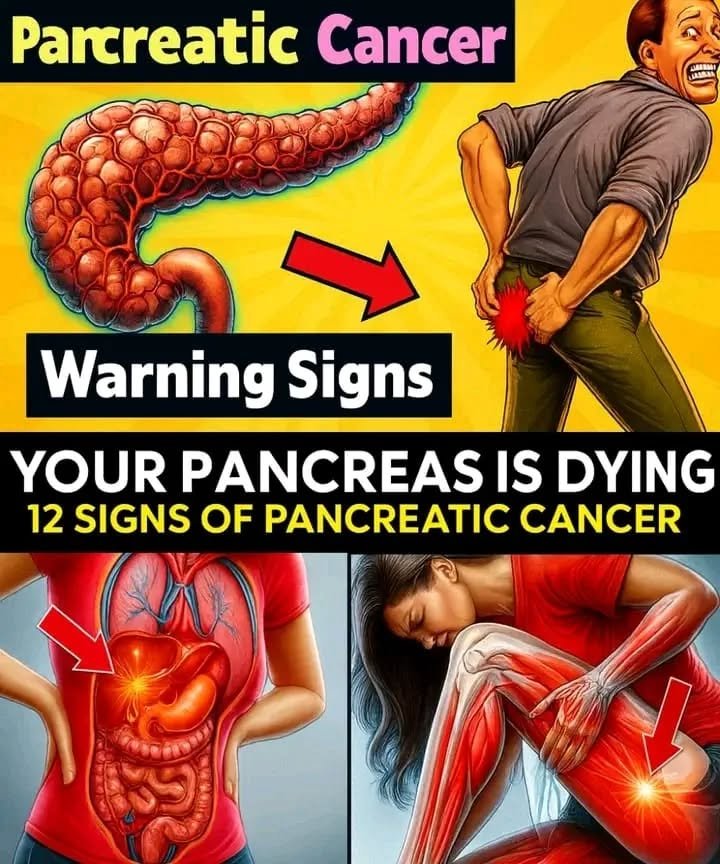
The Silent Threat: 12 Subtle Signs of Pancreatic Cancer You Should Never Ignore
Demystify the world’s most elusive malignancy, learn to catch the whispers of early pancreatic distress before they become deafening, and know the modern diagnostic protocols that save lives.
Discover the 12 early warning signs of pancreatic cancer you should never ignore. Learn about risk factors, subtle symptoms, and when to see a doctor.
There is a terrifying efficiency to how pancreatic cancer operates. Tucked deep behind your stomach and flanked by your liver and small intestine, the pancreas goes about its daily business—producing vital digestive enzymes and blood-sugar-regulating insulin—largely out of sight and out of mind. When malignant cells begin to multiply within this crucial organ, they do so with a stealthy discretion that has earned pancreatic cancer one of the most sobering survival statistics in modern oncology.
In its earliest stages, pancreatic cancer rarely causes overt, dramatic pain. Instead, it speaks in coded whispers: a dull ache in the upper abdomen that you blame on a poor lunch, an unexplainable shift in your bowel habits, or a sudden, baffling drop on the bathroom scale when your diet hasn’t changed by a single calorie. Because these symptoms mimic everything from common irritable bowel syndrome to simple middle-age stress, they are criminally easy to brush off.
Understanding these subtle shifts is the single most effective tool for changing the trajectory of this disease. Let’s pull back the layer on the 12 critical signs of pancreatic cancer that demand immediate medical attention, the modern risk factors driving diagnoses, and what you can do to advocate for your own vascular and metabolic health.
Why Pancreatic Cancer is So Difficult to Catch Early
To understand why symptoms often appear late, you have to look at anatomy. The pancreas is divided into three sections: the head, the body, and the tail. Tumors that form in the tail or body can grow to significant sizes before pressing against surrounding organs or nerves to trigger pain. Conversely, tumors in the head of the pancreas often block the common bile duct early on, causing jaundice—a visible yellowing of the skin and eyes that acts as an earlier alarm bell.
Compounding this anatomical invisibility is the lack of a standard, routine screening test for the general population, much like a routine mammogram or colonoscopy. Recognizing subtle physiological anomalies is your first and best line of defense.
The 12 Subtle Signs of Pancreatic Cancer You Must Never Ignore
While no single symptom definitively proves you have pancreatic cancer, experiencing a cluster of these persistent, unexplained changes warrants a prompt, thorough evaluation by a gastroenterologist or oncologist.
-
1. Painless Jaundice (Yellowing of Skin and Eyes): When a tumor blocks the bile duct, bilirubin builds up in the bloodstream. If your skin or the whites of your eyes take on a yellowish tint—especially if accompanied by dark, cola-colored urine and pale, clay-colored stools—it is a major red flag that requires immediate blood work and imaging.
-
2. A Persistent, Nagging Dull Ache in the Upper Abdomen or Back: This is not a sharp, stabbing pain. It often starts as a vague discomfort in the upper abdomen that radiates straight through to the mid-back. Patients frequently describe it as a sensation of a band tightening around their torso, and it often worsens when lying flat or eating, temporarily easing only when leaning forward.
-
3. Unexplained, Rapid Weight Loss: Dropping ten pounds or more without altering your diet, cutting calories, or ramping up your exercise routine is never normal. In pancreatic cancer, metabolic alterations and a loss of pancreatic enzymes (exocrine pancreatic insufficiency) impair nutrient absorption, causing rapid, involuntary wasting.
-
4. Sudden-Onset Type 2 Diabetes (Without Risk Factors): If you are middle-aged or older, maintain a healthy weight, have no family history of diabetes, and suddenly find your blood sugar spiking out of control, investigate further. A growing pancreatic tumor can destroy the insulin-producing beta cells, acting as an early harbinger of the malignancy.
-
5. New-Onset or Worsening Depression and Anxiety: Clinical studies have noted a bizarre, well-documented link between early pancreatic cancer and psychological shifts. Patients frequently report sudden feelings of profound anxiety, mood changes, or deep, uncharacteristic depression months before any physical pain manifests.
-
6. Digestive Distress and Steatorrhea (Fatty Stools): When the pancreas stops producing enough digestive enzymes, your body cannot break down fats. This results in stools that are unusually pale, bulky, foul-smelling, and floating, often leaving an oily film in the toilet bowl.
-
7. Unexplained Nausea and Vomiting: A tumor pressing against the far end of the stomach or the duodenum (the first part of the small intestine) can physically obstruct the passage of food, causing persistent nausea, early fullness after small meals, and occasional vomiting.
-
8. Extreme Fatigue and Generalized Weakness: Chronic, bone-deep exhaustion that does not improve with a full night of sleep is a common systemic response to cancer. It stems from both metabolic shifts caused by the tumor and the body’s constant, exhausting immune response.
-
9. Blood Clots (Deep Vein Thrombosis or Migratory Superficial Thrombophlebitis): Pancreatic cancer triggers a hypercoagulable state—meaning the blood is abnormally prone to clotting. Developing an unexplained DVT in your leg or experiencing recurring blood clots in different surface veins across your body can sometimes be the first clinical clue of an underlying malignancy.
-
10. Loss of Appetite (Anorexia): Food suddenly losing its appeal, feeling completely full after just a few bites of a meal, or developing a sudden aversion to foods you once loved (such as coffee, meat, or fatty foods) can point toward upper gastrointestinal distress.
-
11. Itching Skin (Pruritus): Driven by the buildup of bile salts circulating in the skin due to blocked bile ducts, generalized, intense itching—often without a visible rash—can drive patients crazy long before they notice severe jaundice.
-
12. Swollen Gallbladder or Liver Enlargement: During a physical exam, a doctor may feel an enlarged, distended gallbladder (known as Courvoisier’s sign) or notice an enlarged liver if the tumor has begun altering hepatic function or blocking biliary flow.
Step-by-Step Actionable Response Protocol
If you or a loved one are experiencing a persistent cluster of these symptoms, panic is unproductive, but swift, methodical advocacy is critical.
-
Step 1: Document Your Symptoms: Keep a detailed, two-week symptom journal tracking pain intensity, weight changes, stool appearance, and triggers. Data speaks louder than vague descriptions during a brief doctor’s appointment.
-
Step 2: Push Beyond Basic Blood Work: Standard routine blood tests can miss early pancreatic stress. Request comprehensive metabolic panels checking liver enzymes, bilirubin, and CA 19-9 tumor markers (though CA 19-9 is used primarily for monitoring rather than standalone screening).
-
Step 3: Insist on Advanced Imaging: If symptoms persist without explanation, ask your physician for a contrasted CT scan of the abdomen (specifically a pancreatic protocol CT) or an Endoscopic Ultrasound (EUS), which provides high-resolution imaging of the pancreas that standard ultrasounds often miss.
-
Step 4: Seek a Specialized Center of Excellence: If a mass or suspicious lesion is discovered, do not settle for general oncology care. Seek evaluation at a high-volume National Cancer Institute (NCI)-designated cancer center where multidisciplinary specialists handle complex pancreatic cases daily.
Comparing Diagnostic Tools for Pancreatic Health
| Diagnostic Tool | Primary Function | Limitations |
| Abdominal Ultrasound | Non-invasive initial scan to check liver and gallbladder | Often blocked by intestinal gas; misses small pancreatic tumors |
| Pancreatic Protocol CT Scan | Detailed, multi-phase cross-sectional imaging of blood vessels and tissue | Involves radiation and contrast dye; requires technical expertise to read |
| Endoscopic Ultrasound (EUS) | High-frequency ultrasound via a thin scope down the throat directly touching the stomach/duodenum | Invasive procedure requiring sedation |
| MRI / MRCP | Detailed visualization of the pancreatic and bile ducts without radiation | Expensive, time-consuming, and difficult for patients with claustrophobia |
Pros & Cons of Biomarker Screening and Genetic Testing
-
Genetic Testing (BRCA, PALB2, Lynch Syndrome mutations):
-
Pros: Identifies inherited high-risk gene mutations, allowing high-risk individuals (with strong family histories) to enter intensive annual surveillance programs.
-
Cons: Can cause psychological anxiety; insurance coverage for proactive testing can sometimes be complex or restricted.
-
-
Blood Tumor Markers (CA 19-9):
-
Pros: Useful for tracking treatment efficacy and recurrence after a diagnosis is confirmed.
-
Cons: Unreliable for early screening because non-cancerous conditions like gallstones, pancreatitis, or jaundice can also elevate CA 19-9 levels.
-
Common Mistakes and How to Fix Them
-
Mistake 1: Accepting “Acid Reflux” as a Blanket Diagnosis for Months.
-
The Fix: If your antacids or PPI medications are not resolving upper abdominal pain or digestive shifts after a few weeks, stop treating symptoms blindly and demand advanced imaging of your pancreas and liver.
-
-
Mistake 2: Ignoring Weight Loss Because It Feels Welcomed.
-
The Fix: Dropping weight without effort feels like a fitness win, but unintentional wasting—especially when paired with fatigue or back ache—is a clinical warning sign that demands medical investigation.
-
-
Mistake 3: Smoking and Heavy Alcohol Use Dismissal.
-
The Fix: Smoking is the single largest preventable risk factor for pancreatic cancer, doubling your risk. If you smoke, prioritize immediate cessation support and aggressive annual physicals.
-
Expert Insights: The Environmental and Genetic Intersection
While smoking, chronic pancreatitis, and obesity represent well-known risk factors, modern oncology is focusing heavily on the intersection of genetics and environmental toxins. Approximately 10% of pancreatic cancers are linked to inherited genetic syndromes. Furthermore, chronic low-grade inflammation driven by diets high in ultra-processed foods and refined sugars creates a systemic environment that accelerates cellular mutations. Protecting your metabolic health is, fundamentally, protecting your pancreas.
Future Outlook: Precision Oncology and Early Detection Breakthroughs
The horizon of pancreatic cancer care is undergoing a technological revolution. By the late 2020s, advanced liquid biopsy technologies—blood tests capable of detecting circulating tumor DNA (ctDNA) and early epigenetic methylation markers—are paving the way for non-invasive early screening. Coupled with artificial intelligence enhancements analyzing routine CT scans for incidental early pancreatic abnormalities, future medicine aims to catch this disease before it ever breaks past the organ’s borders.
Mini Case Scenario: The Persistent Back Pain
Arthur, a 58-year-old accountant in Denver, noticed a dull, nagging ache in his mid-back that grew worse whenever he sat at his desk for long hours. He assumed it was a posture issue from office work and bought an ergonomic chair, popped ibuprofen daily, and stretched religiously.
Two months later, he noticed his morning urine looked dark like tea, and his wife pointed out that the whites of his eyes looked faintly yellow. Recognizing that this was no longer a simple backache, Arthur rushed to urgent care. A pancreatic protocol CT scan revealed a small tumor in the head of the pancreas blocking his bile duct. Because he acted immediately upon seeing the jaundice rather than ignoring it, his medical team caught the tumor while it was still localized, opening the door to life-saving surgical intervention.
Frequently Asked Questions
-
Can routine blood work detect pancreatic cancer early?
Routine complete blood counts (CBC) and basic metabolic panels usually cannot detect early pancreatic cancer. They only flag abnormalities if the cancer has severely impacted liver enzymes, kidney function, or caused severe anemia.
-
Is pancreatic cancer always fatal?
No. While historically difficult to treat, survival rates are improving significantly for patients diagnosed at an early, localized stage who are eligible for surgical resection followed by modern targeted chemotherapy regimens.
-
Does chronic pancreatitis always turn into pancreatic cancer?
Not always, but long-standing chronic inflammation of the pancreas significantly increases the lifetime risk of developing malignant cellular changes.
-
What is the most common age for a pancreatic cancer diagnosis?
The vast majority of pancreatic cancer diagnoses occur in individuals over the age of 55, with the median age of diagnosis hovering around 70. It is relatively rare in younger adults under 40 unless tied to strong genetic syndromes.
-
Does coffee consumption increase pancreatic cancer risk?
Historical studies debated this, but contemporary medical consensus shows that moderate coffee consumption does not increase pancreatic cancer risk and may actually offer protective metabolic benefits.
-
Are there lifestyle changes that lower pancreatic cancer risk?
Yes. Quitting smoking, maintaining a healthy body weight, limiting excessive alcohol consumption, and eating an antioxidant-rich, whole-food diet significantly lower overall vascular and oncological risks.
-
Why does pancreatic cancer cause back pain?
The pancreas sits directly in front of a dense network of major nerves (the celiac plexus) that supply the spine and upper torso. As a tumor grows toward the back of the organ, it presses directly against these nerves, radiating pain straight to the back.
-
What should I do if my doctor dismisses my persistent digestive symptoms?
Be your own advocate. If your symptoms persist and remain unexplained, request a direct referral to a gastroenterologist or seek a second opinion from a specialist who takes your symptom cluster seriously.
Action Checklist
-
What to Do:
-
Keep a detailed symptom and weight-tracking journal if you experience persistent upper abdominal or back discomfort.
-
Request advanced imaging (such as a contrasted pancreatic protocol CT or endoscopic ultrasound) if unexplained symptoms linger.
-
Schedule an immediate evaluation if you notice painless jaundice, dark urine, or clay-colored stools.
-
Prioritize smoking cessation and metabolic health to minimize cellular stress.
-
-
What to Avoid:
-
Never dismiss sudden-onset, unexplained weight loss as a positive health victory.
-
Avoid treating chronic, unresolving upper abdominal pain indefinitely with over-the-counter antacids.
-
Do not ignore psychological shifts like sudden, uncharacteristic depression or severe anxiety.
-
Never delay seeking a specialist second opinion if basic tests leave your symptoms unexplained.
-
Pancreatic cancer hides in the shadows of everyday ailments, but it leaves clues for those paying close attention. By tuning into your body’s subtle whispers—from unexplained weight loss and backaches to sudden jaundice—you can catch this stealthy threat early and fight back with the power of modern medicine.