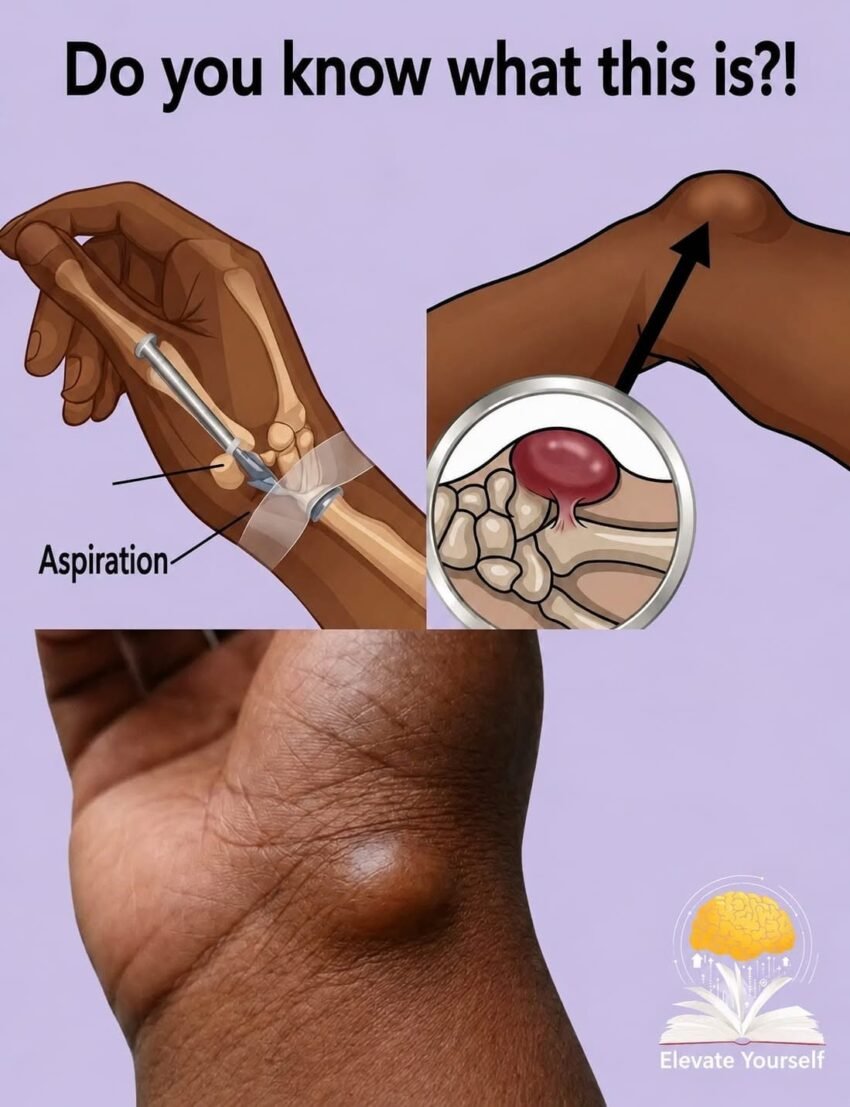
5 Things You Should Know Before Touching a Lump on Your Wrist
Noticed a sudden bump on your wrist? Discover five crucial things you must know before touching, pressing, or trying to treat a mysterious wrist lump.
Discovering a mysterious bump on your wrist can trigger an immediate wave of anxiety. Your fingers instinctively trace its edges, pressing down to see if it moves, wondering if it is a harmless quirk of anatomy or something that requires a doctor’s visit.
Wrist lumps are remarkably common, and the vast majority are completely benign. However, how you react to finding one matters. Poking, squeezing, or attempting aggressive home treatments can turn a minor, harmless issue into a painful complication.
Before you touch, squeeze, or panic over that lump on your wrist, here are five essential things you need to know.
1. Most Wrist Lumps Are Ganglion Cysts (And They Are Non-Cancerous)
When people notice a smooth, firm bump pop up overnight on the back of the wrist or the palm side, it is most frequently a ganglion cyst.
-
The Reality: Ganglion cysts are fluid-filled sacs that develop along tendons or joints, most commonly on the back of the wrist. They are entirely benign and non-cancerous. They can fluctuate in size, sometimes disappearing entirely and returning later without warning. Unless they press on a nerve and cause chronic pain or numbness, many doctors recommend simply leaving them alone.
2. Never Try the Old-School “Bible Bump” Method
Decades ago, a common folk remedy for wrist cysts involved striking the lump with a heavy book—often a family Bible—to rupture the sac beneath the skin.
-
The Reality: Do not attempt this. While smashing a ganglion cyst can sometimes cause it to burst, it also causes severe trauma to the surrounding soft tissue, blood vessels, and nerves. Furthermore, the cyst almost always returns because the root tissue remains intact. Modern medicine offers much safer, pain-free alternatives if removal is necessary.
3. Location and Texture Reveal Clues About What It Might Be
Not all wrist lumps are ganglion cysts. The specific location and physical feel of the bump provide vital clues about its origin.
-
The Clues: A firm, immobile lump on the underside of the wrist near the pulse point might be related to a blood vessel or a tendon sheath anomaly. A soft, fatty lump that moves slightly under the skin could be a benign lipoma. If the lump is hard, bony, and fixed directly to the skeleton, it may be a bone spur resulting from minor joint wear-and-tear or arthritis.
4. Poking and Squeezing Can Cause Internal Irritation
It is tempting to test a lump by continuously pressing, massaging, or trying to flatten it with your fingers.
-
The Reality: Constant physical manipulation can irritate the underlying joint capsule, inflame surrounding tendons, and cause the cyst or inflammation to swell further. If the lump is pressing against a major nerve pathway, aggressive prodding can trigger sharp pain, tingling, or temporary weakness in your hand and fingers.
5. Knowing When to See a Specialist Is Crucial
While most wrist bumps are harmless, certain warning signs mean it is time to schedule an evaluation with an orthopedic specialist or hand surgeon.
-
The Red Flags: Seek professional medical advice if the lump grows rapidly, changes shape, feels hard and completely fixed in place, causes numbness or weakness in your hand, or is accompanied by unexplained skin discoloration or persistent pain. A simple ultrasound or MRI can provide a definitive diagnosis and peace of mind.
Comparison Matrix: Common Types of Wrist Lumps
| Lump Type | Typical Texture | Common Location | Pain Level | Medical Urgency |
| Ganglion Cyst | Smooth, firm, or spongy | Back of wrist or palm side | Often painless; aching if near a nerve | Low (observe unless symptomatic) |
| Lipoma | Soft, movable, rubbery | Anywhere on the wrist/hand | Usually painless | Low (benign fatty tissue) |
| Giant Cell Tumor | Firm, slow-growing | Tendon sheaths of fingers/wrist | Mild discomfort | Moderate (requires evaluation) |
| Bone Spur (Osteophyte) | Hard, rigid, immobile | Directly over joint lines | Achy with joint movement | Low-Moderate (arthritis-related) |
Pros and Cons of Medical Intervention for Wrist Lumps
-
Pros:
-
Accurate Diagnosis: A physician can confirm whether the lump is a simple cyst, a lipoma, or something requiring treatment.
-
Pain Relief: Draining (aspiration) or surgical removal can eliminate nerve compression and chronic wrist discomfort.
-
Peace of Mind: Eliminates the psychological stress of the unknown.
-
-
Cons:
-
Recurrence Risk: Ganglion cysts have a high rate of returning even after being drained or surgically excised.
-
Surgical Recovery: Any minor surgical procedure on the wrist requires a brief recovery period with restricted lifting.
-
Unnecessary Treatment: Invasive intervention is often completely unwarranted for painless, harmless bumps.
-
Common Mistakes and How to Avoid Them
-
Mistake 1: Diagnosing Yourself via Internet Search
-
The Fix: Use online resources for general education, but never self-diagnose. Many different growths look and feel identical to the untrained eye.
-
-
Mistake 2: Attempting Self-Aspiration or Piercing
-
The Fix: Never attempt to puncture or drain a wrist lump at home. This introduces a high risk of localized bacterial infection and soft tissue damage.
-
-
Mistake 3: Ignoring Numbness or Tingling
-
The Fix: If your fingers fall asleep or you experience shooting pain down your hand, do not wait. A small cyst can compress the median or ulnar nerve, requiring prompt medical assessment.
-
Frequently Asked Questions
-
Can a wrist lump go away completely on its own?
Yes. Ganglion cysts frequently shrink or disappear entirely without any medical treatment over weeks or months.
-
Does a painful wrist lump always mean cancer?
No. Pain is usually caused by the lump pressing against a nearby nerve or tendon, not by malignancy. Benign wrist tumors are far more common than cancerous sarcomas.
-
How do doctors diagnose a wrist lump?
A physician will perform a physical exam and may use a transillumination test (shining a light through a ganglion cyst to show it is fluid-filled). They may also order an ultrasound or MRI for confirmation.
-
What is needle aspiration?
A procedure where a doctor uses a sterile needle to draw the fluid out of a ganglion cyst. It is quick and painless, though cysts can refill over time.
-
Is surgery the only permanent cure for a ganglion cyst?
Surgical excision (removing the cyst and its root stalk) has the lowest rate of recurrence, but it is still not a 100% guarantee.
-
Can wrist exercises cause a ganglion cyst to form?
Repeated microtrauma or strain on the wrist joint can contribute to the formation of ganglion cysts, though many appear spontaneously for no apparent reason.
-
Should I wear a wrist brace if I have a lump?
Wearing a lightweight wrist brace can help reduce irritation and pain if the lump flares up during physical activity, but it will not make the lump disappear.
-
When is a wrist lump considered an emergency?
If a lump appears suddenly after severe trauma, grows rapidly in days, or causes sudden loss of hand function, seek immediate medical attention.
-
What to Do:
-
Monitor the lump for any changes in size, shape, or pain levels over a two-week period.
-
Consult a primary care physician or hand specialist for an accurate physical evaluation.
-
Rest your wrist if the bump becomes sore after heavy lifting or computer work.
-
-
What to Avoid:
-
Do not squeeze, puncture, or attempt to smash the lump yourself.
-
Avoid heavy, repetitive wrist strain if the area feels tender or inflamed.
-
Do not ignore red flags like persistent numbness, weakness, or rapid growth.
-
Finding a lump on your wrist is startling, but armed with the right knowledge, you can approach it calmly and safely. Leave the diagnostics to a professional, protect your joints from unnecessary trauma, and get the clarity you need for peace of mind.