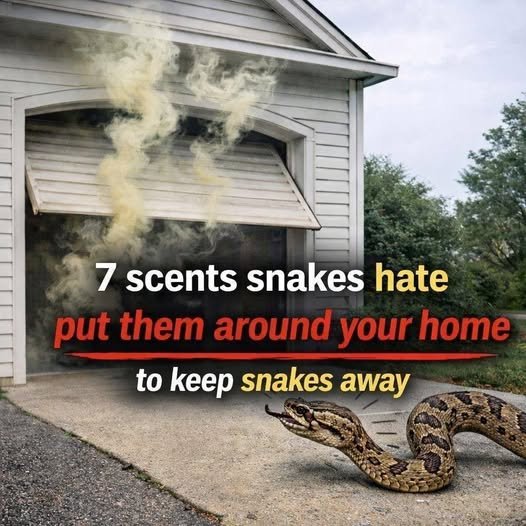
7 Natural Scents That May Help Keep Snakes Away from Your Home (Safe, Practical & Surprisingly Effective)
Discover 7 natural scents that may help deter snakes from your home, plus expert tips, safety insights, and proven prevention strategies.
Finding a snake near your home isn’t just unsettling—it changes how safe your space feels.
Whether you live in a suburban neighborhood or a rural area, the fear is the same: What if it comes back? What if there are more?
Most people immediately think of chemicals or pest control services. But here’s something many homeowners overlook:
👉 Certain natural scents may help discourage snakes from settling around your property.
Not magic. Not guaranteed. But when combined with smart prevention strategies, they can make your home far less inviting.
In this guide, you’ll learn 7 natural scents commonly believed to deter snakes—plus how to use them correctly, what actually works, and where most people go wrong.
🧠 First, Let’s Clear Something Up
Snakes don’t “smell” the way humans do.
They use a specialized organ called the Jacobson’s organ, picking up chemical cues from the air.
That means:
- Strong or irritating scents can disrupt their sensory perception
- Certain compounds may make environments less comfortable
- But scents alone won’t guarantee protection
👉 Bottom line: Think of scents as one layer of defense—not the whole solution.
🌿 1. Clove Oil & Cinnamon Oil: The Most Common Natural Repellent Combo
Why It’s Believed to Work
Clove and cinnamon oils contain strong compounds that can irritate snakes’ sensory systems.
The U.S. Department of Agriculture has even explored similar compounds for repellent purposes.
How to Use It
- Mix a few drops with water in a spray bottle
- Apply around entry points, foundations, and known snake paths
- Reapply after rain
Real-Life Scenario
Homeowners in warmer U.S. states (like Texas or Florida) often use this mix around patios and garages where snakes may hide.
⚠️ Important
- Avoid spraying directly on plants in high concentrations
- Keep away from pets in undiluted form
🌿 2. Garlic & Onion: Strong Sulfur Compounds That Snakes Dislike
Why It Works
Garlic and onions release sulfur compounds when crushed—these can be irritating to many animals, including snakes.
Practical Use
- Blend garlic cloves with water and spray around perimeter areas
- Scatter crushed garlic near entry points
Bonus Tip
Mix with a bit of natural oil (like neem oil) to help the scent linger longer.
🌿 3. Ammonia (Use with Caution)
Why It’s Effective
Ammonia mimics the smell of predator urine in some contexts, which may discourage snakes.
How People Use It
- Soak rags in ammonia
- Place them in sealed containers with holes
- Position near crawl spaces or sheds
⚠️ Safety Note
- Never use indoors in enclosed spaces
- Keep away from children and pets
- Avoid mixing with other chemicals
🌿 4. Vinegar: A Simple Barrier for Entry Points
Why It Helps
Vinegar’s strong acidity and smell can act as a deterrent in certain areas.
Best Use Cases
- Around pools (snakes are often drawn to water)
- Along fence lines
- Near drainage areas
Limitation
It evaporates quickly—so frequent reapplication is necessary.
🌿 5. Lemongrass: A Fresh Scent That Doubles as Landscaping Defense
Why It’s Interesting
Lemongrass contains citronella, which is known for repelling insects—and may also make environments less appealing to snakes.
Strategic Advantage
Instead of spraying, you can plant it.
Real-World Application
Many U.S. homeowners use lemongrass in landscaping:
- Around patios
- Near walkways
- Along property edges
It adds beauty and potential protection.
🌿 6. Sulfur Powder: A Traditional (But Smelly) Option
Why It’s Used
Sulfur emits a strong odor that can irritate snakes and other pests.
How to Apply
- Sprinkle around yard boundaries
- Focus on gaps, holes, and snake-prone areas
⚠️ Downsides
- Strong, unpleasant smell
- Can irritate humans and pets
- Washes away in rain
🌿 7. Mint (Peppermint Oil): A Fresh but Potent Deterrent
Why It May Work
Peppermint oil has a strong, sharp scent that can overwhelm sensitive receptors.
How to Use
- Mix peppermint oil with water
- Spray around doorways, garages, and basements
Bonus
Also helps deter insects—reducing snake food sources.
📊 Comparison Table: Natural Snake Deterrents
| Scent | Effectiveness | Best Use Area | Maintenance Level |
|---|---|---|---|
| Clove & Cinnamon Oil | High (temporary) | Entry points | Medium |
| Garlic & Onion | Moderate | Garden/perimeter | Medium |
| Ammonia | High (localized) | Sheds/crawl spaces | Low |
| Vinegar | Moderate | Water areas | High |
| Lemongrass | Preventive | Landscaping | Low |
| Sulfur | Strong | Yard boundaries | Medium |
| Peppermint | Moderate | Indoors/outdoors | Medium |
🏡 Why This Matters (Especially in the U.S.)
Snake encounters in the U.S. aren’t rare—especially in:
- Southern states
- Rural or wooded areas
- Suburban neighborhoods near natural habitats
Ignoring prevention can lead to:
- Increased risk of encounters
- Potential danger to pets
- Stress and anxiety around your home
👉 Prevention is always easier than removal.
🛠️ Step-by-Step Snake Prevention Strategy (That Actually Works)
Natural scents help—but here’s what really makes a difference:
Step 1: Eliminate Shelter
- Remove wood piles
- Trim overgrown bushes
- Clear debris
Step 2: Cut Off Food Sources
- Control rodents
- Secure trash bins
- Avoid leaving pet food outside
Step 3: Seal Entry Points
- Close gaps under doors
- Repair cracks in foundations
- Install mesh screens
Step 4: Use Scents Strategically
- Apply repellents around high-risk areas
- Rotate scents to maintain effectiveness
⚖️ Pros & Cons of Natural Snake Repellents
Pros
- Safer than chemical pesticides
- Easy to apply
- Affordable and accessible
- Environmentally friendly
Cons
- Not 100% reliable
- Require frequent reapplication
- Less effective without proper home maintenance
🚫 Common Mistakes (And How to Fix Them)
Mistake 1: Relying only on scents
→ Fix: Combine with habitat control
Mistake 2: Applying once and forgetting
→ Fix: Reapply regularly
Mistake 3: Ignoring small entry points
→ Fix: Inspect your home thoroughly
Mistake 4: Using unsafe concentrations
→ Fix: Always dilute properly
🔍 Expert Insight Most Homeowners Miss
Snakes aren’t randomly entering your property.
They’re coming for one of three reasons:
- Food
- Shelter
- Temperature regulation
Remove those—and you reduce the problem dramatically.
Scents alone? Helpful—but not enough.
📈 2026 Trends in Home Pest Prevention
- Increased use of eco-friendly repellents
- Smart home monitoring for wildlife
- Landscaping designed for pest control
- Integrated pest management (IPM) approaches
🔮 Future Outlook
As homeowners move toward safer, chemical-free solutions, natural deterrents will continue gaining popularity.
But the future isn’t just about repellents—it’s about smarter home design and prevention systems.
❓ FAQs
1. Do natural scents really keep snakes away?
They may help deter snakes, but they are not guaranteed solutions.
2. What smell do snakes hate the most?
Strong scents like clove, cinnamon, and sulfur are commonly cited.
3. Is peppermint oil effective?
It can help, especially when combined with other strategies.
4. Can I use these inside my home?
Some (like peppermint) are safe indoors—but use caution with strong substances like ammonia.
5. How often should I reapply?
Every few days or after rain.
6. Are these safe for pets?
Some oils can be harmful if undiluted—always use caution.
7. What attracts snakes to my home?
Food sources, shelter, and moisture.
8. Do ultrasonic repellents work?
Evidence is limited and inconsistent.
9. Should I call a professional?
If you see frequent snake activity—yes.
10. What’s the best overall strategy?
Combine prevention, cleanliness, and deterrents.
✅ Action Checklist
Do This:
- Keep your yard clean and trimmed
- Use natural scents around entry points
- Eliminate food sources
- Seal cracks and gaps
Avoid This:
- Relying only on repellents
- Ignoring small hiding spots
- Using unsafe chemical mixtures
- Skipping regular maintenance
🏁 Conclusion
Snakes don’t show up by accident.
They go where conditions are right.
The good news? You can change those conditions.
Natural scents offer a simple, accessible way to make your home less inviting—but the real power comes from combining them with smart prevention.
Because peace of mind doesn’t come from one solution…
It comes from a system that works.
Natural scents can help deter snakes—but lasting protection comes from eliminating what attracts them in the first place.