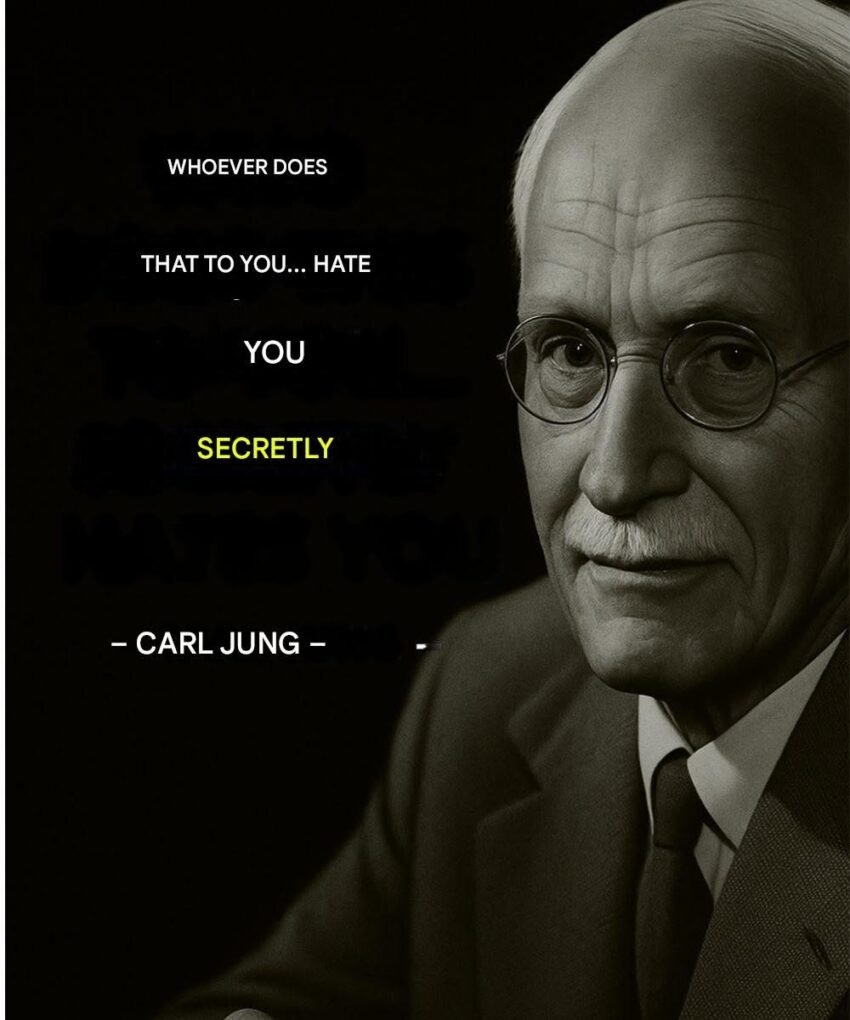
8 Signs Someone May Secretly Dislike You: What Carl Jung’s Psychology Can Teach Us About Hidden Emotions
Discover 8 psychological signs that may reveal hidden resentment or dislike, inspired by Carl Jung’s ideas about the shadow, projection, and human behavior.
Have you ever had the feeling that someone’s words sound friendly, but something about their behaviour feels different?
They smile, but the warmth does not seem genuine.
They congratulate you, but their tone feels strangely cold.
They say everything is fine, yet you sense tension beneath the surface.
Human beings are incredibly skilled at hiding emotions. Social rules often encourage people to remain polite even when they feel frustration, jealousy, disappointment, or resentment.
Swiss psychiatrist Carl Jung spent much of his work exploring the hidden parts of the human personality, including the concept of the “shadow”—the unconscious aspects of ourselves that we may not openly acknowledge.
However, it is important to understand one thing: Jung’s ideas are psychological theories, not a method for accurately reading someone’s mind. A single behaviour does not prove that someone hates you. People may act differently because of stress, insecurity, personality differences, or personal struggles.
The most reliable approach is to look for repeated patterns over time.
Here are eight behaviours that may suggest someone is experiencing negative feelings toward you.
1. Their Praise Feels Forced or Insincere
Compliments usually create connection.
But sometimes, a person may offer praise that feels emotionally disconnected.
Examples:
“You actually did pretty well.”
“I’m surprised you managed that.”
“That’s good… for you.”
The words sound positive, but the underlying message feels dismissive.
From a Jungian perspective, hidden emotions can sometimes appear through unconscious expressions. A person may try to maintain a socially acceptable appearance while their true feelings leak through tone, timing, or body language.
However, remember that communication styles differ. Some people naturally sound less enthusiastic.
Look for patterns:
- Do they rarely celebrate your successes?
- Do they compliment you only when others are watching?
- Do their words and facial expressions seem mismatched?
2. They Constantly Try to Reduce Your Achievements
A person who secretly resents you may struggle to simply acknowledge your accomplishments.
Instead of saying:
“That’s impressive.”
They may respond with:
“That’s not that difficult.”
“Anyone could do that.”
“You were just lucky.”
Psychologically, this can be connected to comparison and insecurity.
Jung believed people sometimes project uncomfortable feelings onto others rather than confronting them internally.
For example, someone who feels inadequate may unconsciously try to lower another person’s achievements to protect their own self-image.
3. They Remember Your Mistakes More Than Your Strengths
Everyone makes mistakes.
Healthy relationships usually include balance: people recognise your flaws but also appreciate your positive qualities.
A person with hidden resentment may focus heavily on your failures.
They may:
- Bring up old mistakes repeatedly.
- Remind others of your embarrassing moments.
- Ignore your improvements.
This behaviour can create a dynamic where someone tries to maintain a negative image of you.
The key question is:
Are they helping you grow, or are they using your mistakes as a weapon?
4. Their Body Language Feels Closed Off
Communication is not only about words.
People often express emotions through:
- Facial expressions
- Eye contact
- Posture
- Physical distance
- Tone of voice
Possible signs of discomfort or emotional distance include:
- Avoiding eye contact
- Turning their body away
- Limited engagement
- Appearing tense around you
But body language should never be interpreted alone.
Someone may avoid eye contact because they are shy, anxious, distracted, or culturally different—not because they dislike you.
Context matters.
5. They Seem Happy When You Fail
One of the clearest signs of resentment is when someone appears unusually satisfied by your difficulties.
For example:
You lose an opportunity, and they seem excited.
You make a mistake, and they immediately point it out.
You face a setback, and they appear relieved.
Psychologists sometimes describe this reaction as schadenfreude, a feeling of pleasure at another person’s misfortune.
This does not automatically mean hatred. A person may have a competitive mindset or unresolved insecurity.
But repeated enjoyment of your struggles is a warning sign in relationships.
6. They Avoid Supporting You When It Matters
People do not have to agree with everything you do.
Healthy relationships allow differences.
But someone who secretly dislikes you may consistently disappear when support is needed.
Examples:
- They never show interest in your important moments.
- They avoid helping even when it would be easy.
- They change the subject when you share good news.
Jung’s psychological approach focused heavily on authenticity—the difference between the image people present and their deeper feelings.
Sometimes behaviour reveals more than words.
7. They Compete With You Constantly
Competition can be healthy.
Friends, colleagues, and family members can motivate each other.
The problem begins when every interaction becomes a competition.
Signs include:
- Turning your story into their story.
- Always trying to be better.
- Refusing to acknowledge your strengths.
- Making comparisons unnecessarily.
A person who feels threatened by you may struggle to appreciate you without comparing themselves.
This often says more about their internal relationship with themselves than about you.
8. They Spread Subtle Negativity About You
Direct hostility is easy to notice.
Hidden dislike is often more subtle.
Examples:
- Backhanded comments
- Small criticisms disguised as jokes
- Sharing negative opinions about you
- Creating doubts about your intentions
Jung’s concept of the shadow suggests that people sometimes hide emotions they do not want to admit.
Those hidden feelings may appear indirectly.
Still, avoid assuming the worst from one comment. Look for repeated behaviour and evidence.
The Jungian Concept of Projection: Why People Hide Negative Feelings
One of Carl Jung’s important ideas was projection.
Projection happens when people unconsciously attribute their own feelings, fears, or weaknesses to someone else.
For example:
A person who feels unsuccessful may accuse another person of being arrogant.
Someone who feels jealous may call another person “too ambitious.”
Projection does not mean every criticism is false. Sometimes feedback is valuable.
The important question is:
Is the criticism fair and constructive, or does it reveal the other person’s unresolved emotions?
Signs You Might Be Misreading the Situation
Human psychology is complicated.
Before deciding someone dislikes you, consider other explanations.
They may be:
- Going through personal stress
- Experiencing anxiety
- Naturally quiet
- Poor at expressing emotions
- Dealing with unrelated problems
A single behaviour rarely tells the full story.
Patterns matter more than isolated moments.
How to Deal With Someone Who May Dislike You
1. Stay Calm
Reacting emotionally can make the situation worse.
Observe before assuming.
2. Focus on Behaviour, Not Mind Reading
You cannot know someone’s thoughts with certainty.
Instead, ask:
“What actions are affecting my relationship with this person?”
3. Communicate Directly When Appropriate
A calm conversation can clear misunderstandings.
Try:
“I’ve noticed some distance between us lately. Is everything okay?”
4. Maintain Your Boundaries
You do not need everyone’s approval.
Healthy boundaries protect your emotional wellbeing.
A Psychological Perspective: Not Everyone Who Dislikes You Is Against You
An important lesson from Jung’s work is self-awareness.
Sometimes our own fears influence how we interpret others.
If we expect rejection, we may notice negative signals more strongly and overlook positive ones.
Understanding yourself is just as important as understanding others.
Frequently Asked Questions
Did Carl Jung create a list of signs that someone hates you?
No. Jung explored concepts like the shadow and projection, but he did not create a checklist for detecting hidden hatred.
Can psychology reveal if someone secretly dislikes me?
Psychology can help explain behaviours, but it cannot accurately read another person’s private thoughts.
Is jealousy always a sign someone hates you?
No. Jealousy may come from insecurity, fear, admiration, or comparison.
Does avoiding eye contact mean someone dislikes me?
Not necessarily. Many factors can influence eye contact.
Why do some people hide negative feelings?
Social expectations, fear of conflict, and personal habits can cause people to hide emotions.
What is Jung’s shadow concept?
The shadow refers to unconscious parts of personality that people may not accept or recognise in themselves.
Should I confront someone who seems to dislike me?
It depends on the relationship and situation. Calm communication is usually better than accusations.
How can I stop worrying about what others think?
Developing self-confidence, focusing on your values, and maintaining healthy relationships can help reduce excessive concern about others’ opinions.
Quick Reflection Checklist
If you feel someone may secretly dislike you, ask:
✔ Is this a repeated pattern?
✔ Are their actions different from their words?
✔ Do they consistently undermine or dismiss me?
✔ Could there be another explanation?
✔ Have I communicated openly?
Conclusion
Human relationships are complex, and hidden emotions are not always easy to understand. Carl Jung’s ideas about the shadow and projection offer interesting ways to think about why people sometimes hide feelings, but they should not be used as a tool to label everyone around us.
The most reliable clues come from consistent patterns: respect, support, honesty, and how someone treats you over time.
Sometimes a person’s behaviour reveals resentment. Other times, it reveals their own struggles.
The goal is not to become suspicious of everyone—it is to become more aware, emotionally intelligent, and thoughtful in how you understand human behaviour.
Pay attention to patterns, not isolated moments. Psychology can help you understand behaviour, but genuine communication remains the best way to understand another person.