9 Foot Symptoms You Should Never Ignore—What They Could Mean
Discover 9 foot symptoms you should never ignore, what they may signal, and when foot pain, swelling, numbness, or color changes need medical attention.
Your feet can tell you more about your health than you might expect.
A sore heel after a long day, a blister from new shoes, or mild aching after exercise is usually not a reason to panic. But some changes in your feet can point to problems involving the nerves, blood vessels, skin, bones, joints, or even your overall health.
The tricky part is knowing which symptoms deserve attention and which ones can safely be watched at home.
For example, a foot that suddenly becomes cold, pale, numb, or difficult to move can indicate a serious circulation problem. A wound that refuses to heal may be particularly important in someone with diabetes or poor circulation. Burning or tingling in both feet may point toward nerve problems.
That doesn’t mean every unusual foot symptom signals a serious disease.
It means persistent, severe, sudden, or unusual changes shouldn’t automatically be dismissed as “just getting older” or “wearing the wrong shoes.”
In this guide, we’ll look at nine foot symptoms you should never ignore, what they could mean, how doctors typically evaluate them, and when you should seek urgent or emergency care.
Medical note: This article is for general education and does not diagnose medical conditions. If you have severe or rapidly worsening symptoms, contact a healthcare professional or seek emergency medical care.
Why Your Feet Can Reveal Health Problems
Your feet contain bones, joints, muscles, tendons, nerves, blood vessels, and skin—all of which can be affected by disease or injury.
Some problems are local.
For example, an overuse injury may cause heel or arch pain.
Others can reflect conditions elsewhere in the body. Diabetes can damage nerves and increase the risk of foot wounds. Peripheral artery disease can reduce blood flow to the legs and feet. Fluid buildup can cause swelling in the feet and ankles and may sometimes be associated with heart, kidney, liver, or vein problems.
This is why paying attention to changes in your feet can be useful.
You don’t need to become an expert in diagnosing foot conditions. Instead, learn to recognize changes that are persistent, severe, sudden, or accompanied by other warning signs.
1. A Foot That Suddenly Becomes Cold, Pale, or Blue
A noticeable difference in temperature or color between your feet deserves attention—especially if the change happens suddenly.
One foot becoming unusually cold, pale, or blue can indicate reduced blood flow.
Peripheral artery disease (PAD), for example, can cause a foot or leg to become colder than the other side, while severe circulation problems may cause pale or bluish skin, numbness, pain, or nonhealing wounds.
What could cause it?
Possible causes include:
- Peripheral artery disease
- A sudden blockage of blood flow
- Blood vessel problems
- Severe circulation impairment
- Certain vascular emergencies
Not every cold foot is dangerous. Room temperature, footwear, inactivity, and normal differences in circulation can all affect how your feet feel.
The concern is a new, significant, or one-sided change, particularly when combined with pain, numbness, weakness, or difficulty moving the foot.
When is it an emergency?
A suddenly cold, pale foot accompanied by loss of sensation or inability to move it can indicate acute limb ischemia, a medical emergency. NHLBI advises seeking emergency medical help immediately in this situation.
Don’t wait to see whether it improves on its own.
2. A Wound or Sore That Won’t Heal
A small cut on the foot may seem insignificant.
But if a wound isn’t healing normally, don’t simply cover it up and forget about it.
Slow-healing wounds can occur when blood circulation is impaired. They can also be particularly concerning in people with diabetes because diabetes can contribute to nerve damage and increase the risk of foot injuries and infections.
Watch for changes such as:
- A sore that remains open
- Increasing redness
- Swelling
- Warmth around the wound
- Drainage or pus
- Increasing pain
- Skin discoloration
- A wound that repeatedly reopens
A person with reduced sensation may not feel an injury that would otherwise be painful.
That’s one reason daily foot checks are especially important for people with diabetes or circulation problems.
A practical habit
If you have diabetes, make checking your feet part of your daily routine.
Look at the bottoms, tops, heels, and spaces between the toes. If it’s difficult to see the bottom of your feet, use a mirror or ask someone you trust for help.
NHLBI recommends daily foot checks for people at risk of foot ulcers and advises medical evaluation for foot problems rather than attempting to treat certain problems yourself.
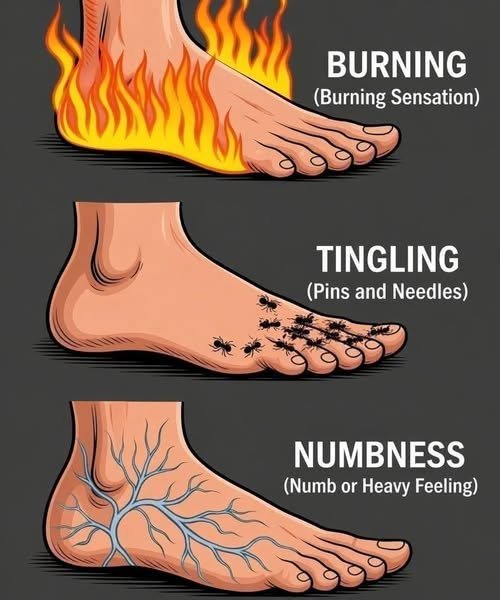
3. Persistent Numbness, Burning, or Tingling
That strange “pins and needles” sensation after sitting awkwardly is usually temporary.
But persistent numbness, burning, or tingling—especially in both feet—shouldn’t automatically be ignored.
These sensations can occur when nerves aren’t functioning normally.
Possible causes include:
- Peripheral neuropathy
- Diabetes-related nerve damage
- Vitamin deficiencies
- Certain medications
- Alcohol-related nerve damage
- Nerve compression
- Other neurological conditions
Peripheral neuropathy can produce burning, tingling, pain, or numbness in the feet.
The danger isn’t just discomfort.
Reduced sensation can make it easier to miss a blister, cut, burn, pressure injury, or other wound.
Mayo Clinic recommends making a medical appointment when burning pain, numbness, or tingling persists, particularly when it affects much of the bottom of the foot.
Why this symptom deserves attention
Imagine stepping on a small object or developing a blister.
If you have normal sensation, you may notice it quickly.
If your feet are numb, the injury could continue for days without your realizing it.
That’s why unexplained or persistent loss of sensation deserves evaluation rather than simply being accepted as a normal part of aging.
4. Sudden or Severe Foot Swelling
Foot and ankle swelling is common.
It can happen after standing for a long time, sitting during travel, experiencing an injury, or simply retaining fluid.
But sudden or unexplained swelling can sometimes signal a more serious problem.
Potential causes include:
- Injury
- Inflammation
- Venous problems
- Fluid retention
- Medication effects
- Heart-related conditions
- Kidney disease
- Liver disease
- A blood clot
Edema occurs when excess fluid accumulates in body tissues and commonly affects the legs, ankles, and feet.
One-sided swelling is especially important
Sudden swelling involving one leg or foot, particularly when accompanied by pain or tenderness, deserves prompt medical evaluation.
A blood clot in a deep vein can cause swelling and pain, and the risk can be particularly relevant after prolonged immobility such as a long flight or car trip.
When swelling becomes an emergency
If unexplained leg or foot swelling occurs with:
- Chest pain
- Trouble breathing
- Fainting
- Severe shortness of breath
- Coughing up blood
seek emergency medical help.
These symptoms can indicate a potentially life-threatening problem involving the lungs or cardiovascular system.
5. Red, Hot, Swollen, or Painful Skin
A foot that suddenly becomes red, warm, swollen, and tender may be infected.
A skin infection such as cellulitis can cause warmth, swelling, tenderness, and redness. Fever or chills may occur as well.
This is particularly important if there is:
- An open wound
- A blister
- A puncture
- An ingrown toenail
- A recent procedure
- Diabetes
- Poor circulation
- A weakened immune system
Why infections can become serious
A relatively small skin injury can sometimes become a deeper infection.
In severe cases, infection can spread into deeper tissues, bone, or the bloodstream.
That’s why rapidly worsening redness, warmth, swelling, pain, drainage, fever, or chills shouldn’t be treated casually.
What not to do
Don’t assume that applying an over-the-counter cream and waiting several days is always enough.
If an infection is suspected—particularly if symptoms are worsening—contact a healthcare professional.
6. Severe Foot Pain After an Injury
If you twist your ankle, drop something heavy on your foot, fall, or suffer another significant injury, pain is expected.
But severe pain deserves attention, especially when it is accompanied by swelling, bruising, deformity, or an inability to walk.
A broken foot can cause:
- Sudden pain
- Swelling
- Bruising
- Tenderness
- Difficulty walking
- Pain when putting weight on the foot
- A visible change in shape
Interestingly, being able to walk doesn’t completely rule out a fracture. Some fractures still allow weight-bearing.
Seek prompt medical care if:
- The foot looks deformed
- You cannot put weight on it
- Pain is severe
- Swelling is substantial
- There is an open wound
- Bone is visible
- Pain continues to worsen
Mayo Clinic recommends immediate medical attention for serious foot pain or swelling after injury and for an inability to walk or bear weight.
7. Pain or Cramping That Appears When You Walk
Here’s a symptom many people overlook.
Suppose your calf, leg, or foot starts aching after walking a certain distance.
You stop and rest.
The pain goes away.
Then you start walking again, and it returns.
That pattern can be a warning sign of peripheral artery disease.
PAD occurs when narrowed arteries reduce blood flow to the limbs. One classic symptom is pain, aching, heaviness, or cramping during walking that improves with rest.
The discomfort is often felt in the calf, but it can also affect the thigh, buttocks, or foot.
Other PAD warning signs
You might also notice:
- A colder foot
- Changes in skin color
- Numbness
- Weakness
- Slow-growing toenails
- Less leg hair
- Foot sores that heal slowly
PAD matters beyond the feet.
It is associated with plaque buildup in arteries elsewhere in the body and increased cardiovascular risk.
If you repeatedly experience unexplained walking-related leg or foot pain, talk with a healthcare professional.
8. Changes in Your Toenails or Skin
Not every nail change is a serious medical warning.
Fungal infections, repeated pressure from shoes, and minor trauma can alter the appearance of toenails.
But persistent or unusual changes deserve attention, particularly when they occur alongside other symptoms.
Changes worth discussing with a clinician include:
- A nail that becomes unusually thick
- Repeated nail damage without an obvious injury
- Significant discoloration
- Skin that becomes unusually shiny or thin
- New ulcers
- Persistent changes in skin color
- Loss of hair on the feet or lower legs
- Recurrent sores
Some of these changes can occur with circulation problems. NHLBI lists reduced toenail and leg-hair growth among possible symptoms associated with PAD.
The key isn’t to diagnose yourself based on a nail photograph.
Instead, consider the whole picture.
A slightly thickened toenail by itself may have a simple explanation.
A thickened nail accompanied by cold feet, poor wound healing, numbness, or color changes deserves a more thorough evaluation.
9. Foot Pain That Keeps Coming Back or Won’t Go Away
Occasional foot pain after a long walk isn’t unusual.
But pain that persists for weeks, repeatedly returns, gradually worsens, or occurs without an obvious explanation deserves medical attention.
Possible causes can include:
- Arthritis
- Tendon problems
- Nerve irritation
- Stress injuries
- Plantar fascia problems
- Joint disorders
- Nerve compression
- Circulation problems
- Poor footwear
- Repetitive strain
Mayo Clinic recommends medical evaluation when foot pain doesn’t improve after several weeks or when persistent burning, numbness, or tingling is present.
Don’t simply keep changing shoes
Footwear can certainly contribute to pain.
But if you’ve repeatedly changed shoes, reduced activity, rested, and tried reasonable self-care without improvement, continuing to treat the problem as a shoe issue may delay the correct diagnosis.
Persistent symptoms are worth investigating.
A Quick Guide: Which Foot Symptoms Need Urgent Attention?
Use this table as a general guide—not as a substitute for medical evaluation.
| Foot symptom | Possible concern | Suggested response |
|---|---|---|
| Sudden cold, pale or blue foot | Severe circulation problem | Emergency evaluation |
| Loss of feeling or inability to move foot | Acute circulation or neurological problem | Emergency evaluation |
| Severe pain after injury | Fracture or serious injury | Prompt medical care |
| Open wound with pus or spreading redness | Infection | Prompt medical care |
| Diabetic foot wound that isn’t healing | Ulcer/infection/circulation problem | Contact healthcare professional promptly |
| Persistent numbness or burning | Nerve disorder | Medical appointment |
| Sudden one-sided swelling | Possible clot or other vascular issue | Prompt medical evaluation |
| Foot swelling with chest pain or breathing difficulty | Potential emergency | Call 911 |
| Walking-related leg/foot pain relieved by rest | Possible PAD | Medical evaluation |
| Mild soreness after activity | Possible overuse | Monitor and use appropriate self-care |
Who Should Pay Extra Attention to Foot Changes?
Some people have a higher risk of serious foot complications.
People with diabetes
Diabetes can contribute to nerve damage and circulation problems, increasing the risk that an injury will go unnoticed or heal poorly.
If you have diabetes, don’t wait for severe pain before checking your feet.
Nerve damage can reduce the sensation that would normally alert you to an injury.
People with circulation problems
Peripheral artery disease can reduce blood flow and make wounds harder to heal.
Foot changes should be taken seriously, especially if you already have diagnosed PAD.
Older adults
Aging can bring changes in balance, sensation, skin integrity, joints, and circulation.
Persistent foot problems shouldn’t simply be attributed to age.
People who smoke
Smoking is an important risk factor for vascular disease, including PAD.
If you smoke and develop walking-related leg pain, cold feet, slow-healing wounds, or unexplained color changes, discuss them with a healthcare professional.
How to Check Your Feet at Home
A simple daily or regular inspection can help you notice changes early.
Look at both feet
Check:
- The tops of your feet
- The bottoms
- Heels
- Toes
- Between your toes
- Around your toenails
Look for:
- Cuts
- Blisters
- Cracks
- Redness
- Swelling
- Bruising
- Color changes
- Drainage
- New sores
Compare both sides
One of the most useful observations is whether something is different between your left and right foot.
For example:
- Is one foot colder?
- Is one more swollen?
- Is one a different color?
- Is sensation different?
- Is one more painful?
A difference doesn’t automatically mean something serious.
But it gives you useful information to discuss with a clinician.
Don’t ignore sensation changes
If your feet feel numb, burning, unusually sensitive, or “asleep” much of the time, make a note of when it happens and whether it is getting worse.
Common Mistakes People Make With Foot Symptoms
Mistake 1: Waiting for severe pain
Some serious foot problems don’t cause dramatic pain, particularly when nerve damage is present.
Better approach: Pay attention to wounds, color, temperature, swelling, and sensation—not pain alone.
Mistake 2: Assuming every problem is caused by shoes
Poorly fitting shoes can cause genuine problems, but they aren’t responsible for every persistent symptom.
Better approach: If symptoms continue despite changing footwear and reducing aggravating activities, seek an evaluation.
Mistake 3: Ignoring a nonhealing wound
A small wound can become a much bigger problem when circulation or sensation is impaired.
Better approach: Have persistent or concerning wounds evaluated.
Mistake 4: Treating numbness as normal aging
Persistent numbness isn’t something you should simply accept without asking why it’s happening.
Better approach: Discuss ongoing numbness, tingling, or burning with a healthcare professional.
Mistake 5: Waiting through signs of infection
Redness, warmth, swelling, drainage, increasing pain, fever, or chills can indicate infection.
Better approach: Seek medical advice promptly when symptoms are worsening.
Mistake 6: Ignoring sudden changes in one foot
A sudden difference in color, temperature, sensation, or swelling between feet deserves attention.
Better approach: Treat sudden and significant changes more seriously than longstanding, mild differences.
What a Doctor May Check
If you visit a healthcare professional because of a concerning foot symptom, don’t be surprised if the examination goes beyond the foot itself.
A clinician may assess:
- Skin color
- Skin temperature
- Pulses
- Sensation
- Strength
- Reflexes
- Swelling
- Wounds
- Walking pattern
- Foot structure
- Blood circulation
Depending on your symptoms, further tests may be appropriate.
For example, when PAD is suspected, an ankle-brachial index (ABI) is commonly used as an initial test to evaluate blood flow.
The testing depends entirely on the suspected cause.
When Foot Symptoms Are an Emergency
Most foot problems do not require an emergency room.
But some situations do.
Call 911 or seek emergency care if you have:
- A suddenly cold, pale, or blue foot with numbness or inability to move it
- Severe foot injury with exposed bone or tissue
- Severe bleeding
- A rapidly worsening infection accompanied by serious illness
- Foot or leg symptoms accompanied by chest pain or significant breathing difficulty
- Sudden severe swelling with concerning symptoms
For example, acute limb ischemia can cause sudden loss of blood flow to a limb and requires rapid treatment. NHLBI advises immediate emergency care when a person suddenly cannot feel or move the foot and it becomes pale or colder than the other foot.
Similarly, unexplained leg swelling accompanied by chest pain or difficulty breathing can signal a potentially life-threatening condition and warrants emergency medical help.
When in doubt about a potentially serious emergency, it’s safer to seek immediate professional help than to wait for symptoms to resolve.
Frequently Asked Questions
What are the most serious foot symptoms?
Sudden coldness, pale or blue discoloration, loss of sensation, inability to move the foot, severe swelling, serious infection, and nonhealing wounds can be important warning signs. The significance depends on the circumstances and accompanying symptoms.
When should I worry about foot swelling?
Sudden, unexplained, or one-sided swelling deserves prompt medical attention, particularly if it is painful or accompanied by skin color or temperature changes. Swelling with chest pain or breathing difficulty is an emergency.
Can foot problems be a sign of diabetes?
Yes. Diabetes can contribute to nerve damage and circulation problems, increasing the risk of unnoticed injuries, ulcers, and infections. People with diabetes should pay particular attention to changes in their feet.
What does numbness in the feet mean?
Persistent foot numbness can have several causes, including peripheral neuropathy, diabetes-related nerve damage, nerve compression, nutritional problems, medications, and other conditions. A healthcare professional can help determine the cause.
Why is one foot colder than the other?
A difference in temperature can have harmless causes, but a new or significant difference—especially with pain, numbness, weakness, or color changes—can indicate a circulation problem and should be evaluated.
Can poor circulation cause foot pain?
Yes. Peripheral artery disease can cause aching, cramping, heaviness, or pain in the legs or feet during activity that improves after rest.
Is a foot wound that won’t heal serious?
It can be. Slow-healing wounds may occur with poor circulation and can be particularly concerning in people with diabetes. A wound that isn’t healing normally should be evaluated, especially if it becomes red, warm, swollen, painful, or produces drainage.
Should I see a doctor for persistent foot pain?
Yes, particularly when pain lasts for several weeks, keeps returning, gets worse, or occurs with numbness, tingling, swelling, weakness, or other unusual symptoms.
What is the best way to prevent serious foot problems?
Wear properly fitting shoes, avoid walking barefoot when you are at increased risk of foot injury, inspect your feet regularly, address wounds promptly, manage conditions such as diabetes and vascular disease, and seek medical advice when persistent or unusual changes develop. NHLBI specifically recommends protective footwear and regular foot checks for people at risk of foot complications.
Your feet take thousands of steps every day, so occasional soreness is hardly unusual.
But persistent, sudden, or unexplained changes deserve your attention.
A wound that won’t heal, persistent numbness, unusual swelling, repeated walking-related pain, significant color changes, or a foot that suddenly becomes cold can sometimes signal a problem that needs medical evaluation.
The goal isn’t to become alarmed by every blister or ache.
It’s to recognize when something is different from your normal and know when professional care is appropriate.
If you have diabetes, circulation problems, persistent nerve symptoms, or another condition that increases your risk of foot complications, regular foot checks are especially important.
And if a foot suddenly becomes cold, pale or blue, numb, or difficult to move, don’t wait for tomorrow—seek emergency medical care.
Your feet may be at the bottom of your health checklist, but they shouldn’t be at the bottom of your priority list.
If this guide helped you recognize a symptom you hadn’t been paying attention to, consider sharing it with a family member or friend—especially someone living with diabetes or circulation problems. And if you’re experiencing a persistent or concerning change in your feet, use this information as a reason to have a conversation with a qualified healthcare professional.