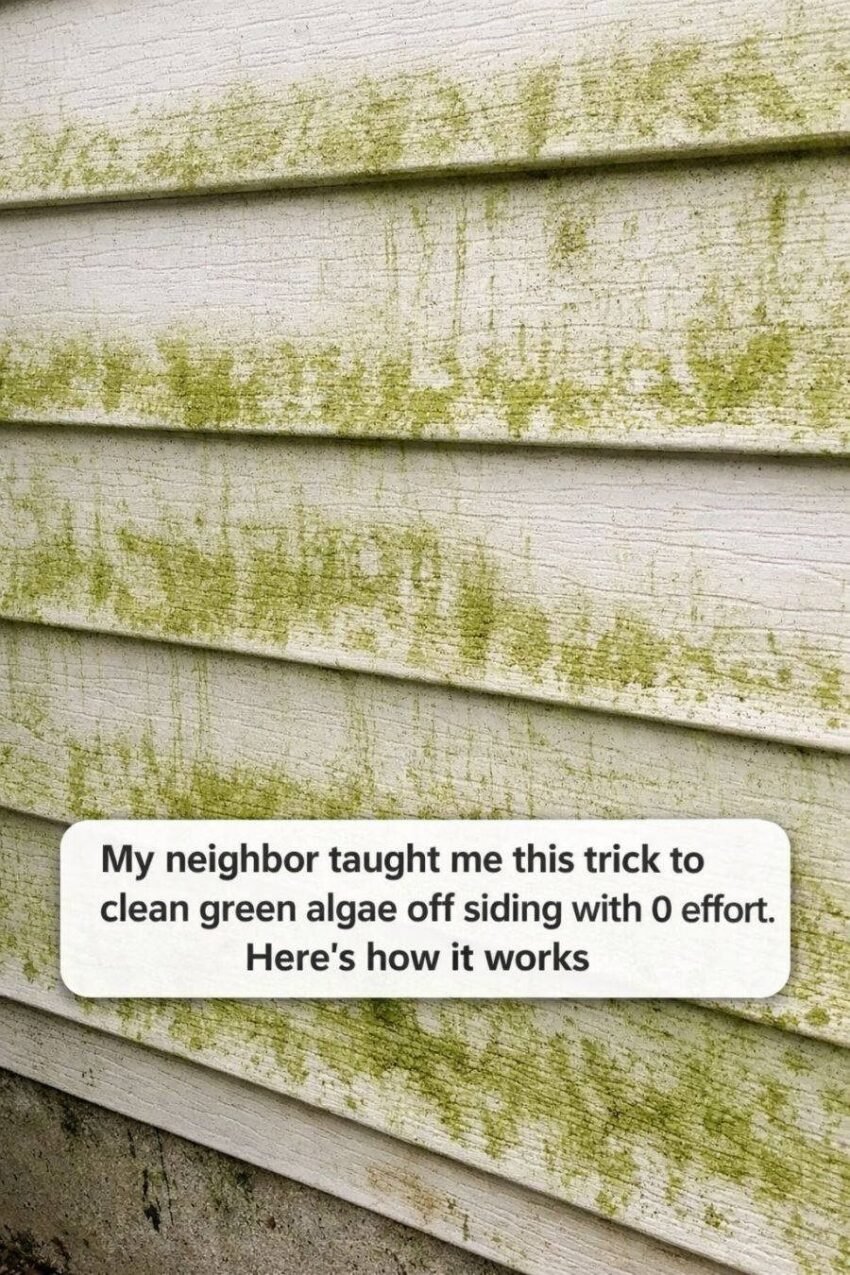
My Neighbor’s 0-Effort Trick to Remove Green Algae from Siding (No Pressure Washer Needed)
Tired of green algae on your siding? This simple, low-effort method removes stains safely—no pressure washer, no harsh scrubbing.
Introduction
If you live in a humid part of the U.S., you’ve probably seen it.
That streaky, green film slowly creeping across your vinyl siding. It starts near shaded areas. Then it spreads. Before long, your home looks older than it really is.
I spent months assuming I’d need a pressure washer, a ladder, and a full Saturday to fix it.
Then my neighbor walked over with a garden pump sprayer and said, “You’re overthinking this.”
What he showed me was surprisingly simple, inexpensive, and effective — and it required almost zero scrubbing.
Here’s exactly how it works, why it works, and how to do it safely.
Why Green Algae Grows on Siding in the First Place
Green discoloration on siding isn’t dirt — it’s typically algae or mildew thriving in damp, shaded environments.
According to the Environmental Protection Agency, algae and mold grow where moisture lingers, especially on porous or lightly textured surfaces.
Common causes include:
-
North-facing walls with limited sun exposure
-
Overhanging trees
-
Humid climates (Southeast, Pacific Northwest)
-
Clogged gutters causing runoff
-
Sprinklers constantly hitting siding
Vinyl siding is especially vulnerable because moisture can cling to its textured surface.
The “0-Effort” Cleaning Method My Neighbor Uses
No pressure washer.
No expensive contractor.
No intense scrubbing.
Just a diluted cleaning solution, a pump sprayer, and time.
What You’ll Need
-
1 gallon of water
-
1 cup household bleach (5–6% sodium hypochlorite)
-
1 tablespoon dish soap
-
Garden pump sprayer
-
Protective gloves and eyewear
-
Garden hose
That’s it.
Step-by-Step: How It Works
Step 1: Mix the Solution
In your pump sprayer, combine:
-
1 gallon water
-
1 cup bleach
-
1 tablespoon dish soap
The soap helps the solution cling to siding instead of running off immediately.
Step 2: Protect Surroundings
Before spraying:
-
Wet nearby plants with clean water
-
Cover delicate landscaping if needed
-
Close windows
-
Wear eye protection
The Centers for Disease Control and Prevention advises proper ventilation and protective gear when using bleach solutions outdoors.
Step 3: Spray (Bottom to Top)
Spray the siding from bottom to top.
Why bottom to top?
It prevents streaking. If you start at the top, cleaner can drip down and leave marks.
Let the solution sit for 10–15 minutes.
You’ll literally see the green fade.
No scrubbing required in most cases.
Step 4: Rinse Thoroughly
After dwell time:
-
Rinse top to bottom with a garden hose
-
Avoid high-pressure spray
That’s it.
The algae breaks down and washes away.
Why This Trick Works So Well
Bleach kills algae at the root level.
The soap breaks surface tension.
Water dilutes the mixture enough to avoid siding damage.
Unlike pressure washing, this method:
-
Doesn’t force water behind panels
-
Reduces risk of cracking vinyl
-
Avoids stripping protective finishes
The Vinyl Siding Institute notes that gentle cleaning methods are preferred over high-pressure washing for vinyl siding longevity.
When You Should Use This Method
This works best for:
-
Light to moderate green algae
-
Vinyl siding
-
Fiber cement siding (with caution)
-
Painted surfaces in good condition
If you see black mold patches or heavy staining, you may need a stronger commercial cleaner.
When NOT to Use Bleach
Avoid bleach if:
-
You have untreated wood siding
-
You have aluminum siding prone to oxidation
-
You’re on well water with septic concerns
-
You’re near sensitive landscaping
In those cases, oxygen-based cleaners may be safer.
Pros and Cons of This Method
Pros
✔ Extremely affordable (under $5 per batch)
✔ No scrubbing required
✔ No expensive equipment
✔ Low physical effort
✔ Quick results
Cons
✘ Requires careful plant protection
✘ Not eco-friendly if overused
✘ Strong odor during application
✘ Needs proper safety precautions
Common Mistakes Homeowners Make
1. Using a Pressure Washer Too Close
High pressure can crack vinyl or force water underneath panels.
2. Mixing Bleach with Other Cleaners
Never mix bleach with vinegar or ammonia.
3. Spraying in Direct Sunlight
Solution may dry too fast, reducing effectiveness.
4. Skipping Plant Protection
Bleach runoff can damage landscaping.
5. Ignoring Gutter Issues
If moisture problems aren’t fixed, algae returns.
How Often Should You Clean Siding?
Most U.S. homeowners benefit from cleaning:
-
Once per year in humid climates
-
Every 2 years in drier regions
Regular cleaning prevents buildup from becoming stubborn.
Alternative Low-Effort Options
If you prefer store-bought solutions, several “spray and rinse” exterior cleaners are available at major retailers like Home Depot and Lowe’s.
Look for products labeled:
-
“Outdoor cleaner”
-
“Algae remover”
-
“No-scrub formula”
Always read manufacturer instructions carefully.
Does This Increase Home Value?
While cleaning siding doesn’t add structural value, it significantly improves curb appeal.
In competitive real estate markets, first impressions matter.
A clean exterior suggests proper maintenance — something buyers notice immediately.
Frequently Asked Questions
1. Will bleach damage vinyl siding?
Not when properly diluted and rinsed.
2. Can I use vinegar instead?
Vinegar may lighten algae but is less effective for heavy growth.
3. Is this safe for painted siding?
Yes, if paint is intact and solution is diluted.
4. Can I skip the soap?
Soap improves adhesion, so it’s recommended.
5. Do I need a ladder?
Usually no — a pump sprayer reaches most first-floor siding.
6. Will algae come back?
Yes, especially in humid areas. Preventive maintenance helps.
7. Can I do this before selling my home?
Absolutely. It’s a low-cost curb appeal upgrade.
8. Should I pressure wash afterward?
Not necessary if rinsed thoroughly.
9. Is oxygen bleach safer?
It’s gentler on plants but may require light scrubbing.
10. What time of day is best?
Early morning or late afternoon when surfaces are cool.
Pro Tips for Longer-Lasting Results
-
Trim back overhanging branches
-
Clean gutters regularly
-
Adjust sprinklers away from siding
-
Improve drainage around foundation
-
Increase sunlight exposure where possible
Prevention reduces repeat cleaning.
Final Thoughts
I was ready to rent a pressure washer and spend half a weekend battling green stains.
Instead, this simple spray-and-rinse method solved the problem in under an hour.
No ladder gymnastics.
No back-breaking scrubbing.
No expensive equipment.
Sometimes the best home maintenance tricks come from the neighbor next door.
If you found this method helpful, share it with someone dealing with algae on their siding — and let me know what worked best in your climate.