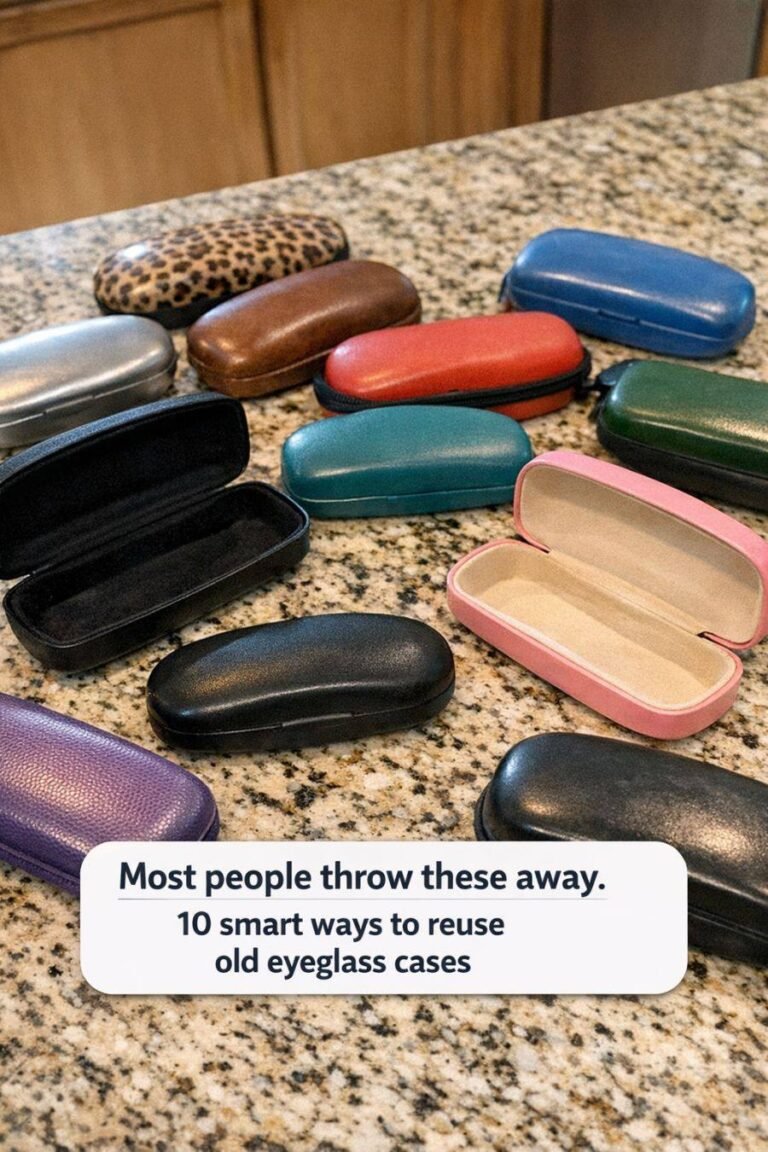
Most People Throw These Away: 10 Smart, Surprisingly Useful Ways to Reuse Old Eyeglass Cases
Don’t toss that old eyeglass case. Discover 10 clever, practical ways Americans are reusing them at home, work, and travel.
You probably have one in a junk drawer right now.
A sturdy little shell that once protected your glasses… now just taking up space.
Most people toss old eyeglass cases without thinking twice. But here’s the thing: those compact, durable cases are built to survive daily drops, travel bags, and tight spaces. That makes them incredibly useful for far more than eyewear.
In a country where Americans generate over 4 pounds of waste per person per day (according to the United States Environmental Protection Agency), finding small ways to reuse everyday items actually adds up.
Today, I’ll show you 10 smart, practical, real-world ways to reuse old eyeglass cases — ideas that save money, reduce clutter, and solve everyday problems. These aren’t Pinterest fantasies. They’re things you can actually use.
Let’s open that drawer.
Why Reusing Eyeglass Cases Makes More Sense Than You Think
Before we jump into the ideas, here’s why this even matters.
1. They’re Built to Last
Eyeglass cases are designed to:
-
Resist pressure
-
Protect fragile items
-
Fit into tight spaces
-
Open and close easily
That’s premium functionality — already paid for.
2. They’re the Perfect “Micro-Organizer”
Most storage solutions are too big. Eyeglass cases are ideal for:
-
Travel
-
Car compartments
-
Desk drawers
-
Gym bags
3. It’s a Small Step Toward Smarter Consumption
Minimal waste habits don’t require extreme lifestyle changes. Sometimes, they start with rethinking what you already own.
1. Travel Tech Organizer (Tangle-Free Cord Storage)
If you travel — even occasionally — you’ve dealt with this:
Earbuds wrapped around lip balm.
Charging cables knotted into a stress ball.
Loose adapters floating in your carry-on.
An old eyeglass case solves this instantly.
How to Use It:
-
Wrap phone charger loosely
-
Add wireless earbuds
-
Include a USB drive or small adapter
-
Close and toss into your backpack
Hard-shell cases protect fragile cords better than zip pouches.
Why It Works
The rigid structure prevents crushing in backpacks or luggage. If you fly often, this is especially helpful when going through TSA — you can pull everything out in one motion.
Pro Tip: Use separate cases for:
-
Work tech
-
Personal travel gear
-
Emergency backup cables
2. Emergency Car Kit (The Mini “Just in Case” Box)
Your glove compartment is chaos. Admit it.
Instead of loose items rolling around, turn an eyeglass case into a compact emergency kit.
What Fits Inside:
-
Small flashlight
-
Tire pressure gauge
-
Emergency cash
-
Bandages
-
Contact lens solution
-
Spare house key
For commuters, rideshare drivers, or road trippers, this keeps essentials organized without bulk.
Why Americans Love This Hack
With long commutes and road travel common across the U.S., compact emergency prep makes sense. It’s not about being dramatic — it’s about being prepared.
3. Minimalist First-Aid Kit for Bags & Backpacks
Parents, hikers, students — this one’s for you.
Instead of carrying a full first-aid pouch, create a compact version.
Step-by-Step Setup:
-
Add 4–5 adhesive bandages
-
Include alcohol wipes
-
Add blister pads
-
Fold small gauze pads
-
Optional: small pain reliever packet
This fits perfectly into:
-
Kids’ school backpacks
-
Hiking daypacks
-
College dorm drawers
-
Gym lockers
Hard cases prevent bandages from bending or tearing.
4. Sunglasses Upgrade Case (Protect Cheaper Shades)
Cheap sunglasses rarely come with durable protection.
If you buy backup pairs from stores like Target or Walmart, they often come with flimsy sleeves.
Instead of buying a new hard case, reuse your old prescription eyeglass case.
Bonus Tip:
Label the inside with masking tape if you rotate multiple pairs (driving vs. beach vs. backup).
5. DIY Travel Sewing Kit
Traveling for weddings? Business trips? Family holidays?
Loose buttons and wardrobe malfunctions happen.
Turn your eyeglass case into a compact sewing kit.
What to Include:
-
Mini thread spools (black + white)
-
2–3 needles
-
Safety pins
-
Small folding scissors
-
Spare buttons
Because it’s hard-shell, scissors won’t poke through fabric bags.
This is especially helpful if you:
-
Travel frequently for work
-
Attend events
-
Keep an emergency kit in your car
6. Makeup Brush & Beauty Tool Protector
Makeup brushes get crushed in cosmetic bags.
Instead of buying specialty brush guards, use an eyeglass case to protect:
-
2–3 travel brushes
-
Tweezers
-
Eyelash curler
-
Lip liner pencils
Hard cases maintain brush shape and keep bristles clean.
This is ideal for:
-
Gym bags
-
Weekend trips
-
Bridesmaid prep kits
7. Kids’ “Quiet Kit” for Restaurants & Flights
Parents know the moment.
You sit down at a restaurant.
Food takes 20 minutes.
Boredom begins.
Turn an eyeglass case into a mini distraction kit.
Fill It With:
-
Crayons (broken in half to fit)
-
Folded paper
-
Tiny puzzle cards
-
Stickers
-
Small LEGO-style pieces
It’s small enough for purses and diaper bags, but durable enough to survive drops.
8. Portable Snack Holder (For Mess-Free Nuts or Trail Mix)
This one surprises people.
Hard-shell eyeglass cases are perfect for:
-
Almonds
-
Cashews
-
Dried fruit
-
Protein bites
Why?
Because they:
-
Don’t collapse
-
Prevent crushing
-
Fit in cup holders
-
Close securely
Important: Only use clean cases with food-safe lining (wash thoroughly first).
For commuters, this is a game-changer compared to plastic baggies.
9. DIY “Focus Kit” for Your Desk
Productivity experts often talk about environmental triggers for focus.
Instead of cluttering your desk, create a small “focus kit” inside your eyeglass case.
What Goes Inside:
-
Foam earplugs
-
A small worry stone
-
A short motivational quote
-
Blue light filtering clip-ons
-
Breath mint
When it’s time to concentrate, open the case. That simple ritual becomes a mental signal.
This behavioral trigger method is supported by habit-building research frequently discussed in outlets like Harvard University and productivity publications.
10. Memory Capsule or Keepsake Box
Not every reuse has to be practical.
Old eyeglass cases make beautiful miniature memory containers.
Ideas:
-
Hospital baby bracelet
-
First concert ticket
-
Wedding day cufflink
-
Military pins
-
Travel mementos
Because they close securely, items won’t scatter.
This works especially well for people embracing minimalism — you preserve memories without storing bulky boxes.
Pros and Cons of Reusing Eyeglass Cases
| Pros | Cons |
|---|---|
| Durable and protective | Limited space |
| Free storage solution | Not ideal for large items |
| Compact and travel-friendly | Some interiors may need cleaning |
| Reduces household waste | Hinges may wear out over time |
Balanced thinking matters. Not every idea will fit your lifestyle — but at least one probably will.
Common Mistakes to Avoid
1. Not Cleaning the Interior
Lint and debris build up over time.
Use mild soap and air dry completely before reuse.
2. Overstuffing
The hinge can crack if forced shut.
3. Using for Food Without Sanitizing
Always clean thoroughly first.
4. Ignoring Soft Cases
Soft zippered cases work better for flexible items like cables.
2025 Trend: Micro-Organization & Everyday Upcycling
Across the U.S., more households are embracing:
-
Small-space organization
-
Intentional consumption
-
Functional minimalism
You don’t need to be zero-waste to be smarter with what you own.
Upcycling small items like eyeglass cases aligns with growing sustainability awareness without requiring lifestyle extremes.
Mini Case Scenario
Sarah, a remote worker in Texas, had five old eyeglass cases in a drawer.
Instead of tossing them, she turned them into:
-
A travel cord organizer
-
A purse first-aid kit
-
A keepsake box for her late grandmother’s ring
-
A snack holder for her commute
-
A quiet kit for her toddler
Total cost: $0
Total storage saved: One junk drawer cleared.
Sometimes organization isn’t about buying new containers — it’s about seeing value in what you already have.
Frequently Asked Questions (People Also Ask Style)
Can I recycle eyeglass cases instead?
Hard-shell cases are often mixed materials, which makes recycling difficult. Check local guidelines through your city’s waste department.
Are eyeglass cases food-safe?
Not originally designed for food. Wash thoroughly before using and avoid long-term food storage.
How long do eyeglass cases last?
Many last years due to reinforced construction.
Can I donate old eyeglass cases?
Some vision centers accept them, but policies vary. Call ahead.
What if the hinge is loose?
Use it for soft items like cables or sewing supplies.
Are soft cases better than hard cases?
Hard cases protect better; soft cases flex more.
Is this actually worth doing?
If it replaces buying a $10 organizer, yes.
What’s the best use for travel?
Cord organizer or mini first-aid kit.
Can kids use them safely?
Yes, with age-appropriate items and supervision.
Action Checklist: Start in 5 Minutes
-
Open your junk drawer
-
Gather unused eyeglass cases
-
Clean them
-
Assign each a purpose
-
Label if necessary
-
Store intentionally
No shopping required.
The Bigger Picture: Small Changes, Smarter Homes
Most clutter isn’t caused by having too little space.
It’s caused by not seeing potential in what we already own.
Old eyeglass cases are a perfect example. Durable. Compact. Overlooked.
You don’t need a massive lifestyle overhaul to live more intentionally. Sometimes, it starts with a simple decision not to throw something away — but to rethink it.
Old eyeglass cases are small but surprisingly powerful organizational tools.
From travel tech storage to emergency kits, snack containers to memory capsules, they solve real-life problems without costing a dollar.
Before you toss the next one, pause.
What could it become instead?
If one of these ideas surprised you, share this with someone who always complains about clutter. And I’d love to hear — what creative use have you found for yours?