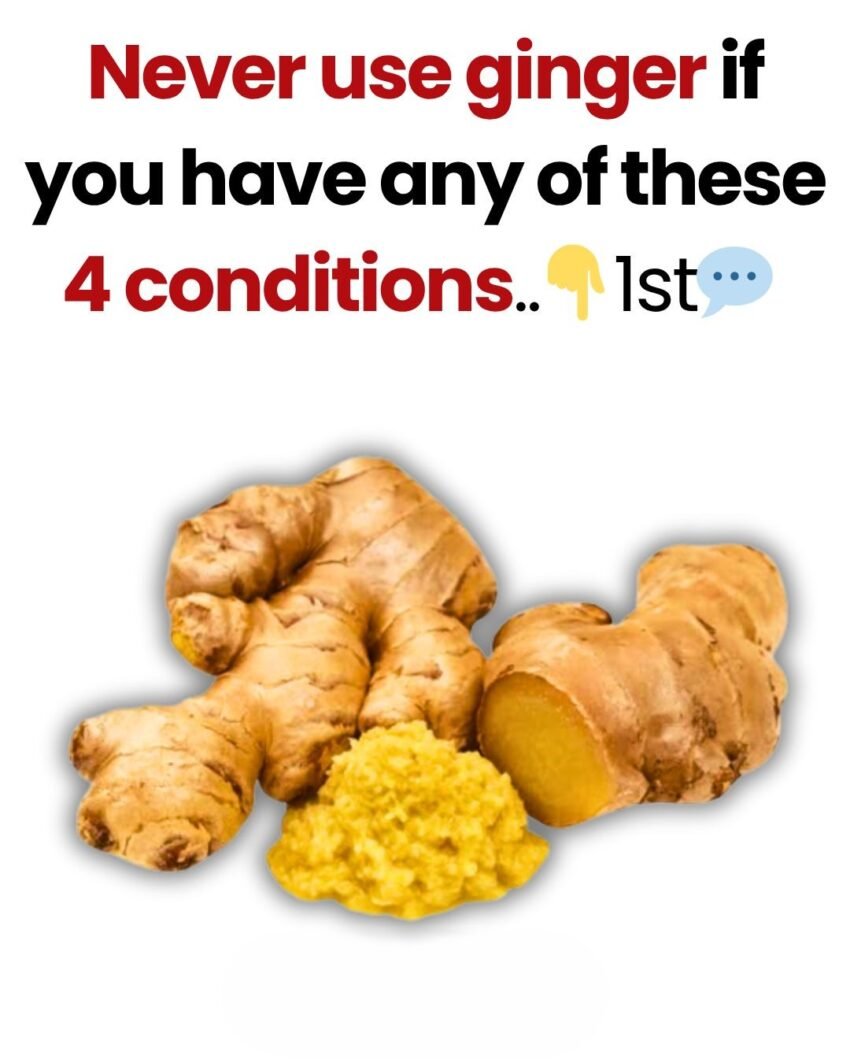
Never Use Ginger If You Have Any of These Conditions — It Can Cause Serious Health Problems
Ginger is a popular health remedy, but it’s not safe for everyone. Learn the conditions where ginger can be harmful and what to do instead.
Ginger is often hailed as a natural remedy for nausea, inflammation, and digestion. While it has many benefits, it’s not suitable for everyone. In certain medical conditions, ginger can cause serious health problems. Understanding when to avoid it is essential for your safety.
Here’s what you need to know.
1. Bleeding Disorders or Taking Blood Thinners
-
Ginger has anticoagulant properties, which means it can thin the blood.
-
People with hemophilia or those taking warfarin, aspirin, or clopidogrel may be at higher risk of excessive bleeding.
-
Even minor cuts or injuries could lead to prolonged bleeding.
Tip: Consult your doctor before using ginger supplements or consuming large amounts in tea or meals.
2. Gallstones or Gallbladder Disease
-
Ginger can stimulate bile production, which may worsen gallbladder issues.
-
Individuals with gallstones or inflammation may experience pain, nausea, or digestive distress after consuming ginger.
Tip: Avoid high doses of ginger supplements; small amounts in food are generally safer but still check with your doctor.
3. Low Blood Pressure (Hypotension)
-
Ginger may lower blood pressure, which can be dangerous for people already prone to hypotension.
-
Symptoms of too-low blood pressure include dizziness, fainting, and blurred vision.
Tip: Monitor your blood pressure and avoid ginger supplements if you have consistently low readings.
4. Pregnancy Complications
-
While ginger can relieve mild morning sickness, high doses may increase the risk of bleeding or interfere with certain medications.
-
Women with high-risk pregnancies should be cautious and consult a healthcare provider before using ginger.
Tip: Stick to small amounts in tea or meals, and avoid concentrated supplements unless approved by your doctor.
5. Diabetes
-
Ginger can lower blood sugar, which may interfere with diabetes medications.
-
Taking too much can lead to hypoglycemia — dangerously low blood sugar levels.
Tip: If you have diabetes, monitor blood sugar closely when using ginger and consult your doctor before starting supplements.
General Safety Tips
-
Start with small amounts — a teaspoon of fresh ginger or a cup of ginger tea is usually safe for most people.
-
Avoid supplements if you fall into any of the above categories unless cleared by a healthcare professional.
-
Monitor symptoms — dizziness, unusual bruising, or digestive upset may indicate ginger is affecting you negatively.
-
Inform your doctor about all herbs and supplements you take.
Mini Case Scenario
Maria, 55, had gallstones and started taking ginger capsules for joint pain. Soon after, she experienced severe abdominal pain and nausea. Her doctor confirmed the ginger had aggravated her gallbladder condition. By stopping the supplement and switching to a mild ginger infusion in food, she avoided further complications.
While ginger offers many health benefits, it is not safe for everyone. Avoid or limit ginger if you have:
-
Bleeding disorders or take blood thinners
-
Gallstones or gallbladder disease
-
Low blood pressure
-
Pregnancy complications
-
Diabetes (without monitoring)
Herbs are natural, but “natural” doesn’t always mean safe. Always check with your healthcare provider before adding ginger in large amounts to your diet, especially if you have preexisting health conditions.