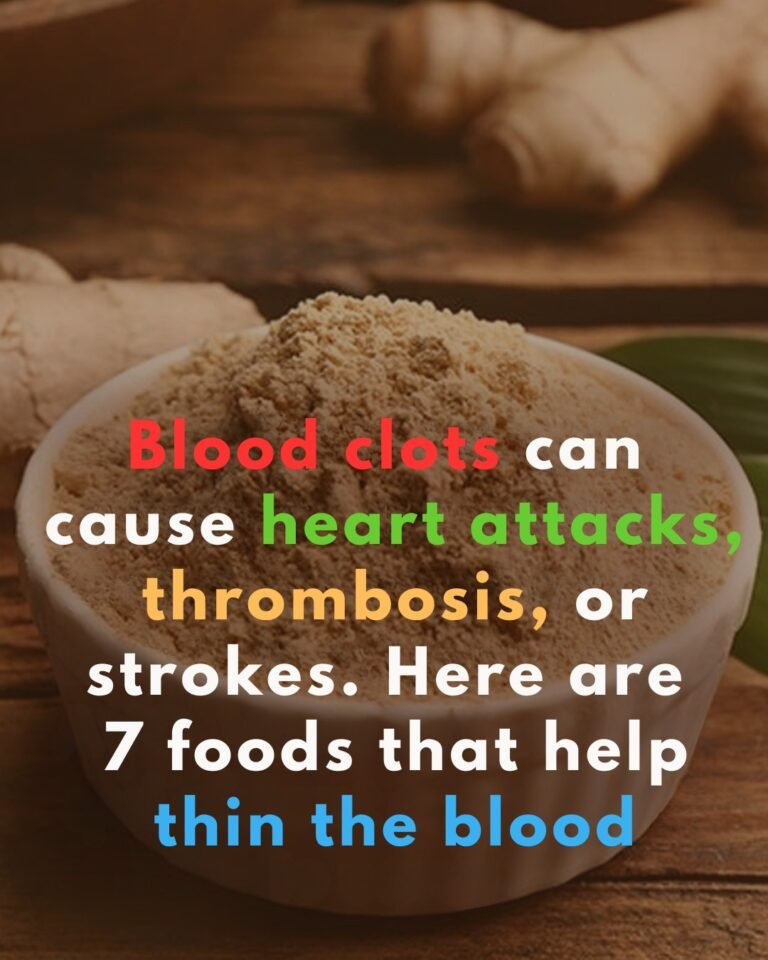
7 Powerful Blood-Thinning Foods You Need to Know About
Certain foods naturally help thin the blood and support heart health. Discover 7 effective options and how to include them safely in your diet.
Blood thinning isn’t just for medications. Certain foods have natural anticoagulant properties that can support heart health, improve circulation, and reduce the risk of clot-related conditions.
Whether you want to support cardiovascular health or complement medical advice, knowing these foods can make a difference.
⚠️ Important: If you’re on prescription blood thinners (like warfarin), always consult your doctor before making dietary changes.
1. Garlic
-
Contains allicin, which helps prevent platelets from clumping together
-
May lower blood pressure and cholesterol as well
How to use:
-
Add fresh garlic to salads, stir-fries, or roasted vegetables
-
Raw garlic offers the strongest effect
Tip: Cooking reduces some of the blood-thinning properties, so mix raw and cooked forms for balance.
2. Ginger
-
Known for anti-inflammatory and anticoagulant effects
-
Can help improve circulation and reduce clotting risk
How to use:
-
Brew fresh ginger tea before bedtime
-
Add grated ginger to soups, smoothies, or marinades
Caution: Avoid high doses if you have bleeding disorders or take blood-thinning medications.
3. Turmeric (Curcumin)
-
Contains curcumin, which may prevent platelet aggregation
-
Offers additional anti-inflammatory benefits
How to use:
-
Mix turmeric into curries, rice dishes, or warm milk (“golden milk”)
-
Pair with black pepper to improve absorption
4. Cayenne Pepper
-
Contains capsaicin, which may improve blood flow and prevent clots
-
Provides a spicy metabolism boost as well
How to use:
-
Sprinkle into soups, stews, or roasted vegetables
-
Use sparingly if you have digestive sensitivity
5. Cinnamon
-
Particularly Ceylon cinnamon may reduce blood clotting
-
Supports blood sugar regulation, which indirectly benefits circulation
How to use:
-
Add to oatmeal, coffee, smoothies, or baked goods
-
Avoid excessive amounts if on anticoagulant medication
6. Fatty Fish (Salmon, Mackerel, Sardines)
-
Rich in omega-3 fatty acids, which reduce platelet stickiness
-
Supports heart health and lowers inflammation
How to use:
-
Eat 2–3 servings per week
-
Bake, grill, or steam for maximum nutrient retention
7. Berries (Blueberries, Strawberries, Cranberries)
-
High in flavonoids and antioxidants, which help reduce platelet aggregation
-
Protect blood vessels and improve circulation
How to use:
-
Add fresh berries to yogurt, oatmeal, or smoothies
-
Opt for unsweetened varieties to avoid excess sugar
How to Incorporate Blood-Thinning Foods Safely
-
Balance diet with vegetables, fruits, and lean proteins
-
Stay hydrated and maintain a heart-healthy lifestyle
-
Monitor interactions if you take prescription anticoagulants
Tip: Natural blood thinners are effective, but they’re not a replacement for medical therapy in high-risk individuals.
Mini Case Scenario
John, 58, wanted to improve circulation naturally. By incorporating garlic, salmon, and berries into his weekly diet and combining them with moderate exercise, his cholesterol and blood pressure improved, and he experienced better energy levels.
Incorporating these 7 foods into your diet can help:
-
Reduce blood clot risk
-
Improve circulation
-
Support overall heart health
Remember: Always check with your doctor if you take medications or have bleeding disorders before significantly increasing intake of blood-thinning foods.