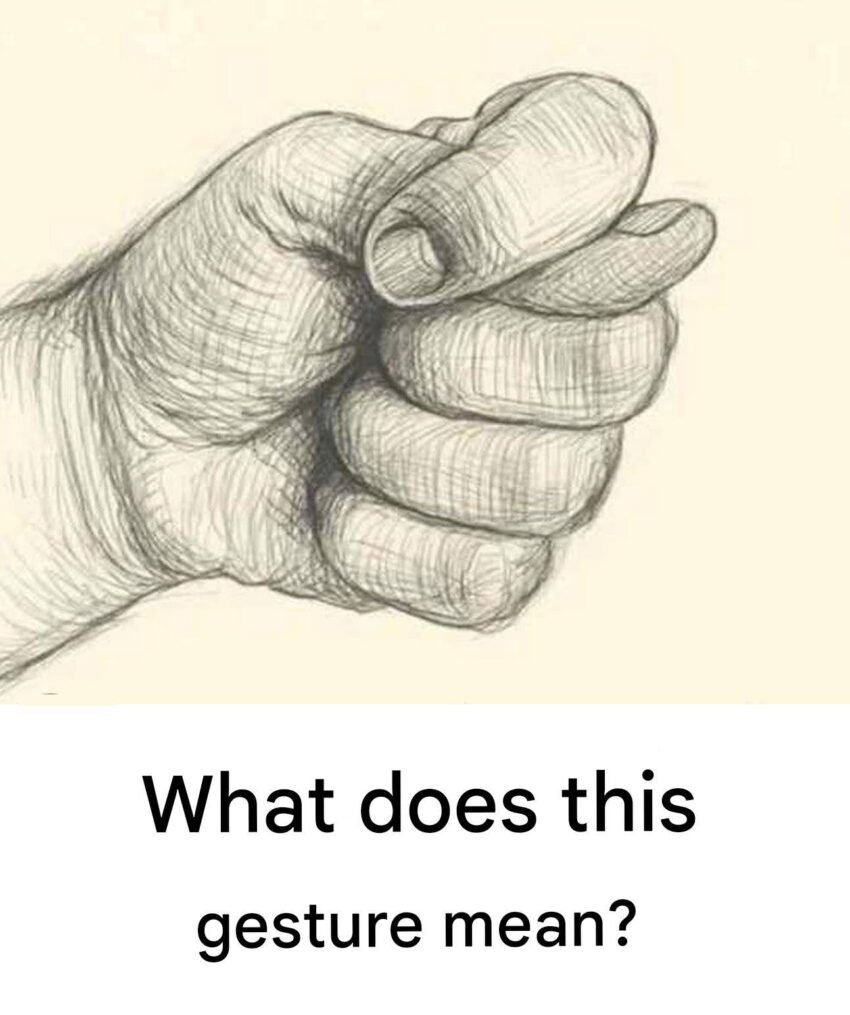
The Gesture With the Thumb Tucked Between the Fingers: What It Really Means
If you’ve seen someone make a fist and tuck their thumb between their index and middle fingers, you might have wondered:
Is that offensive?
Is it cultural?
Is it playful… or rude?
The meaning depends entirely on where you are and who’s using it.
Let’s break it down clearly.
The “Fig” Gesture (Mano Fico)
This hand sign is commonly known as the fig gesture, or mano fico in several European and Latin cultures.
It’s made by:
-
Closing your fist
-
Placing your thumb between your index and middle fingers
It looks simple — but historically, it carries layered meanings.
Meaning in the United States
In modern U.S. culture, this gesture is not widely used and most people won’t immediately recognize it.
If someone does use it, it usually falls into one of these categories:
-
A playful, teasing sign (rare)
-
A symbolic charm (very rare)
-
An imitation seen online or in cultural references
It’s generally not a common insult in the U.S., but context still matters.
Meaning in Europe & Latin America
In countries like:
-
Italy
-
Brazil
-
Portugal
-
Turkey
The gesture can mean:
-
“You get nothing.”
-
A crude or vulgar insult.
-
A symbolic representation of sexual imagery (historically).
In some contexts, it’s considered offensive, similar in tone to flipping someone off — though not identical.
The Protective / Superstition Meaning
Interestingly, in older traditions — especially in Mediterranean cultures — the fig gesture was used as a protective charm against evil spirits or bad luck.
It was sometimes:
-
Worn as jewelry
-
Carved into amulets
-
Used symbolically for protection
In that context, it wasn’t rude at all — it was spiritual or protective.
In Pop Culture & Online Use
Today, the gesture occasionally appears in:
-
Memes
-
Anime references
-
Historical symbolism discussions
-
Cultural anthropology content
But in everyday American social settings, it’s uncommon.
Is It Offensive?
Here’s the quick breakdown:
| Location | Meaning | Offensive? |
|---|---|---|
| United States | Rare / unclear | Usually no |
| Italy | Insulting / vulgar | Yes |
| Brazil | Dismissive or crude | Often |
| Traditional use | Protective charm | No |
Context always matters.
Why Gestures Can Be Confusing
Hand signs don’t translate universally.
A gesture that’s harmless in one country can be deeply insulting in another. That’s why it’s smart to be cautious when using unfamiliar signs — especially while traveling.
Bottom Line
The thumb-tucked-between-fingers gesture (the fig sign):
-
Has historical roots
-
Can be insulting in some cultures
-
Is mostly unfamiliar in modern U.S. settings
-
Once symbolized protection from evil
If you saw someone use it, the meaning depends on their cultural background and the situation.