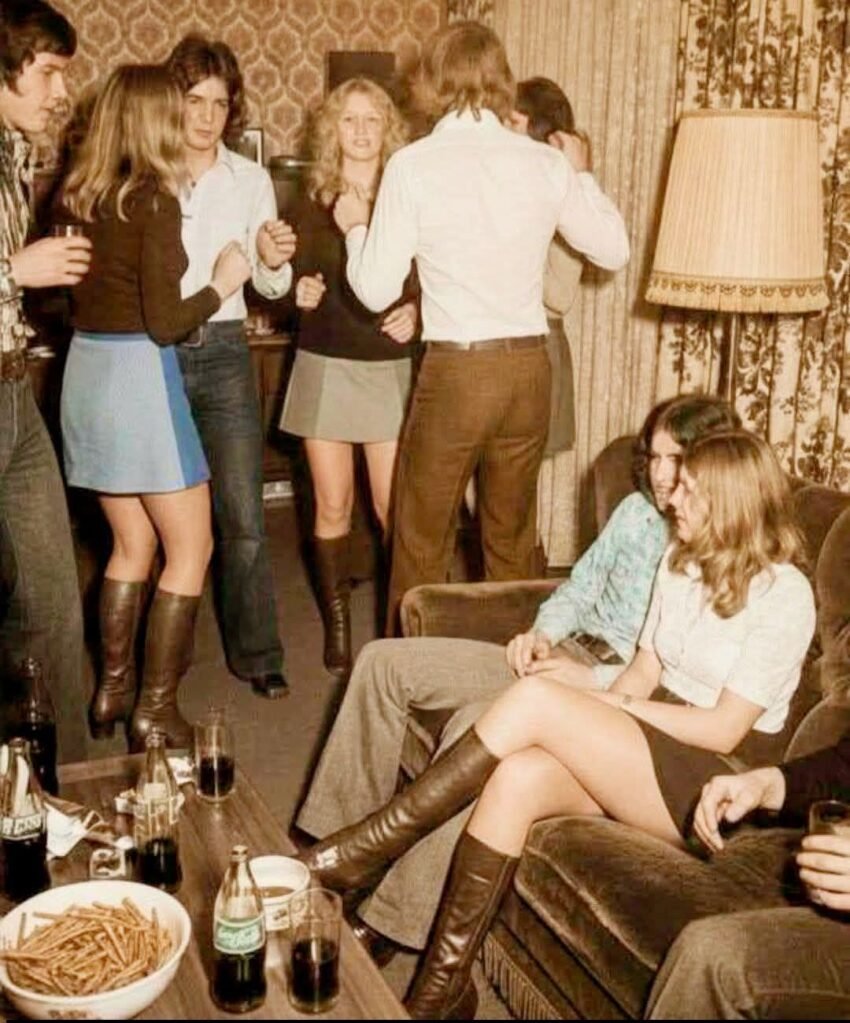
What Year Was This Photo Taken? 7 Smart Clues That Reveal If It’s Really From the 1970s
Think your photo looks like the 1970s? Learn 7 expert clues—from fashion to film quality—to estimate the year with surprising accuracy.
You’re staring at a photo.
The colors look a little faded.
The hairstyles feel big.
The clothes scream “retro.”
And your first thought is:
This has to be the 1970s… right?
But here’s the thing — guessing the year of a photo isn’t just about vibe. It’s about details.
With a few smart observations, you can narrow down a photo’s timeframe surprisingly well — often within 3–5 years.
Let’s walk through the exact clues professionals use to date old photographs.
Why the 1970s Have a Distinct Look
The 1970s weren’t subtle.
Culturally, it was the era of:
-
Disco
-
Bold prints
-
Earth tones
-
Flared silhouettes
-
Experimental photography
Pop culture icons like Donna Summer and Elton John helped define the aesthetic — glamorous, expressive, unapologetic.
But aesthetic alone isn’t enough.
Let’s get specific.
7 Clues to Tell If a Photo Is Really From the 1970s
1. The Color Tone of the Photo
One of the biggest giveaways.
Most 1970s prints have:
-
Warm, slightly yellow undertones
-
Faded reds
-
Muted blues
-
A soft, matte finish
Film stocks from companies like Kodak were dominant during that time, and aging chemicals contribute to that nostalgic warmth.
If the photo feels overly crisp or digitally sharp — it’s probably newer.
2. Hairstyles
The 1970s were defined by:
-
Feathered layers (popularized by Farrah Fawcett)
-
Long, center-parted hair
-
Afros
-
Shag cuts
-
Heavy sideburns for men
-
Mustaches (thick and natural)
If you see tight perms with teased height — that leans more 1980s.
If hair is slick and minimal — likely 1990s or later.
3. Clothing Silhouettes
Look closely at the shapes.
Common 1970s fashion included:
-
Bell-bottom jeans
-
High-waisted trousers
-
Wide lapels
-
Platform shoes
-
Polyester fabrics
-
Earth tones (mustard, rust, olive)
If shoulder pads are extreme — that’s 1980s.
If denim is ultra-light and ripped — likely 1990s.
4. Eyewear and Accessories
Oversized glasses were everywhere.
Think:
-
Tinted lenses
-
Gold metal frames
-
Large square shapes
Chunky jewelry also became popular mid-decade.
5. Interior Design Details
If your photo includes background décor, it’s a goldmine for dating clues.
1970s interiors often featured:
-
Wood paneling
-
Shag carpeting
-
Avocado green appliances
-
Orange and brown color schemes
-
Floral wallpaper
Appliances can be especially telling — refrigerator shapes changed dramatically in later decades.
6. Car Models in the Background
Cars are one of the most accurate dating tools.
Large, boxy American sedans from brands like Ford Motor Company or Chevrolet were common in the 1970s.
Look for:
-
Chrome bumpers
-
Rounded edges
-
Minimal plastic
Plastic-heavy bumpers didn’t dominate until the 1980s.
7. Photo Quality & Paper
Original 1970s prints often:
-
Have a white border
-
Feel slightly thicker
-
Show chemical aging spots
-
Lack ultra-high resolution
If the photo is extremely sharp with modern gloss coating, it may be a digital reproduction styled to look vintage.
Could It Be a 1970s-Inspired Photo Instead?
Here’s the twist.
Modern photographers intentionally recreate 1970s aesthetics.
You’ll see:
-
Vintage film filters
-
Retro clothing
-
Styled shoots
-
Warm editing tones
Social media trends have revived retro styling — especially among Gen Z creators.
So how do you tell?
Look for subtle modern tells:
-
Visible smartphones
-
Contemporary tattoos
-
Modern electrical outlets
-
LED lighting tones
Tiny details reveal everything.
Quick Comparison: 1970s vs 1980s vs 1990s
| Feature | 1970s | 1980s | 1990s |
|---|---|---|---|
| Pants | Bell-bottom | High-waisted tapered | Straight / relaxed |
| Hair | Feathered / natural | Big teased volume | Sleek / grunge |
| Colors | Earth tones | Neon | Muted / minimal |
| Cars | Rounded chrome | More angular | Plastic bumpers |
| Photo Tone | Warm, faded | Flash-heavy | Clearer contrast |
Mini Case Example
Imagine your photo shows:
-
A woman with feathered hair
-
Brown bell-bottom pants
-
A wood-paneled living room
-
An avocado green refrigerator
High probability: mid-to-late 1970s (around 1974–1978).
But if the hair is huge and teased with bright neon clothing?
More likely early 1980s.
Why We Instantly Think “1970s”
The 1970s aesthetic is emotionally distinctive.
It signals:
-
Nostalgia
-
Warmth
-
Family memories
-
Analog life
That emotional fingerprint makes us label anything warm-toned and retro as “70s” — even when it’s not.
Frequently Asked Questions
1. Can you determine the exact year from a photo?
Rarely exact — but often within a 3–5 year range.
2. Are faded colors always 1970s?
No. Aging affects many decades, but the 70s had distinct film chemistry warmth.
3. What’s the most reliable dating clue?
Background objects — especially cars and appliances.
4. Could it be early 1980s instead?
Yes. Early 80s still carried late 70s influence.
5. Do reprints change how old a photo looks?
Yes. Modern reprints can look newer than originals.
Action Checklist to Estimate the Year
✔ Examine hairstyles
✔ Look at pant shape
✔ Identify car models
✔ Study interior décor
✔ Check color tone
✔ Inspect photo paper texture
Combine multiple clues before deciding.
If your photo feels like the 1970s, it might be — but don’t rely on vibe alone.
Look for concrete clues:
-
Fashion silhouettes
-
Background objects
-
Film characteristics
-
Cultural markers
The more details align, the more confident your estimate.
If you’d like, describe what you see in the photo — clothing, background, hairstyles — and I’ll help you narrow it down to a likely year range.