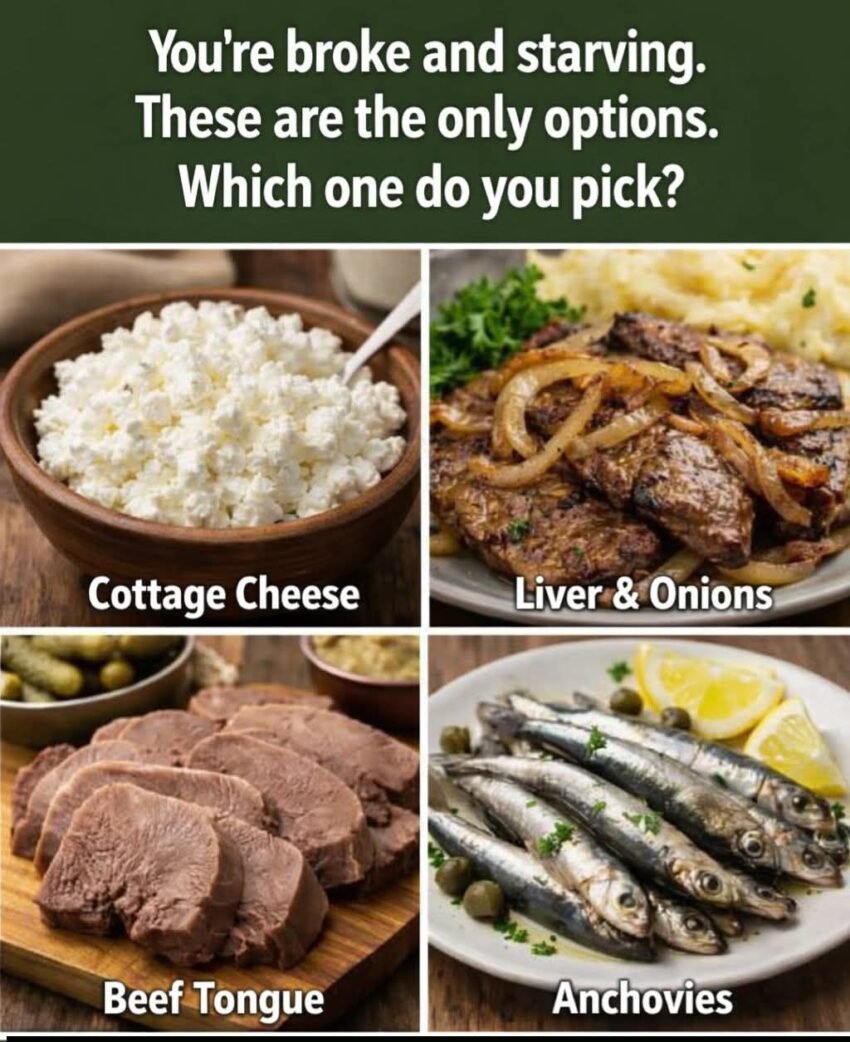
You’re Broke and Starving: Which of These Foods Should You Pick? A Practical Survival Guide
If you’re broke and starving, which food should you eat? We break down cottage cheese, liver & onions, beef tongue, and anchovies — nutrition, taste, and survival value.
You open your pantry. Or maybe a stranger offers help. Your stomach is growling. Your wallet is empty.
And in front of you are four options:
-
A. Cottage Cheese
-
B. Liver & Onions
-
C. Beef Tongue
-
D. Anchovies
Which do you choose?
This isn’t just about taste. It’s about survival, nutrition, and maximizing every calorie.
Let’s break it down like a seasoned survivalist and nutrition expert.
Why Food Choice Matters When You’re Starving
When your body is desperate for nutrients:
-
Calories matter
-
Protein matters
-
Vitamins and minerals matter
-
Digestibility matters
Your choice now can determine energy levels, mental clarity, and how long you can hold out until your next meal.
Option A: Cottage Cheese
Nutrition Snapshot:
-
High in protein (~14g per cup)
-
Moderate fat
-
Low carb
-
Contains calcium and B vitamins
Pros:
-
Easy to digest
-
Supports muscle maintenance
-
Ready to eat — no prep needed
Cons:
-
Perishable (won’t last long without refrigeration)
-
Low in calories if you need energy fast
Survival Takeaway:
Cottage cheese is great for a short-term protein boost, especially if you’re near refrigeration. Not ideal for long-term energy if you’re starving.
Option B: Liver & Onions
Nutrition Snapshot:
-
Extremely high in vitamin A, B12, iron, and other micronutrients
-
Moderate protein (~20g per 3 oz serving)
-
Low calorie unless cooked with fat
Pros:
-
Nutrient-dense powerhouse
-
Supports anemia prevention
-
Offers long-term health benefits
Cons:
-
Strong taste — some find it unpleasant
-
Can be tough to digest if unprepared
-
Requires cooking
Survival Takeaway:
If you can stomach it, liver is one of the best survival foods on the planet. It gives you vitamins you wouldn’t get elsewhere.
Option C: Beef Tongue
Nutrition Snapshot:
-
Protein-rich (~19g per 3 oz)
-
High in fat (~14g per 3 oz)
-
Contains zinc, iron, and B vitamins
Pros:
-
High-calorie, high-fat option — good for energy
-
Tender when cooked properly
-
Can sustain you longer
Cons:
-
Requires cooking and prep
-
Some people find texture off-putting
-
Less micronutrient-dense than liver
Survival Takeaway:
Beef tongue is energy-packed and filling. It’s a solid choice for staying alive, especially if you need calories to last.
Option D: Anchovies
Nutrition Snapshot:
-
Protein (~9g per 2 oz can)
-
High in omega-3 fats
-
Rich in calcium, selenium, and sodium
Pros:
-
Extremely long shelf life
-
No cooking needed
-
Healthy fats support brain function
Cons:
-
Very salty — can worsen dehydration if water is scarce
-
Small portion, low calories
-
Strong taste — not everyone likes it
Survival Takeaway:
Anchovies are perfect as a preserved protein source in emergencies. Great for vitamins and healthy fats, but you’ll need more calories to survive long-term.
Quick Comparison Table
| Option | Protein | Fat | Calories | Vitamins & Minerals | Prep Needed | Survival Rank |
|---|---|---|---|---|---|---|
| Cottage Cheese | High | Medium | Moderate | Calcium, B vitamins | None | 3 |
| Liver & Onions | High | Low-Med | Moderate | Vitamin A, B12, Iron | Cooking | 1 |
| Beef Tongue | High | High | High | Zinc, Iron, B vitamins | Cooking | 2 |
| Anchovies | Medium | Medium | Low | Omega-3, Calcium | None | 4 |
Expert Tip: Combine When Possible
If you can mix options, you can maximize benefits:
-
Cottage cheese + anchovies → protein + omega-3 + calcium
-
Beef tongue + liver → high energy + vitamins
Even small portions can cover critical nutritional needs when you’re desperate.
Beginner Mistakes to Avoid
-
Ignoring taste tolerance – Starving? You may need to eat what your body can handle, even if unappealing.
-
Skipping fat – Calories matter. Without fat, protein alone won’t keep you going.
-
Over-salting – Anchovies are already salty; dehydration is real.
-
Cooking incorrectly – Tough cuts like tongue or liver need proper prep to avoid digestive upset.
Real-Life Scenario
Imagine you’re alone, low on energy, and need to travel a few miles for help:
-
Liver & onions gives you micronutrients for stamina
-
Beef tongue fills you with calories
-
Cottage cheese is easy and digestible if you need a quick protein boost
-
Anchovies supplement essential fats and minerals
Making the right choice depends on immediate needs:
-
Short-term energy → tongue
-
Long-term nutrition → liver
-
Quick protein → cottage cheese
-
Shelf-stable fat & minerals → anchovies
Frequently Asked Questions
1. Which is best if you only get one meal?
Liver & onions for micronutrients, or beef tongue for calories if liver taste is a barrier.
2. Can I survive on just cottage cheese?
Not long-term — it lacks sufficient calories and micronutrients for prolonged survival.
3. Are anchovies safe without water?
They provide nutrients but high sodium can worsen dehydration.
4. Is beef tongue really edible?
Yes — it’s tender and nutritious when cooked properly.
5. Can I mix these foods?
Yes — combining protein, fat, and micronutrients gives the best survival advantage.
If you’re broke and starving:
-
Top pick for nutrition: Liver & onions
-
Top pick for energy and calories: Beef tongue
-
Top pick for quick, easy protein: Cottage cheese
-
Top pick for preserved nutrients and fats: Anchovies
Survival isn’t just about taste — it’s about nutritional strategy, calorie density, and what your body can handle.
Remember: eat smart, stay hydrated, and conserve energy. Your choices now directly impact your strength, stamina, and ability to endure until your next meal.
If you had to pick one of these four, which would you choose — and why? Share your strategy in the comments.