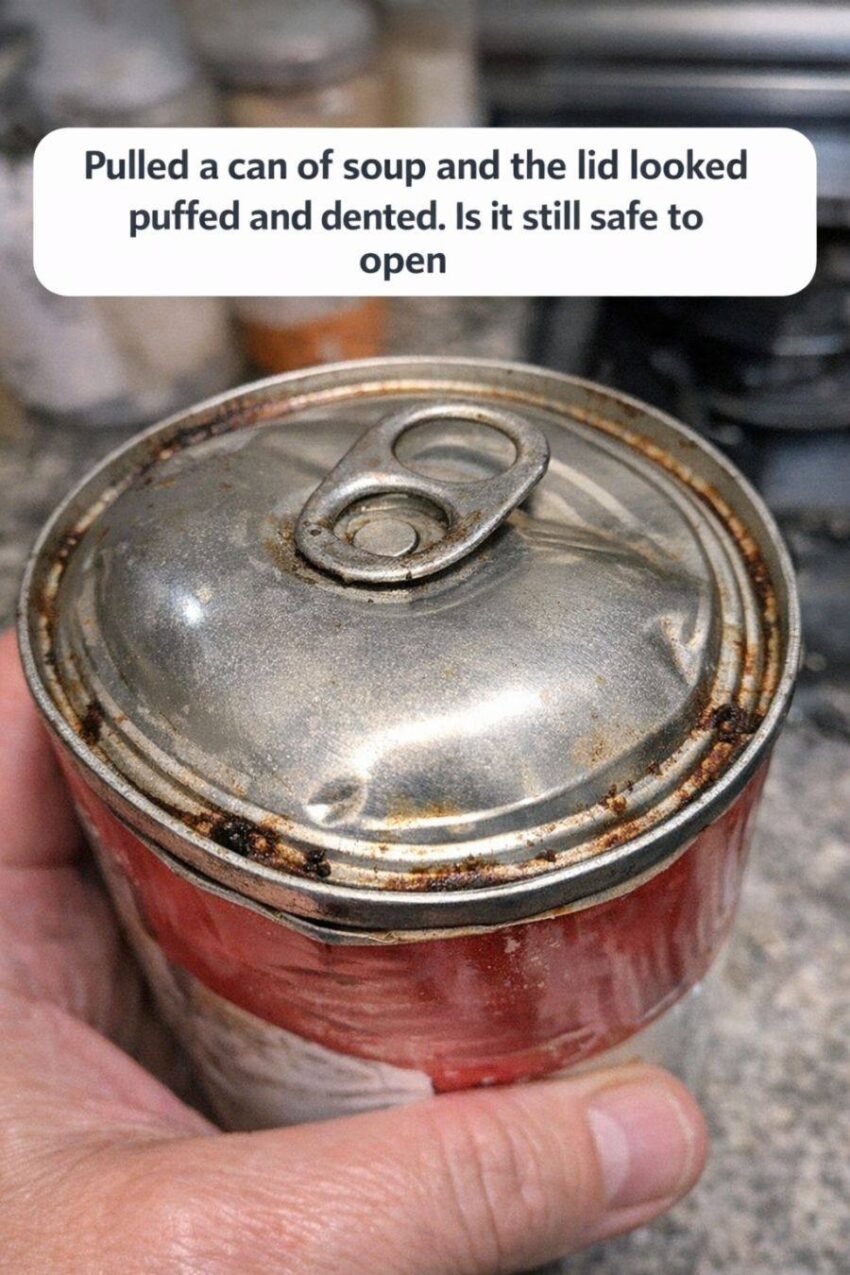
Pulled a Can of Soup With a Puffed or Dented Lid — Is It Safe to Eat?
Found a dented or puffed soup can in your pantry? Learn how to spot danger signs, why it happens, and what to do to stay safe.
You reach for a comforting can of soup, ready for a quick meal… and notice something alarming: the lid is puffed out or dented.
Your first thought: “Is this safe to eat?”
It’s a common pantry dilemma, and the answer is important — because opening a compromised can can make you seriously ill.
Let’s break down what you need to know.
Why Can Lids Puff or Dents Happen
1. Bacterial Growth (Botulism Risk)
-
When a can is contaminated, Clostridium botulinum bacteria can produce gas, causing the lid to bulge.
-
This can happen even if the soup looks normal inside.
-
Botulism is rare but life-threatening.
2. Improper Sealing During Manufacturing
-
Sometimes cans leave the factory with a tiny leak or air pocket, which can expand over time.
-
If the can bulges right out of the box, this is a red flag.
3. Physical Damage
-
Dents can compromise the can’s seal.
-
Dents on the seam or top lid are particularly dangerous because they may allow bacteria to enter.
Signs a Can Is Unsafe
-
Puffed or bulging lid
-
Leaking liquid from the seam
-
Severe rust or corrosion on the lid
-
Foul odor when opened
-
Unusual colors or textures in the soup
Never taste soup from a suspicious can — even a tiny sip can be dangerous.
When a Dented Can May Be Safe
-
Small dents on the side, away from the seams often do not compromise safety.
-
If there is no bulge, rust, or leak, the can is probably safe.
Tip: If unsure, throw it out. The risk isn’t worth it.
What to Do If You Have a Puffed Can
-
Do not open it.
-
Place it in a sealed plastic bag in case it leaks.
-
Dispose of it carefully — do not crush it by hand.
-
Wash your hands after handling.
⚠️ Opening a swollen can can release toxic gas and bacteria. Always err on the side of caution.
Prevention Tips
-
Check cans regularly in your pantry.
-
Rotate stock — use older cans first.
-
Inspect before buying — avoid dented or leaking cans at the store.
-
Store in a cool, dry place to reduce risk of bacterial growth.
Real-Life Scenario
Samantha found a puffed can of tomato soup in her pantry. At first, she thought it might still be okay. But after reading the safety signs:
-
She didn’t open it
-
Sealed it in a bag
-
Threw it away safely
Later, she learned that puffed cans are often a sign of botulism risk, and her cautious approach prevented potential poisoning.
FAQs
1. Can I fix a dented or puffed can by boiling it?
No — boiling does not remove toxins, and botulism toxins are heat-resistant.
2. Are all bulging cans unsafe?
Yes. Any can with a bulge should be discarded without tasting.
3. Can dented cans always be eaten?
Only small side dents away from seams, with no bulging, leaking, or rust.
4. Is botulism common?
Rare, but extremely dangerous. One contaminated can can make you very sick.
5. Can I report a bad can to the manufacturer?
Yes, most companies encourage reporting unsafe products. Keep the label and date for reference.
A puffed or severely dented can is never worth the risk. Even if the soup looks fine, the danger of botulism or bacterial contamination is real.
-
Inspect cans before use
-
Avoid dented or rusted cans
-
When in doubt, throw it out
Your health is far more important than a single can of soup. Safe handling prevents serious illness and keeps mealtime worry-free.