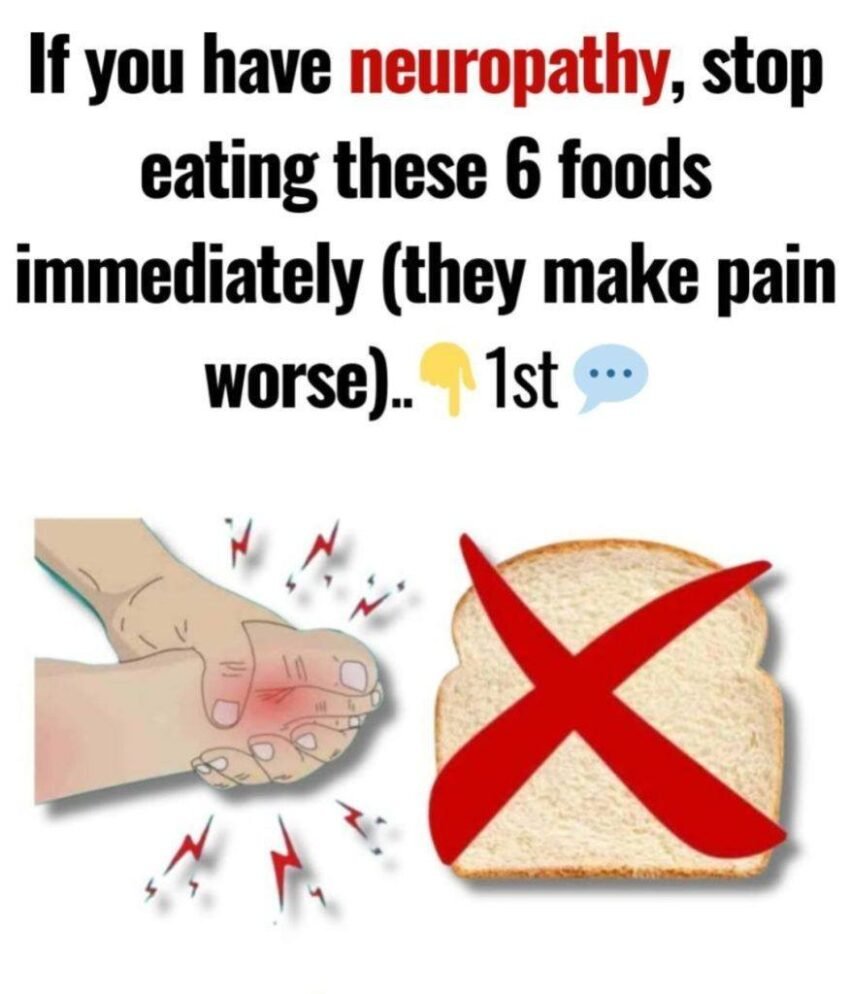
6 Trigger Foods That Can Cause Agonizing Pain If You Have Neuropathy
Living with neuropathy? Learn which 6 foods may worsen nerve pain, inflammation, or tingling sensations — and how to manage your diet for relief.
Neuropathy, or nerve damage, can make even simple daily activities painful. Tingling, burning, or sharp nerve pain often flare up due to certain triggers — and what you eat can play a big role.
While everyone’s body reacts differently, research and patient experiences reveal that specific foods can intensify neuropathy symptoms. Knowing these triggers can help you manage pain and improve quality of life.
1. Sugar and Refined Carbs
-
Why it hurts: High blood sugar damages nerves over time, leading to diabetic neuropathy. Refined carbs (white bread, pastries, soda) spike glucose levels quickly.
-
Effect: Can worsen burning, tingling, and nerve sensitivity.
-
Tip: Choose complex carbs like oats, quinoa, and sweet potatoes to stabilize blood sugar.
2. Alcohol
-
Why it hurts: Excessive alcohol is toxic to nerves and can worsen neuropathy, even in non-diabetics.
-
Effect: Increases numbness, tingling, and pain in hands and feet.
-
Tip: Limit alcohol or avoid it completely if neuropathy is severe.
3. Fried and Processed Foods
-
Why it hurts: Foods high in trans fats and additives increase inflammation throughout the body, aggravating nerve pain.
-
Examples: Fast food, fried snacks, packaged pastries.
-
Effect: Can trigger sharp nerve pain or flare-ups.
-
Tip: Opt for baked, steamed, or grilled meals with whole ingredients.
4. Excessive Salt
-
Why it hurts: High sodium intake can reduce blood flow to nerves, which worsens neuropathy symptoms.
-
Effect: Can cause swelling, discomfort, and sharper pain sensations.
-
Tip: Use herbs and spices instead of salt, and read labels on processed foods.
5. Artificial Sweeteners
-
Why it hurts: Some studies suggest sweeteners like aspartame may aggravate nerve pain in sensitive individuals.
-
Effect: Can trigger tingling or burning sensations, especially in diabetic neuropathy.
-
Tip: Replace with natural alternatives like stevia in moderation.
6. Highly Acidic Foods
-
Why it hurts: Citrus fruits, tomatoes, and vinegar can irritate sensitive nerves in some neuropathy patients.
-
Effect: May worsen burning sensations or nerve inflammation.
-
Tip: Monitor symptoms and reduce intake if they trigger flare-ups.
Managing Neuropathy Through Diet
-
Focus on anti-inflammatory foods: leafy greens, berries, fatty fish, nuts.
-
Stay hydrated: proper hydration supports nerve health.
-
Balance blood sugar: eat smaller meals with complex carbs, fiber, and lean protein.
-
Monitor triggers: keep a food journal to identify problem foods.
-
Consult your doctor: dietary changes can complement medication and physical therapy.
Real-Life Scenario
Jessica, 52, noticed her neuropathy pain worsened after indulging in pastries and soda. By gradually eliminating sugar and processed foods and increasing anti-inflammatory meals, she reported:
-
Reduced burning in her feet
-
Fewer flare-ups
-
Better overall energy and mood
Even small dietary changes can have a noticeable impact on nerve pain.
FAQs
1. Can eating these foods cause neuropathy?
They don’t cause neuropathy directly, but they can worsen existing nerve damage.
2. Are there foods that help neuropathy?
Yes — anti-inflammatory foods, omega-3-rich fish, berries, leafy greens, and whole grains support nerve health.
3. Should I avoid all sugar and carbs?
No — focus on complex carbs and moderate natural sugars, while avoiding refined or processed sugar.
4. Can alcohol cause permanent nerve damage?
Chronic excessive alcohol can lead to alcoholic neuropathy, so moderation or avoidance is key.
5. How quickly do symptoms improve after changing diet?
Some patients notice reduced flare-ups within weeks, but sustained improvement requires consistency.
Neuropathy pain can be agonizing, but diet plays a powerful role in managing it.
-
Avoid trigger foods: sugar, alcohol, fried foods, high salt, artificial sweeteners, and highly acidic foods.
-
Focus on nutrient-rich, anti-inflammatory meals.
-
Track your symptoms and stay consistent — small changes can make daily life more comfortable.
Eating thoughtfully isn’t just about general health; it’s about giving your nerves the best chance to feel better.