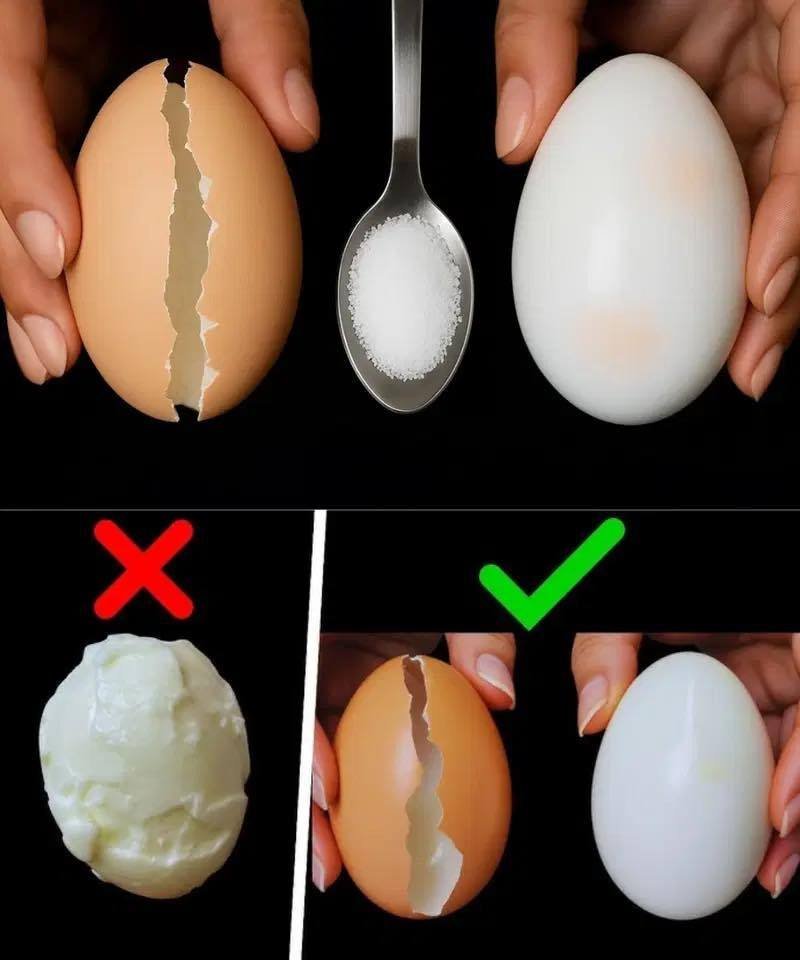
Stop Boiling Eggs in Water — Here’s How Five-Star Hotels Make Them Silky Every Time
Don’t boil eggs the old way. Discover the five-star hotel method for perfectly cooked eggs—tender whites, creamy yolks, zero guesswork.
If you’ve ever cracked open a hard-boiled egg and found a chalky yolk with that gray-green ring around it, you’ve experienced what most home cooks think is “normal.”
It’s not.
Luxury hotels don’t aggressively boil eggs in rolling water. They use a gentler, controlled technique that protects texture, flavor, and appearance.
The result?
-
Silky whites
-
Creamy, vibrant yolks
-
Easy-to-peel shells
-
Zero sulfur smell
Let’s break down the method professionals rely on—and how you can recreate it in your own kitchen without fancy equipment.
Why Direct Boiling Ruins Eggs
When you drop eggs into vigorously boiling water, three things happen:
-
Rapid temperature shock can crack shells.
-
Overcooking begins immediately, especially around the outer whites.
-
Sulfur compounds react with iron in the yolk, creating that gray ring.
That gray layer isn’t dangerous—but it signals overcooking.
Professional kitchens prioritize precision. Texture matters. Appearance matters.
At high-end properties in cities like New York City and Las Vegas, breakfast service runs with timing down to the minute. Eggs are treated as delicate proteins—not afterthoughts.
The Five-Star Method: Gentle Heat Control
Hotels typically use one of two refined approaches:
-
Hot-start covered method
-
Low-temperature water bath (sous vide style)
Both avoid aggressive boiling.
Let’s start with the simplest one you can use today.
Method 1: The Hot-Start Covered Technique (No Boiling)
This is the most practical at-home version of hotel-style eggs.
What You’ll Need
-
Eggs (room temperature preferred)
-
Saucepan
-
Lid
-
Ice bath
Step-by-Step Instructions
-
Place eggs in a single layer in a saucepan.
-
Add cold water until it covers eggs by about 1 inch.
-
Heat on medium until the water just reaches a gentle boil.
-
Immediately turn off heat and cover with a lid.
-
Let sit in the hot water:
-
6 minutes → Soft set
-
9 minutes → Medium set
-
11–12 minutes → Fully set but creamy
-
-
Transfer immediately to an ice bath for 5–10 minutes.
The key difference?
You’re not cooking in rolling boiling water.
You’re finishing the cooking with residual heat.
This creates controlled protein coagulation—something culinary schools emphasize for egg cookery fundamentals.
Method 2: Low-Temperature Water Bath (Precision Style)
Higher-end kitchens sometimes use immersion circulators to maintain exact temperatures.
For example:
-
145°F (63°C) for 45–60 minutes → Custardy yolk, tender white
-
165°F (74°C) for 13 minutes → Fully set but ultra-smooth
This approach is rooted in modernist cooking techniques popularized in fine-dining circles and widely discussed in culinary innovation spaces covered by publications like Forbes when profiling top chefs.
You don’t need a professional setup to improve your results—but understanding the science helps.
Why This Method Works (The Science, Simplified)
Eggs cook through protein denaturation.
-
Egg whites begin setting around 140–149°F.
-
Yolks thicken between 149–158°F.
-
Above 170°F, proteins tighten aggressively → rubbery texture.
A rolling boil reaches 212°F.
That’s far beyond what eggs need.
By cutting heat early, you avoid over-tightening proteins.
Why It Matters in American Kitchens
Eggs are a staple in U.S. households.
According to food consumption reports frequently analyzed in research institutions like Harvard University, eggs remain one of the most affordable high-quality protein sources in America.
When something is eaten this often, improving technique makes a noticeable difference.
Whether you’re:
-
Meal prepping
-
Hosting brunch
-
Packing protein snacks
-
Making deviled eggs
-
Preparing egg salad
Texture determines quality.
Common Mistakes Most People Make
1. Boiling Too Aggressively
High heat toughens the whites.
2. Skipping the Ice Bath
Cooling stops residual cooking. Without it, eggs overcook internally.
3. Using Very Fresh Eggs for Hard Boiling
Slightly older eggs peel easier.
4. Overcrowding the Pan
Eggs bump and crack.
5. Guessing Timing
Precision beats estimation.
Pros and Cons of the Hotel-Style Method
| Pros | Cons |
|---|---|
| Creamier yolks | Slightly longer process |
| No gray ring | Requires attention to timing |
| Easier peeling | Ice bath needed |
| Better presentation | Not ideal if rushed |
For most home cooks, the tradeoff is worth it.
Real-World Use Case: Meal Prep Upgrade
Imagine you prep a dozen eggs every Sunday.
Using direct boiling, you might get:
-
Dry centers
-
Peeling frustration
-
Inconsistent doneness
Using the gentle heat method, you get:
-
Consistent texture
-
Smooth yolks
-
Clean presentation for the entire week
Small upgrade. Big payoff.
2025 Kitchen Trend: Precision Over Speed
Across the U.S., cooking trends continue shifting toward:
-
Temperature control
-
Technique refinement
-
Quality over convenience
Social media cooking content increasingly emphasizes how food is prepared—not just recipes.
People are realizing simple ingredients deserve better technique.
Eggs are the perfect example.
Frequently Asked Questions
1. Is boiling eggs unsafe?
No. It’s safe—just not optimal for texture.
2. Why do my eggs crack when boiling?
Rapid temperature shock and bumping cause cracks.
3. Do I need vinegar or baking soda?
Not necessary with proper timing and cooling.
4. How do I get easier peeling?
Use slightly older eggs and cool fully in ice water.
5. What causes the green ring?
Iron and sulfur reaction from overcooking.
6. Can I use this method for large batches?
Yes—just keep eggs in a single layer.
7. Does altitude affect cooking time?
Yes. Higher altitudes may require slight adjustments.
8. Are hotel eggs always sous vide?
Not always. Many use controlled residual heat instead.
9. Is this method energy efficient?
Yes. You turn heat off early.
Step-By-Step Quick Reference
-
Bring water to a gentle boil
-
Turn heat off immediately
-
Cover and rest
-
Ice bath
-
Peel under running water
Simple. Controlled. Professional.
The Bigger Lesson
Luxury cooking isn’t about expensive ingredients.
It’s about respecting temperature.
Eggs don’t need violent heat.
They need precision.
Once you try this method, going back to aggressive boiling will feel unnecessary.
Conclusion: Upgrade a Basic Habit
Most people boil eggs out of habit.
Hotels cook them with intention.
The difference is subtle—but unmistakable.
Better texture.
Better appearance.
Better experience.
Next time you make eggs, try the gentler approach.
Notice the difference.
And if you’ve been boiling them for years—don’t worry.
Most of us were.
You don’t need rolling boiling water to cook perfect eggs. A gentle heat method delivers creamier yolks, smoother whites, and consistent results—just like five-star kitchens aim for every morning.
Have you tried a low-heat method before?
If not, this might be your simplest kitchen upgrade yet.