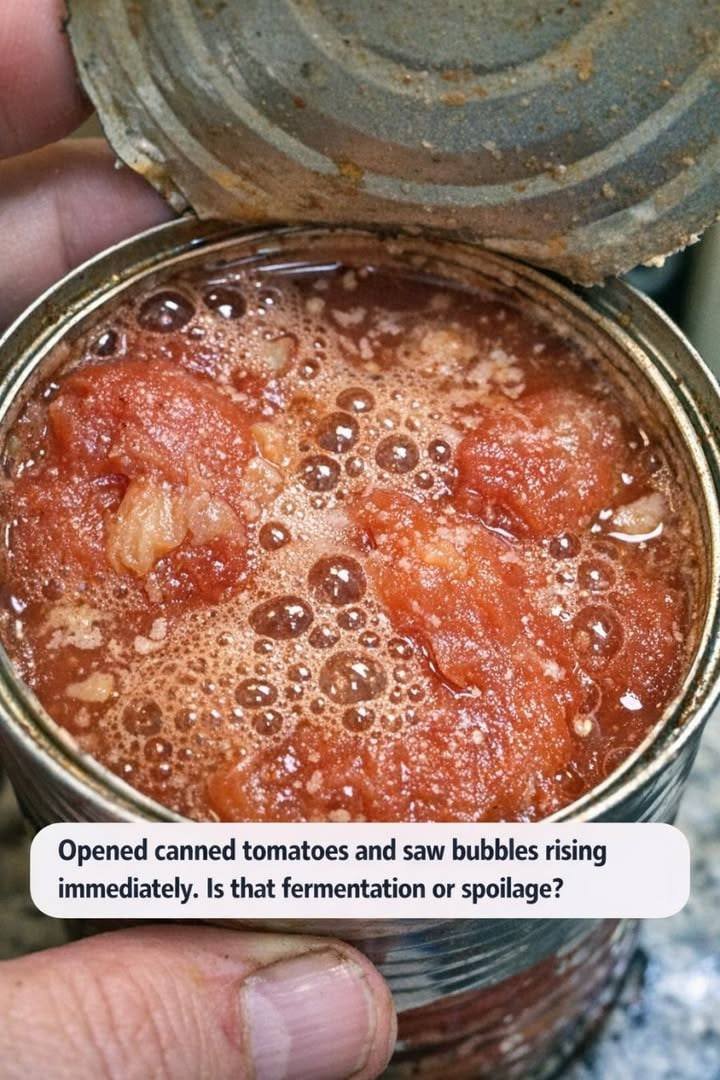
Bubbles in Your Canned Tomatoes: Fermentation or Spoilage? What You Need to Know
Opened a can of tomatoes and saw bubbles? Learn how to tell if it’s harmless gas, fermentation, or dangerous spoilage—and how to stay safe.
You grab a can of tomatoes for dinner.
You pop it open—and bubbles rise immediately.
Your first thought: “Is this normal, or is my food spoiled?”
It’s a common concern, and understanding what those bubbles mean can keep your meals safe—and your family healthy.
Why Bubbles Appear in Canned Tomatoes
Bubbles in canned tomatoes can occur for a few reasons:
-
Residual Carbon Dioxide from Canning
-
During production, some gas can get trapped.
-
If the can is intact and there’s no off smell, this is usually harmless.
-
-
Fermentation
-
Happens when natural sugars are converted by yeast or bacteria into carbon dioxide.
-
This is intentional in pickles or fermented foods, but canned tomatoes are not meant to ferment.
-
Signs of fermentation include: fizzy liquid, tangy or sour smell, slight effervescence in taste.
-
-
Spoilage from Harmful Bacteria
-
Bacteria like Clostridium botulinum can grow if the can’s seal is compromised.
-
Signs include:
-
Bulging or leaking can
-
Foul, rotten, or sour odor
-
Discoloration or slimy texture
-
-
Important: Even one bite of contaminated canned food can be extremely dangerous.
How to Tell if Your Canned Tomatoes Are Safe
| Sign | Likely Cause | Action |
|---|---|---|
| Bubbling but no smell, normal color | Trapped CO₂ from canning | Likely safe, but monitor carefully |
| Foul, sour, or rotten smell | Bacterial spoilage | Discard immediately |
| Bulging can or leaking | Bacterial contamination | Do not consume |
| Mold or unusual color | Spoilage | Discard |
Rule of thumb: If in doubt, throw it out. It’s not worth the risk.
Why Canned Tomatoes Rarely Ferment Safely
Canned tomatoes are highly acidic, which normally prevents bacterial growth.
-
Low pH inhibits harmful bacteria.
-
Spontaneous fermentation in a sealed can is rare.
-
Bubbles in an intact, normal-smelling can may be harmless gas, but if any spoilage signs appear, it’s dangerous.
Expert Tips to Stay Safe
-
Check the can before opening: Avoid dents, rust, or swelling.
-
Inspect after opening: Smell, look, and note texture.
-
Store leftovers safely: Refrigerate in a sealed container; consume within 3–4 days.
-
When in doubt, throw it out: Safety beats saving food.
Real-Life Scenario
Maria from Chicago:
She opened a can of tomatoes and noticed fizzing bubbles. She inspected and smelled them—no sour odor, normal color. She proceeded to cook the tomatoes, and they were perfectly fine.
But when her neighbor experienced a bulging can with an off smell, they wisely discarded it. It’s a perfect reminder: inspection matters more than panic.
FAQs About Canned Tomato Safety
1. Can I eat bubbly canned tomatoes if they smell fine?
Sometimes, yes—but only if the can is intact and there’s no odor, discoloration, or slime.
2. What causes bubbles in canned food?
Trapped CO₂ during manufacturing, fermentation (rare in acidic foods), or spoilage.
3. How can I prevent spoilage?
Store cans in a cool, dry place; avoid damaged or bulging cans.
4. Is fermentation in tomatoes ever safe?
Commercial canned tomatoes are not designed to ferment; intentional fermentation requires controlled conditions.
5. Can spoiled canned tomatoes make me sick?
Yes. Clostridium botulinum and other bacteria can cause serious foodborne illness.
Conclusion: Bubbles Are a Signal, Not Always a Threat
Bubbles rising in canned tomatoes aren’t automatically dangerous—but they warrant careful inspection.
-
Check for smell, color, texture, and can integrity.
-
Understand that canned tomatoes are acidic, making spontaneous fermentation rare.
-
Prioritize safety: when in doubt, discard.
Bubbling in canned tomatoes can be:
-
Harmless gas from the canning process
-
Rare fermentation (usually not safe in canned tomatoes)
-
Spoilage from harmful bacteria
Always inspect cans, trust your senses, and when uncertain, throw it out.
Next time you see those bubbles, you’ll know exactly what to do—and keep your meals safe.