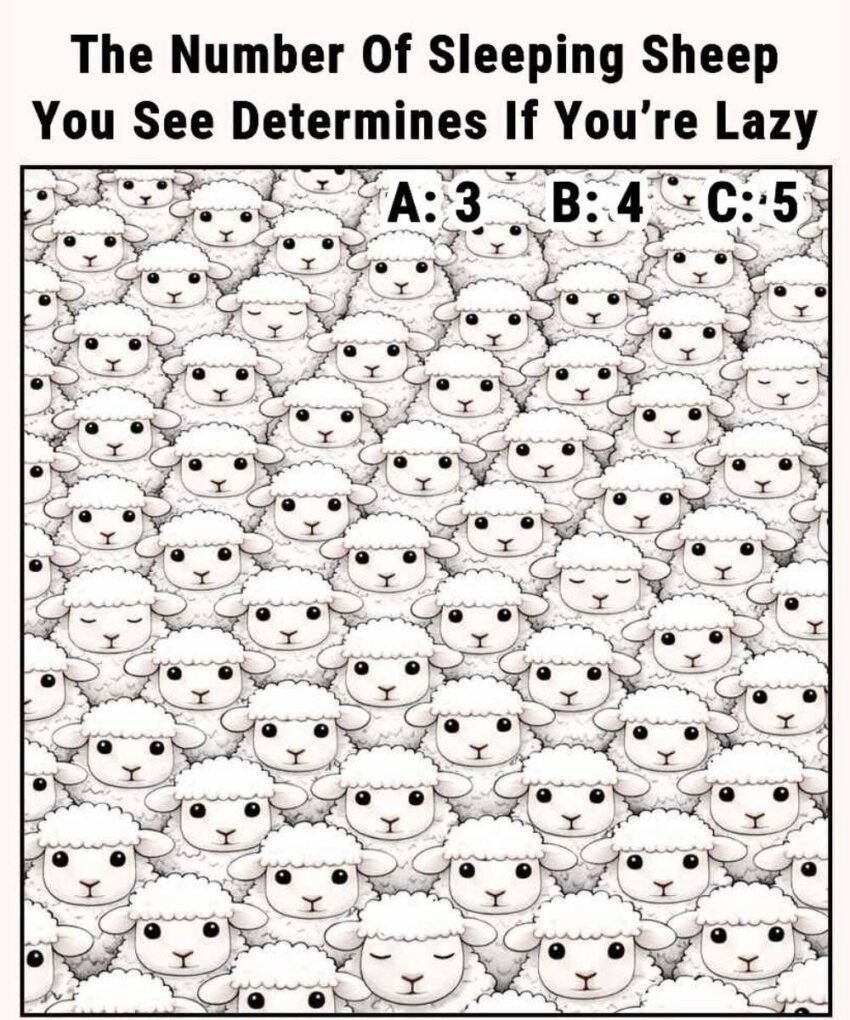
The Number of Sleeping Sheep You See Determines If You’re Lazy? 🐑
Let’s Talk About the Viral Claim — And What It Really Means
You’ve probably seen it floating around social media:
“The number of sleeping sheep you see determines if you’re lazy.”
It sounds playful. Maybe even a little mystical. Some versions say if you see more sheep, you’re hardworking. Others claim fewer sheep means laziness. Some suggest it’s a personality test.
But is there any real psychology behind this?
Let’s break it down.
🐑 Where Does This Idea Come From?
This trend likely stems from the old tradition of “counting sheep” to fall asleep.
The idea behind counting sheep is simple:
Repetitive mental imagery helps calm your brain, making it easier to drift off.
But the viral version flips that into a personality test — claiming the number of sheep you “see” reveals laziness or work ethic.
Here’s the truth:
There is no scientific evidence linking imagined sheep to laziness.
Zero.
🧠 Why Do These Tests Feel So Convincing?
These viral “see what you notice first” or “count what you see” posts work because of something called the Barnum Effect.
The Barnum Effect happens when people believe vague personality statements are uniquely accurate about them.
For example:
-
“You sometimes doubt yourself.”
-
“You want to be successful but struggle with motivation.”
-
“You value rest but also work hard.”
Almost everyone relates to those.
So when a sheep image claims to reveal laziness, your brain fills in the blanks.
💤 What Laziness Actually Is (And Isn’t)
Psychology doesn’t really use the word “lazy” clinically.
What people call laziness is often:
-
Burnout
-
Mental fatigue
-
Sleep deprivation
-
Depression
-
ADHD
-
Lack of motivation due to stress
Sometimes it’s not laziness — it’s exhaustion.
If you’re seeing “sleeping sheep,” it might just mean your brain is interpreting a calm or repetitive pattern. That’s visual processing, not a moral judgment.
🐑 Why Counting Sheep Helps With Sleep
The traditional sheep-counting technique works because:
-
It gives your mind a neutral focus.
-
It reduces anxious thoughts.
-
It slows mental chatter.
In fact, sleep researchers have found that guided imagery can sometimes be even more effective than counting sheep.
So if you’re seeing sheep in your mind, it might just mean your brain is trying to relax.
📱 Why These Viral Posts Spread So Fast
Social media thrives on:
-
Quick personality quizzes
-
Emotional reactions
-
Shareable results
-
“Tag a friend” moments
And let’s be honest — it’s fun to take them.
But they’re entertainment, not diagnostics.
🚨 Does Seeing More Sheep Mean You’re Lazy?
No.
The number of sheep you see likely depends on:
-
How imaginative you are
-
How long you stare at the image
-
How your visual perception works
-
Whether you’re actively trying to count
It has nothing to do with work ethic.
🧠 A More Helpful Question
Instead of asking, “Am I lazy?” ask:
-
Am I rested?
-
Am I overwhelmed?
-
Am I burned out?
-
Do I need structure or support?
Sometimes what looks like laziness is actually your body asking for recovery.
The “sleeping sheep determines laziness” claim is a viral myth — not science.
Seeing sheep doesn’t measure:
-
Your productivity
-
Your ambition
-
Your discipline
It just means your brain saw sheep.
And that’s perfectly normal.