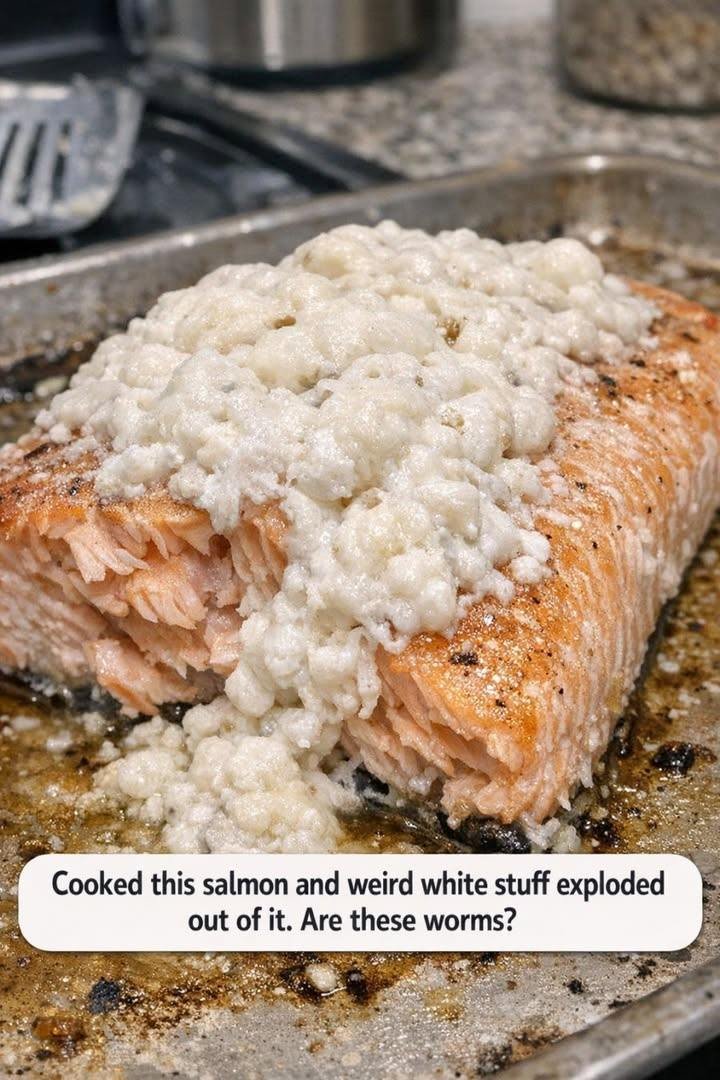
No, that weird white stuff you saw isn’t worms — it’s a natural protein called albumin. 🐟
Here’s what’s happening when you cook salmon (or other fish):
🥩 What Is That White Stuff?
-
The substance is albumin, a water-soluble protein found in fish muscle.
-
When salmon cooks, the heat causes the muscle fibers to contract.
-
This pushes the albumin to the surface, where it solidifies into the white streaks or blobs you see.
It can look alarming, but it’s completely safe to eat.
🔥 Why It Appears More Sometimes
-
Overcooking: The more heat and time, the more albumin is forced out.
-
Frozen then thawed salmon: This can also increase albumin leakage.
-
Freshness: Fresher salmon sometimes has less albumin on the surface.
✅ How to Reduce Albumin on Cooked Salmon
-
Cook gently: Lower heat or slower cooking reduces albumin.
-
Brining: A light saltwater brine before cooking helps proteins stay in the fish.
-
Don’t overcook: Aim for an internal temperature of about 125–130°F (52–54°C) for medium, moist salmon.
⚠️ When It’s Not Albumin
While albumin is harmless, actual parasites like Anisakis worms are rare in properly handled fish. Signs of parasites include:
-
Small, visible worms inside the flesh before cooking
-
Fish that smells off or has a slimy texture
-
Uncooked or raw fish from unreliable sources
Proper cooking kills parasites completely. If your salmon was cooked thoroughly, it’s safe to eat.
That white stuff is not worms, it’s just natural protein. You can eat it, or gently scrape it off if you like. Salmon with albumin is safe, nutritious, and delicious — just a little science in action.