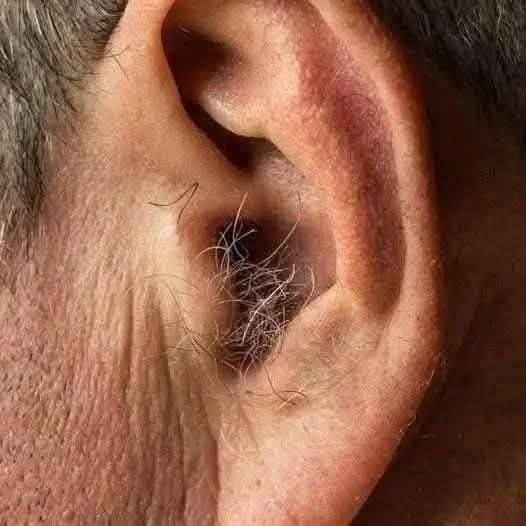
Did You Know? If Hair Grows on Your Ears, Here’s What Your Body Might Be Trying to Tell You
Noticed hair growing on your ears? Discover the real reasons behind ear hair growth, what it means for your health, and when to see a doctor.
You Lean In Close to the Mirror… and There It Is.
At first, you think it’s just lighting.
Then you look again.
A few coarse hairs — right on the outer edge of your ear.
For many people, especially men over 40, ear hair growth seems to appear out of nowhere. It can feel surprising, sometimes embarrassing, and occasionally worrying.
But here’s the truth:
In most cases, ear hair growth is completely normal.
That said, your body rarely does anything without a reason.
Let’s explore what causes ear hair growth, what it might signal about your hormones and aging process, and when (if ever) you should be concerned.
First, Is Ear Hair Normal?
Yes.
Hair follicles exist all over your body — including:
-
The outer ear (pinna)
-
The ear canal entrance
-
The earlobe
Some of these hairs are fine and barely visible. Others become thicker over time.
The key question isn’t whether ear hair exists.
It’s why it becomes more noticeable later in life.
1. Hormones — Especially Testosterone
The primary driver of increased ear hair growth is androgens — male hormones like testosterone.
As men age, testosterone levels fluctuate. At the same time, hair follicles in certain areas (like the ears and nose) become more sensitive to androgens.
That’s why:
-
Scalp hair may thin
-
Eyebrow, nose, and ear hair may thicken
It’s not about having “too much” testosterone. It’s about how hair follicles respond to it over time.
Who Experiences This Most?
-
Men over 40
-
Men with a family history of thicker body hair
-
Some postmenopausal women (due to shifting hormone balance)
Hormonal shifts are the most common and least concerning reason.
2. Aging Changes Hair Growth Cycles
As we age, the hair growth cycle changes.
Some follicles:
-
Slow down (like scalp hair)
-
Become more active (like ear and nose hair)
Dermatologists explain that aging alters how long hair stays in its growth phase (anagen phase).
This is why ear hair often becomes:
-
Coarser
-
Darker
-
Longer
It’s part of the natural aging process — not a disease.
3. Genetics Play a Major Role
If your father or grandfather had noticeable ear hair, chances are higher that you will too.
Hair distribution patterns are strongly influenced by genetics.
In some populations, ear hair growth is more common due to inherited follicle sensitivity.
This explains why some men develop visible ear hair in their 30s — while others never do.
4. Ethnicity and Ancestral Traits
Certain ethnic backgrounds have higher tendencies toward thicker body hair overall.
That includes hair growth on:
-
Ears
-
Nose
-
Chest
-
Back
This isn’t abnormal — it’s simply variation in hair follicle density and hormone response.
5. Rarely: Hormonal Imbalances
In uncommon cases, excessive hair growth (including ears) can be linked to hormonal conditions.
Examples may include:
-
Androgen-producing tumors (rare)
-
Hormonal disorders
-
Medication side effects
However, ear hair alone — without other symptoms — is usually not a warning sign.
If you also notice:
-
Sudden unexplained weight gain
-
Rapid hair growth in unusual areas
-
Severe acne
-
Voice changes (in women)
That’s when medical evaluation makes sense.
6. Is There a Link to Heart Disease?
You may have heard claims that ear hair predicts heart disease.
This idea gained attention after small observational studies suggested a possible association between earlobe crease patterns and cardiovascular risk.
However:
Major health organizations such as the American Heart Association do not recognize ear hair as a proven risk factor for heart disease.
There is no strong scientific consensus that ear hair growth directly predicts heart problems.
Correlation does not equal causation.
Focus on real cardiovascular risk factors:
-
High blood pressure
-
Smoking
-
Diabetes
-
High cholesterol
-
Sedentary lifestyle
7. Medications That May Increase Body Hair
Some medications can stimulate hair growth, including:
-
Certain testosterone therapies
-
Anabolic steroids
-
Some hair growth treatments
If you recently started hormone therapy and noticed increased ear hair, that could be contributing.
Always review new symptoms with your prescribing provider.
Why Ear Hair Growth Is More Noticeable After 50
In the United States, men over 50 often report:
-
Thicker ear hair
-
Increased nose hair
-
Thinning scalp hair
This pattern is influenced by:
-
DHT (a derivative of testosterone)
-
Aging follicle response
-
Gradual hormonal shifts
It’s not a sign that something is “wrong.”
It’s a visible marker of how aging affects hair distribution.
Should You Remove Ear Hair?
That’s a personal choice.
Some men embrace it. Others prefer grooming.
If you choose removal, consider:
Safer Options
-
Electric ear trimmers
-
Professional grooming
-
Careful trimming with rounded-tip scissors
Avoid
-
Waxing deep inside the ear canal
-
Tweezing aggressively (can cause infection)
-
Inserting sharp objects into the ear
The ear canal has protective hairs for a reason — they help trap dust and debris.
Remove only visible external hair.
Pros and Cons of Common Removal Methods
| Method | Pros | Cons |
|---|---|---|
| Electric trimmer | Safe, quick | Requires maintenance |
| Scissors | Affordable | Risky if careless |
| Waxing | Longer-lasting | Can irritate skin |
| Laser removal | Permanent reduction | Expensive |
For most people, a small electric trimmer is safest.
When Ear Hair Might Signal a Doctor Visit
While usually harmless, seek medical advice if ear hair growth is:
-
Sudden and extreme
-
Accompanied by other hormonal symptoms
-
Associated with skin changes or lesions
-
Causing recurrent infections
Otherwise, it’s typically cosmetic.
Common Myths About Ear Hair
Myth 1: Ear hair means high testosterone.
Not necessarily. It reflects follicle sensitivity more than hormone levels.
Myth 2: It predicts heart attacks.
No strong evidence supports this claim.
Myth 3: It only happens to older men.
It’s more common with age — but not exclusive.
Myth 4: Removing it makes it grow back thicker.
Hair may feel blunt after trimming, but it doesn’t change follicle density.
Mini Case Example
Robert, 52, from Ohio, noticed thicker ear hair and worried it meant a hormone issue.
Bloodwork showed normal testosterone levels.
His physician explained it was age-related follicle sensitivity.
A simple grooming routine solved the cosmetic concern — no medical issue involved.
Frequently Asked Questions
Is ear hair a sign of aging?
Yes — in most cases, it’s part of normal aging.
Can women get ear hair?
Yes, especially after menopause when estrogen declines.
Is ear hair related to prostate health?
There is no established scientific link.
Can diet influence ear hair growth?
Diet affects overall hair health but does not specifically target ear hair.
Does shaving increase growth?
No. Shaving does not increase follicle count or growth rate.
Should I test my hormones?
Only if other symptoms suggest imbalance.
Can ear hair cause hearing problems?
External hair does not. Excessive hair inside the canal may occasionally trap debris.
Is laser removal safe?
When performed by licensed professionals, generally yes.
Action Checklist
✔ Assess whether growth is gradual (normal) or sudden (evaluate)
✔ Consider safe grooming methods
✔ Avoid aggressive removal techniques
✔ Monitor for additional hormonal symptoms
✔ Discuss concerns during routine check-ups
If hair is growing on your ears, your body isn’t sounding an alarm.
In most cases, it’s simply responding to natural hormonal changes and aging.
It doesn’t mean disease.
It doesn’t mean danger.
It means your hair follicles are doing what follicles do — adapting over time.
If it bothers you, manage it safely. If it worries you, talk to your doctor.
But in the vast majority of cases?
It’s just biology.
If this article eased your concern, share it with someone who recently discovered an unexpected “new feature” in the mirror. And if you’ve found a grooming method that works well, drop it in the comments — practical tips always help.