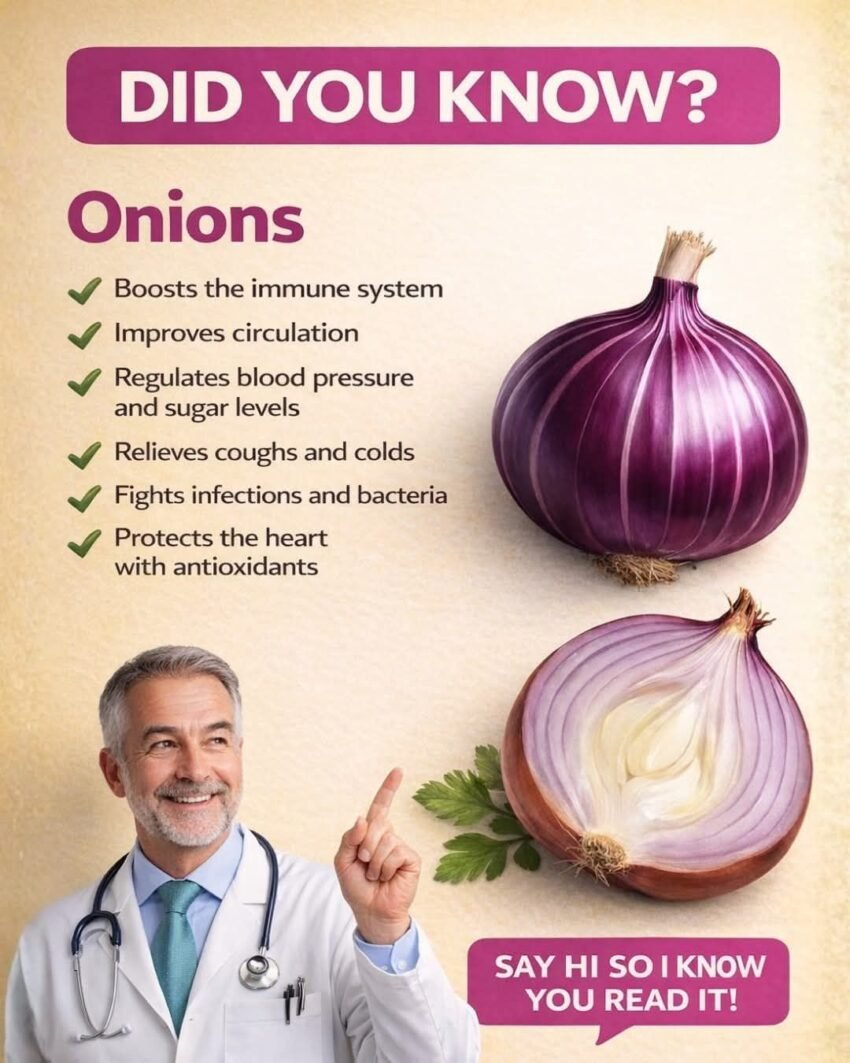
It’s Probably Sitting in Your Kitchen Right Now
No superfood label.
No $40 supplement jar.
No influencer hype.
Just a humble red onion.
If you cook at home even occasionally, you’ve probably chopped one this week. Maybe you added it to tacos, a salad, or a burger.
But what most people don’t realize is this:
Red onion isn’t just flavor — it’s function.
When used consistently, this accessible ingredient may support heart health, gut balance, and even clearer-looking skin.
Not magic.
Not overnight transformation.
But powerful, evidence-informed support.
Let’s break down what’s real — and how to use red onion in a way that actually benefits your body.
Why Red Onion Deserves More Respect
Red onions contain several bioactive compounds that have been studied for their potential health-supporting properties.
The most important ones include:
-
Quercetin (a flavonoid antioxidant)
-
Sulfur compounds
-
Prebiotic fibers (like inulin)
-
Anthocyanins (the pigment that gives red onions their purple hue)
Together, these compounds influence inflammation, circulation, gut bacteria, and cellular protection.
That’s why red onion can impact multiple systems at once.
1️⃣ Red Onion and Heart Health
Heart disease remains one of the leading health concerns in the United States.
Major institutions such as Harvard University regularly emphasize the role of diet in cardiovascular health — particularly antioxidant-rich plant foods.
Here’s how red onion may help support heart function:
✔ Quercetin May Support Healthy Blood Pressure
Quercetin has been studied for its potential to:
-
Support vascular flexibility
-
Reduce oxidative stress in blood vessels
-
Help maintain normal blood pressure levels
While it’s not a medication, consistent intake through whole foods contributes to a heart-supportive diet.
✔ Sulfur Compounds Support Circulation
Onions contain organosulfur compounds that may:
-
Support blood vessel health
-
Contribute to healthy cholesterol metabolism
Again — this supports heart health when combined with overall healthy habits like exercise and balanced nutrition.
2️⃣ A Balanced Gut Starts with Prebiotics
Your gut microbiome influences:
-
Digestion
-
Immune function
-
Mood
-
Skin clarity
-
Metabolism
Red onion contains inulin, a type of prebiotic fiber.
Prebiotics feed beneficial gut bacteria.
When those bacteria thrive, you may experience:
-
Improved digestion
-
Reduced bloating
-
More consistent bowel movements
-
Better nutrient absorption
Search data often cited by Google shows that interest in “gut health foods” continues to rise across the U.S. — and prebiotic vegetables are leading that movement.
Red onion is one of the easiest to add daily.
3️⃣ More Beautiful Skin (Indirect but Real)
Let’s be clear: red onion is not a cosmetic treatment.
But skin reflects internal health.
Here’s how it may contribute indirectly:
✔ Antioxidant Protection
Anthocyanins and quercetin help reduce oxidative stress.
Oxidative stress contributes to:
-
Premature aging
-
Dullness
-
Inflammation
Reducing internal inflammation often improves skin clarity over time.
✔ Gut-Skin Connection
When gut bacteria are balanced:
-
Inflammatory skin flare-ups may decrease
-
Nutrient absorption improves
-
Hormonal balance becomes more stable
That’s why gut-supportive foods often show visible skin benefits after several weeks.
Why Red Onion Is So Accessible (And That Matters)
Many health trends involve:
-
Expensive powders
-
Hard-to-find herbs
-
Complicated regimens
Red onion costs a few dollars and is available in nearly every U.S. grocery store.
Publications like Forbes frequently highlight the shift toward affordable, food-based wellness over extreme supplementation.
That’s where red onion fits beautifully.
It’s sustainable.
The Right Way to Use Red Onion for Maximum Benefits
Preparation matters.
🥗 1. Eat It Raw (Best for Antioxidants)
Raw red onion preserves quercetin and anthocyanins.
Try it in:
-
Salads
-
Avocado toast
-
Salsa
-
Sandwiches
-
Grain bowls
Pro tip: Soak sliced onion in cold water for 10 minutes to reduce sharpness.
🍳 2. Lightly Cook It (Balanced Approach)
Cooking reduces some antioxidants but enhances digestibility.
Best methods:
-
Quick sauté (5–7 minutes)
-
Roasting at moderate heat
-
Adding at end of cooking process
Avoid overcooking — high heat for long periods degrades beneficial compounds.
🥣 3. Combine It Strategically
Pair red onion with:
-
Olive oil (improves antioxidant absorption)
-
Leafy greens (adds vitamin C)
-
Legumes (fiber synergy)
-
Fermented foods (gut support amplification)
What Happens After 2–4 Weeks?
When consumed consistently as part of a balanced diet, some people report:
-
Improved digestion
-
Reduced bloating
-
Slightly clearer skin
-
Better post-meal energy
-
Feeling less inflamed
Results vary — and they’re subtle.
But subtle, consistent improvements are sustainable.
Common Mistakes to Avoid
❌ Expecting Instant Skin Glow
This is internal nourishment — not a cosmetic filter.
❌ Eating It Alone While Ignoring Overall Diet
Red onion can’t override:
-
Excess sugar
-
Chronic stress
-
Poor sleep
-
Ultra-processed foods
❌ Overdoing It
Too much raw onion may cause digestive discomfort.
Moderation matters.
Mini Case Scenario
Angela, 41, California:
-
Mild bloating
-
Occasional skin flare-ups
-
Sedentary office job
She adds:
-
Raw red onion to daily salads
-
More water intake
-
30-minute walks 4x weekly
After 6 weeks:
-
Reports improved digestion
-
Notices slightly brighter skin
-
Feels less sluggish after meals
Not dramatic.
But consistent.
Pros and Cons
| Pros | Cons |
|---|---|
| Affordable | Strong taste for some |
| Widely available | May cause digestive discomfort if overconsumed |
| Supports multiple systems | Not a medical treatment |
| Easy to integrate | Subtle results |
Frequently Asked Questions
1. Can red onion lower cholesterol?
It may support heart health, but it does not replace prescribed treatments.
2. Is raw better than cooked?
Raw preserves more antioxidants, but lightly cooked is easier to digest.
3. How much should I eat daily?
A few tablespoons to ½ cup incorporated into meals is reasonable for most people.
4. Does it detox the body?
Your liver and kidneys handle detoxification. Red onion may support overall health.
5. Can it improve acne?
Indirectly, through gut and inflammation support — but not as a standalone cure.
6. Is it safe every day?
Yes for most healthy adults, unless you have digestive sensitivities.
7. What about onion supplements?
Whole foods are generally preferred over isolated extracts.
Action Checklist
If you want to start today:
✔ Add raw red onion to one meal daily
✔ Pair with healthy fats
✔ Increase overall fiber intake
✔ Stay hydrated
✔ Move your body consistently
✔ Track changes for 4 weeks
The Bigger Picture
There’s no miracle vegetable.
But there are smart, consistent choices.
Red onion:
-
Supports heart-friendly nutrition
-
Feeds beneficial gut bacteria
-
Provides antioxidants for cellular protection
It’s simple. Accessible. Sustainable.
And sometimes, that’s exactly what long-term health needs.
Red onion won’t transform your health overnight.
But when used consistently as part of a balanced lifestyle, it may support heart health, gut balance, and clearer-looking skin — naturally and affordably.
Before chasing exotic superfoods, look at what’s already in your kitchen.
Sometimes the most powerful health tools aren’t trendy.
They’re timeless.
If you’ve started adding more red onion to your meals, share how you’re using it below — your recipe might inspire someone else’s healthy upgrade.