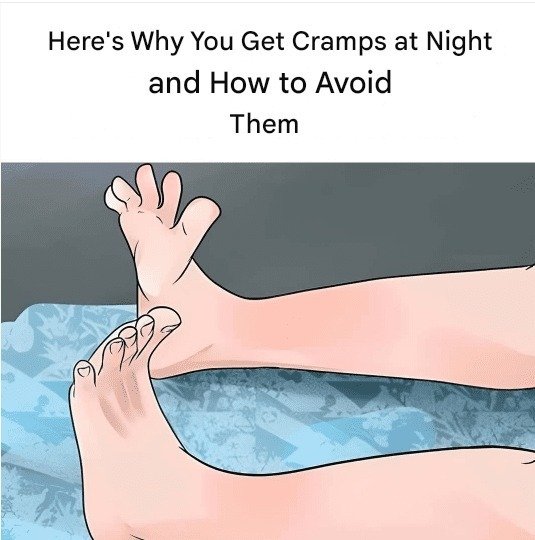
This Is Why We Get Cramps at Night — and How to Avoid Them
Night time leg cramps are more than annoying — they can disrupt sleep and indicate imbalances. Learn the main causes and practical ways to prevent them.
Waking Up to a Cramp: The Night time Struggle
There’s nothing quite like being jolted awake by a sudden, sharp cramp in your calf, foot, or thigh. It’s painful, surprising, and can leave you limping or tense for minutes.
Nighttime cramps are common, especially as we age. But understanding why they happen and what to do can make them far less disruptive — and even prevent them.
Why Nighttime Cramps Happen
Muscle cramps occur when a muscle contracts involuntarily and doesn’t relax. At night, several factors make this more likely:
-
Dehydration
-
Lack of fluids can make muscles more excitable and prone to spasms.
-
-
Electrolyte Imbalance
-
Low levels of magnesium, potassium, or calcium can trigger cramps.
-
-
Overuse or Muscle Fatigue
-
Standing, walking, or exercising heavily during the day can leave muscles tight.
-
-
Poor Circulation
-
Sitting or lying in one position for hours may reduce blood flow to legs.
-
-
Medication Side Effects
-
Diuretics, statins, or certain blood pressure medications can increase risk.
-
-
Underlying Conditions
-
Diabetes, peripheral artery disease, and nerve issues may contribute to nighttime cramps.
-
Simple Ways to Prevent Nighttime Cramps
1️⃣ Stay Hydrated
Drink water throughout the day — not just before bed. Proper hydration keeps muscles functioning optimally.
2️⃣ Stretch Before Sleeping
-
Calf stretches: Stand facing a wall, press your heel to the floor, lean forward gently.
-
Hamstring stretches: Sit on the floor, legs extended, reach toward toes.
-
Gentle yoga or mobility exercises can loosen tight muscles.
3️⃣ Maintain Electrolyte Balance
-
Include magnesium-rich foods: spinach, almonds, pumpkin seeds
-
Potassium: bananas, oranges, sweet potatoes
-
Calcium: yogurt, cheese, leafy greens
-
Supplements may help if diet isn’t enough (consult your doctor first)
4️⃣ Improve Circulation
-
Avoid crossing legs while lying down
-
Elevate your feet slightly if circulation is poor
-
Wear compression socks if recommended by a physician
5️⃣ Check Medications
If cramps are frequent, ask your doctor if any current medication could be contributing.
6️⃣ Massage or Heat Before Bed
-
Lightly massage calves or thighs
-
Use a warm compress or hot water bottle to relax muscles
Quick Relief When a Cramp Strikes
-
Stretch the affected muscle gently
-
Stand and walk on your heels if it’s in the calf
-
Massage the muscle firmly but carefully
-
Apply ice or heat for lingering soreness
Mini Case Example
-
Karen, 55: Experienced nightly calf cramps after long workdays. She increased hydration, added magnesium-rich snacks, and stretched before bed. Result: cramps reduced by 80% within two weeks.
-
Tom, 62: Diabetic, taking a statin, had cramps several nights a week. After consulting his doctor and adjusting electrolyte intake, frequency decreased dramatically.
Nighttime cramps are usually preventable with hydration, stretching, and proper nutrition. Understanding your body and its needs — and addressing contributing factors — can restore restful sleep and reduce painful interruptions.
✨ Pay attention to your habits today, stretch before bed, and your legs may thank you with a cramp-free night.