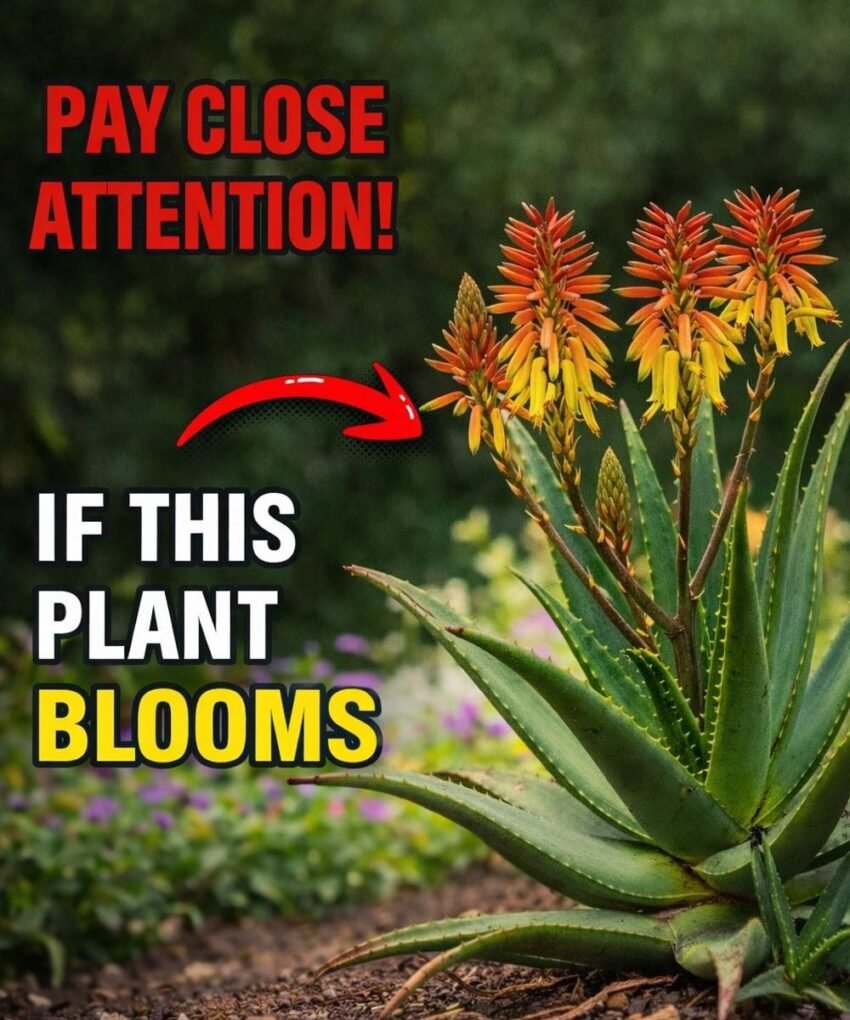
The Mystery Behind Why Aloe Vera Plants Bloom (And What It Really Means for Your Home Garden)
Discover why aloe vera plants bloom, what triggers flowering, and how to encourage healthy blooms in your home garden.
You’ve cared for your aloe vera plant for years.
Watered it sparingly.
Placed it near sunlight.
Maybe even forgotten about it for weeks at a time.
Then one day — a tall stalk rises from the center.
Buds form.
Color appears.
And suddenly, your simple succulent blooms.
If this has happened to you, you probably wondered:
Why now?
Is it rare?
Did I do something right?
The truth is, when an aloe vera plant blooms, it’s not random. It’s a biological milestone — and in many American homes, it happens far less often than people realize.
Let’s explore the real science, the environmental triggers, and what flowering actually says about your plant’s health.
Understanding the Aloe Vera Plant
The plant most people grow in their homes is Aloe vera, a succulent native to the Arabian Peninsula but now cultivated across warm regions of the United States, particularly in states like Arizona, California, Texas, and Florida.
It’s best known for:
-
Thick, gel-filled leaves
-
Medicinal and skincare uses
-
Low-maintenance care requirements
-
Drought tolerance
But many people don’t realize that aloe vera is also a flowering plant.
And when it blooms, it’s a sign of maturity and environmental harmony.
What Does an Aloe Vera Bloom Look Like?
When aloe vera flowers, it sends up a tall central stalk — sometimes 2–3 feet high — topped with tubular flowers.
These flowers are typically:
-
Yellow
-
Orange
-
Red (depending on variety and growing conditions)
The bloom resembles a torch or candle shape and can last several weeks.
It’s not just decorative.
It’s part of the plant’s natural reproductive cycle.
Why Aloe Vera Plants Bloom
There isn’t one single reason.
Flowering is triggered by a combination of biological readiness and environmental conditions.
Let’s break it down.
1. Maturity: The Plant Is Old Enough
Most aloe vera plants won’t bloom until they are:
-
At least 3–4 years old
-
Well-established
-
Root-bound but healthy
In many U.S. households, aloe plants are repotted frequently or divided into smaller pups, which can delay maturity.
If your aloe blooms, it likely means:
Your plant has reached full adulthood.
2. Sunlight Exposure
Aloe vera thrives in bright, indirect sunlight.
Outdoor aloe plants in sunny climates are far more likely to bloom than indoor ones.
Why?
Flowering requires energy.
Sunlight fuels photosynthesis, which provides the plant with the energy needed to produce a flower stalk.
In southern states like California and Arizona, outdoor aloe blooms are common.
In colder northern states, indoor plants may never bloom due to limited light.
3. Seasonal Cues
Aloe vera typically blooms in:
-
Late winter
-
Early spring
This timing aligns with longer daylight hours and warmer temperatures.
Plants respond to seasonal light changes — a phenomenon known as photoperiodism.
As days lengthen, hormonal shifts trigger flowering.
4. Slight Stress Can Encourage Blooming
Interestingly, mild environmental stress can stimulate flowering.
This may include:
-
Slightly cooler winter temperatures
-
Reduced watering during dormant months
-
Root crowding
This does not mean neglecting the plant.
It means allowing it to experience its natural growth cycle.
Overwatering or constant indoor climate control can suppress bloom signals.
Why Many Aloe Plants Never Bloom Indoors
Here’s the reality:
In many American homes, aloe plants are treated as decorative succulents rather than outdoor desert plants.
Common indoor conditions include:
-
Low winter sunlight
-
Consistent indoor heating
-
Overwatering
-
Limited airflow
These stable conditions reduce the environmental cues aloe needs to flower.
Blooming is less about effort and more about environment.
Does Flowering Mean the Plant Is Healthy?
Yes — generally.
Flowering is a strong indicator that:
-
The plant has adequate light
-
Roots are healthy
-
Nutrient balance is sufficient
-
Stress levels are manageable
However, if flowering is accompanied by:
-
Yellowing leaves
-
Wilting
-
Sudden decline
Then it may signal resource depletion.
In most cases, though, blooming is a positive milestone.
Step-by-Step: How to Encourage Aloe Vera to Bloom
If you want to increase your chances of seeing flowers, follow these practical steps.
Step 1: Increase Sunlight
-
Place near a south- or west-facing window
-
Provide 6–8 hours of bright light daily
-
Consider outdoor placement in warm months
Step 2: Adjust Watering
-
Water deeply but infrequently
-
Allow soil to dry completely between waterings
-
Reduce watering in winter
Step 3: Use Well-Draining Soil
Aloe requires sandy, cactus-style soil to prevent root rot.
Step 4: Allow Root Crowding
Avoid frequent repotting.
A slightly root-bound plant is more likely to flower.
Step 5: Maintain Seasonal Variation
If possible, allow cooler winter temperatures (50–60°F at night).
This mimics natural desert conditions.
Pros and Cons of Aloe Vera Flowering
| Pros | Cons |
|---|---|
| Indicates plant maturity | Flower stalk may drain energy |
| Adds visual beauty | Indoor plants may struggle to support bloom |
| Attracts pollinators outdoors | Rare indoors |
| Signals balanced care | Requires strong light |
Common Mistakes That Prevent Blooming
-
Overwatering
-
Insufficient sunlight
-
Repotting too often
-
Using heavy potting soil
-
Expecting young plants to bloom
Patience is essential.
Real-Life Example
Maria in Phoenix kept her aloe outdoors year-round.
Minimal watering. Full sun. Natural temperature shifts.
Her plant bloomed annually.
Meanwhile, her sister in Chicago kept hers on a kitchen counter with moderate light.
Five years — no bloom.
The difference wasn’t skill.
It was environment.
2026 Gardening Trend Insight
As more Americans embrace indoor gardening and sustainable living, succulents remain popular.
According to consumer gardening insights reported by publications like Forbes, plant ownership surged over the past few years, especially among millennials and Gen Z.
But as plant care knowledge grows, so does interest in flowering cycles.
Gardeners now seek:
-
Not just survival
-
But thriving and blooming
Understanding aloe flowering fits into this shift toward deeper plant care awareness.
Does Aloe Vera Die After Flowering?
No.
Unlike some monocarpic plants (which die after blooming), aloe vera can flower multiple times throughout its life.
After flowering:
-
The stalk will dry
-
It can be trimmed off
-
The plant continues growing
It does not signal the end.
Frequently Asked Questions
1. How often does aloe vera bloom?
Usually once a year under ideal outdoor conditions.
2. Why has my aloe never flowered?
Most likely insufficient light or the plant is too young.
3. Should I fertilize to encourage blooming?
A diluted succulent fertilizer in spring may help, but avoid overfeeding.
4. Can indoor aloe bloom?
Yes, but it’s less common due to light limitations.
5. How long do aloe flowers last?
Typically several weeks.
6. Should I cut the flower stalk?
Yes, once it dries, trim it near the base.
7. Does flowering reduce leaf gel quality?
No, but heavy flowering may temporarily redirect energy.
8. Do all aloe species bloom?
Most mature aloe species flower, but frequency varies.
Action Checklist
✔ Ensure 6–8 hours of bright light
✔ Use well-draining soil
✔ Avoid overwatering
✔ Allow natural seasonal shifts
✔ Be patient — maturity matters
✔ Trim stalk after blooming
The Deeper Meaning Behind the Bloom
There’s something quietly symbolic about an aloe vera plant blooming.
It thrives in tough conditions.
Stores water for drought.
Requires little attention.
And yet — when the environment aligns — it produces something strikingly beautiful.
Blooming isn’t about constant effort.
It’s about the right conditions at the right time.
When your Aloe vera blooms, it’s not luck.
It’s a sign of maturity, balance, and environmental harmony.
If yours hasn’t flowered yet, don’t worry.
Adjust the light. Respect the seasons. Be patient.
Sometimes growth happens quietly — before it rises on a tall, unexpected stalk.
Have you ever seen your aloe bloom? Share your experience and what conditions worked for you.