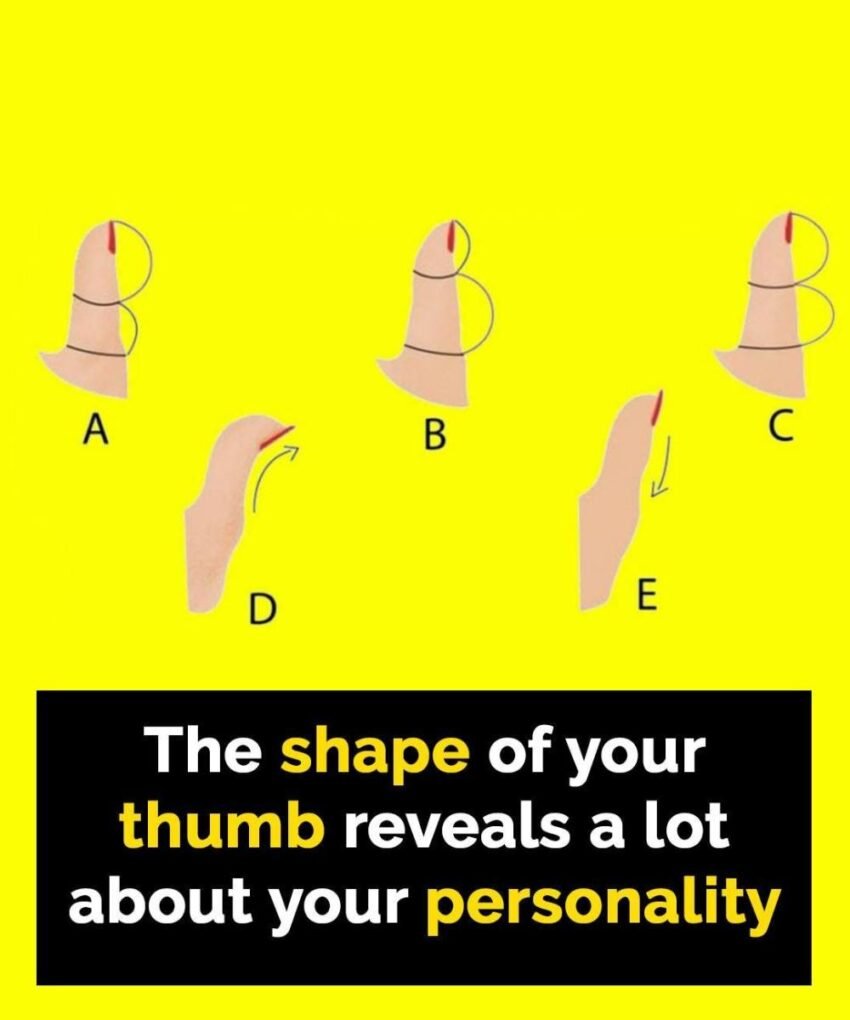
Look at Your Thumb… What Do You See? The Subtle Clues It May Be Giving About Your Health
Your thumb may reveal more than you think. Discover subtle thumb traits, what they can suggest about health and habits, and when to pay attention.
Introduction: The Body Clue You’ve Probably Never Questioned
Go ahead—look at your thumb.
Not your phone.
Not your screen.
Your actual thumb.
Its shape, flexibility, nail appearance, and even how you use it every day can quietly reflect aspects of your health, habits, and lifestyle. Doctors, therapists, and researchers have long known that hands—especially thumbs—can offer useful clues about how the body is functioning.
This doesn’t mean your thumb can diagnose disease. It does mean it can highlight patterns worth noticing.
In this article, you’ll discover:
-
Common thumb traits people notice (and what they may indicate)
-
Real-life scenarios many Americans recognize
-
What’s normal, what’s not, and what’s often misunderstood
-
Practical steps to protect thumb and hand health
-
When a thumb change deserves professional attention
Let’s take a closer look—literally.
Why the Thumb Is So Important
More Than Just Another Finger
The thumb is responsible for:
-
Grip strength
-
Fine motor skills
-
Hand coordination
-
Everyday tasks like typing, texting, cooking, and driving
In fact, nearly half of all hand function involves the thumb in some way.
That’s why changes in the thumb are often noticed earlier than changes elsewhere in the body.
What Your Thumb May Be Telling You
1. Thumb Nail Changes You’ve Probably Seen Before
Take a look at your thumbnail.
Do you notice:
-
Ridges
-
Discoloration
-
Brittleness
-
Unusual thickness
What this can reflect
Nails grow slowly and can reflect long-term patterns, such as:
-
Repeated stress or trauma
-
Nutritional habits
-
Circulation quality
-
Natural aging
Real-life example:
People who work with their hands, type constantly, or do manual labor often see nail ridges or surface changes over time.
2. Thumb Flexibility: Can Yours Bend Back Easily?
Some people can bend their thumb far backward. Others can’t at all.
This difference is usually harmless—but it can reveal joint flexibility patterns.
Possible associations
-
Natural joint flexibility
-
Repetitive strain
-
Overuse without adequate rest
Flexibility itself isn’t good or bad. Problems arise when flexibility is paired with pain, weakness, or instability.
3. Thumb Pain or Stiffness (Especially in the Morning)
Morning stiffness or soreness at the base of the thumb is extremely common.
Often linked to
-
Repetitive motion (phones, keyboards, tools)
-
Joint wear over time
-
Poor hand ergonomics
US context:
With increased screen time and remote work, thumb discomfort has become far more common in recent years.
4. The Base of the Thumb: A High-Use Pressure Point
The joint at the base of your thumb works harder than almost any other hand joint.
If you notice:
-
Swelling
-
Reduced grip strength
-
Aching after use
It may simply reflect overuse, not injury.
Ignoring early discomfort, however, often makes recovery slower.
5. Cold or Pale Thumbs
Do your thumbs often feel colder than the rest of your hands?
This can sometimes relate to:
-
Circulation sensitivity
-
Temperature response
-
Environmental exposure
For many people, it’s harmless—especially in colder climates or air-conditioned spaces.
Persistent or extreme changes should be evaluated professionally.
What Thumb Signs Do Not Mean (Important Reality Check)
Let’s clear up some common myths.
❌ A single thumb feature does not diagnose illness
❌ Internet charts cannot replace medical evaluation
❌ Temporary changes often reflect stress, activity, or environment
Your thumb provides context, not conclusions.
Everyday Habits That Affect Your Thumbs (More Than You Think)
1. Smartphone Use
Frequent texting and scrolling can lead to:
-
Thumb strain
-
Joint irritation
-
Reduced range of motion
This is sometimes casually referred to as “texting thumb.”
2. Work-Related Repetition
Jobs involving:
-
Tools
-
Writing
-
Data entry
-
Assembly work
Often place consistent stress on the same thumb movements.
3. Hobbies and Fitness
Activities like:
-
Gaming
-
Weight training
-
Gardening
-
Crafting
Can strengthen thumbs—but also overwork them without proper recovery.
Step-by-Step: How to Support Healthy Thumbs Daily
Step 1: Notice Early Signals
Pay attention to:
-
Mild pain
-
Clicking or stiffness
-
Reduced grip strength
Early awareness prevents long-term issues.
Step 2: Improve Thumb Ergonomics
-
Switch hands when scrolling
-
Use voice-to-text occasionally
-
Adjust keyboard and mouse height
Small changes reduce repetitive strain.
Step 3: Gentle Thumb Mobility
Simple movements can help:
-
Open and close the hand slowly
-
Touch thumb to each fingertip
-
Gently stretch (never force)
Consistency matters more than intensity.
Step 4: Rest Is Not Weakness
Pain is information.
Ignoring it often leads to:
-
Longer recovery
-
Reduced hand function
Rest supports resilience.
Pros and Cons of Paying Attention to Thumb Changes
Pros
-
Early awareness of strain
-
Better hand function
-
Reduced discomfort over time
-
Improved daily comfort
Cons
-
Overanalyzing harmless differences
-
Misinterpreting online claims
Balanced observation is the goal.
Common Thumb-Related Mistakes
Mistake 1: Pushing Through Pain
➡️ Pain usually worsens when ignored.
Mistake 2: Assuming Changes Are “Just Age”
➡️ Many issues are habit-related and adjustable.
Mistake 3: Self-Diagnosing Online
➡️ Context matters more than charts.
Mistake 4: Never Resting the Thumb
➡️ Recovery is part of strength.
FAQs: People Also Ask About Thumb Health
1. Can thumb pain be caused by phone use?
Yes, repetitive scrolling and texting are common contributors.
2. Are nail ridges normal?
Often yes, especially with age or repeated use.
3. Should I worry about thumb stiffness?
Occasional stiffness is common; persistent stiffness should be evaluated.
4. Can thumb flexibility be a problem?
Only if it causes pain or instability.
5. Why does my thumb click sometimes?
This may relate to tendon movement or overuse.
6. Is thumb weakness serious?
It can affect daily tasks and should be assessed if it worsens.
7. Can exercises help thumb comfort?
Yes, gentle mobility and rest often help.
8. When should I see a professional?
If pain, swelling, or weakness persists or interferes with daily life.
Current Trends: Why Thumb Issues Are Increasing
-
More screen time than ever
-
Remote work and home offices
-
Less hand variety in daily tasks
The modern lifestyle places unique demands on the thumb.
Actionable Tips You Can Use Today
-
Switch scrolling hands
-
Stretch thumbs once daily
-
Take screen breaks
-
Use ergonomic tools
-
Pay attention—without panic
Awareness beats alarm.
Conclusion: Your Thumb Isn’t Predicting the Future—But It Is Talking
Your thumb doesn’t reveal secrets or predict illness.
What it does do is reflect how you use your body every day.
When you listen early—through small aches, stiffness, or changes—you give yourself the chance to adjust habits before problems grow.
Sometimes, the smallest body parts give the most useful feedback.
Your Turn
Did you notice something new about your thumb after reading this?
Share your thoughts in the comments, pass this article along to someone glued to their phone, or explore more practical health insights to stay informed and proactive.