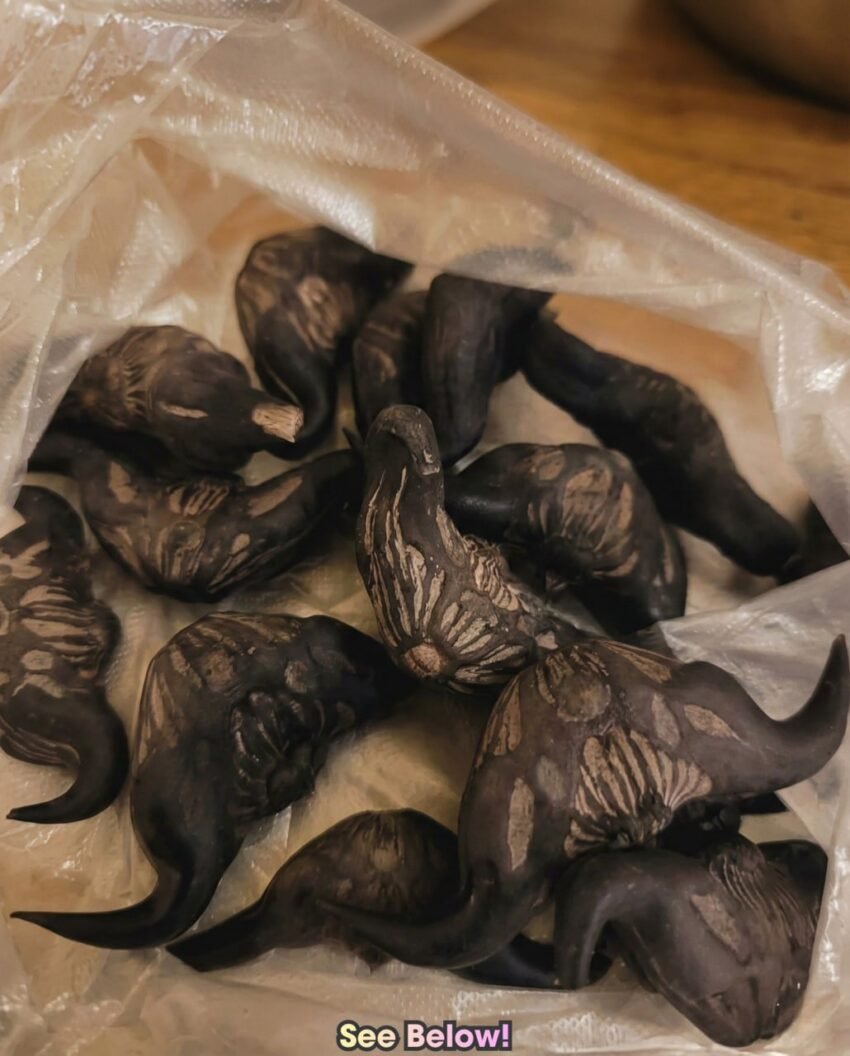
My Neighbor Gave Me a Bag of These Water Caltrops… What Are They, and How Do You Eat Them?
Last fall, my neighbor knocked on my door with a mysterious paper bag in hand.
“They’re in season,” she smiled.
Inside were the strangest little things I’d ever seen — dark, glossy, horned pods that looked like something between a bat and a tiny bull. I turned one over in my hand and thought, Is this even food?
That was my first introduction to water caltrops — also known as water chestnuts (but not the canned kind you’re thinking of!). When I finally boiled and cracked one open, I was surprised by the soft, starchy flesh inside. Slightly sweet. Nutty. Comforting. Somewhere between a chestnut and a potato.
If you’ve recently received a bag of these curious little pods and are wondering what on earth to do with them — you’re in the right place.
Let’s unlock the mystery together.
What Are Water Caltrops?
Water caltrops are aquatic fruits that grow in freshwater lakes and ponds. They belong to the species Trapa natans, commonly called water caltrop or bat nut.
They’re popular across:
-
China
-
India
-
Vietnam
-
Thailand
In India, they’re known as singhara and often ground into flour. In China, they’re sold fresh during autumn markets and boiled as a seasonal snack.
⚠️ Important: These are NOT the same as the sliced “water chestnuts” found in cans (which come from a different plant entirely).
Why Do They Look So Strange?
The “horns” serve a purpose in nature — they help anchor the seed into mud when it falls from the plant.
Depending on the variety, they can have:
-
Two sharp horns
-
Four pointed projections
-
A triangular shape
Their tough outer shell protects a soft, white, edible interior.
Think of them as nature’s little treasure chest.
Why You’ll Love Water Caltrops
-
✅ Naturally gluten-free
-
✅ Vegan & plant-based
-
✅ Budget-friendly seasonal produce
-
✅ Unique flavor & texture
-
✅ High in fiber
-
✅ Great conversation starter at gatherings
-
✅ Can be eaten sweet or savory
If you love discovering cultural foods, this one is a gem.
Nutritional Information (Per 100 g, boiled)
-
Calories: ~115 kcal
-
Protein: 4 g
-
Carbohydrates: 23 g
-
Fats: 0.5 g
-
Fiber: 3 g
Rich In:
-
Potassium
-
Manganese
-
Vitamin B6
-
Antioxidants
Dietary Info:
-
✔ Vegan
-
✔ Gluten-Free
-
✔ Dairy-Free
-
✔ Low Fat
-
✖ Not Keto (naturally starchy)
How Do You Eat Water Caltrops?
Good news: They’re simple to prepare.
Step 1: Rinse Thoroughly
They often come muddy from ponds. Scrub them well under running water.
Step 2: Boil Them
Place in a large pot.
Cover with water.
Add 1 teaspoon salt (optional).
Boil for 20–30 minutes until tender.
You’ll know they’re ready when the shell slightly darkens and softens.
Step 3: Crack & Peel
Let cool slightly.
Use:
-
A knife
-
Kitchen scissors
-
Or gently crack with your hands
Peel off the hard shell to reveal white flesh inside.
What Do They Taste Like?
-
Mildly sweet
-
Slightly nutty
-
Similar to chestnut
-
Soft and starchy like a boiled potato
They’re comforting and surprisingly addictive.
Delicious Ways to Eat Them
🌰 Simple Snack (Traditional Way)
Just peel and eat warm with:
-
A sprinkle of salt
-
A dash of chili powder
This is how they’re commonly enjoyed in China and India during fall festivals.
🍛 Savory Stir-Fry
Chop boiled water caltrops and add to:
-
Vegetable stir-fries
-
Fried rice
-
Curries
They absorb flavor beautifully.
🥞 Water Caltrop Flour (Indian Style)
In India, they’re dried and ground into flour used during religious fasting to make flatbreads and pancakes.
🍯 Sweet Version
Mash boiled caltrops with:
-
Honey
-
Cardamom
-
A pinch of cinnamon
It becomes a naturally sweet, earthy dessert mash.
Kitchen Tools Needed
-
Large pot
-
Knife or kitchen scissors
-
Colander
-
Cutting board
Simple and rustic — just like the ingredient.
Expert Tips & Mistakes to Avoid
🔥 Don’t Eat Raw
They must be cooked to soften the shell and flesh.
🔥 Watch the Horns
They can be sharp! Handle carefully.
🔥 Don’t Overboil
Too long can make them mushy.
🔥 Store Properly
Keep fresh ones in the fridge and use within 5–7 days.
Storage & Reheating
Fridge Life
Fresh (uncooked): 5–7 days
Boiled: 3–4 days
Freezer Life
Boiled and peeled: Up to 2 months
Reheating
Steam or microwave for 1–2 minutes.
Are Water Caltrops the Same as Water Chestnuts?
This is the most common confusion.
Canned water chestnuts come from a different plant entirely and have a crisp texture even when cooked.
Water caltrops:
-
Are horned
-
Have a hard shell
-
Are starchy and soft when cooked
Very different experience!
FAQs
1. Are water caltrops safe to eat?
Yes — when properly washed and boiled.
2. Can I roast them instead of boiling?
Yes! Roast at 200°C (400°F) for 25–30 minutes.
3. Why are they seasonal?
They grow in freshwater ponds and are harvested in autumn.
4. Do they taste like chestnuts?
Similar, but softer and less sweet.
5. Can kids eat them?
Yes — just remove the shell completely first.
6. Why have I never seen them before?
They’re mostly popular in Asian markets and seasonal produce stalls.
Final Thoughts: From Mystery to Favorite
What started as a mysterious bag from my neighbor turned into one of my favorite seasonal discoveries.
There’s something beautiful about foods that feel ancient and traditional — harvested from ponds, boiled simply, shared warm between friends.
Water caltrops may look intimidating at first, but inside that hard shell is a humble, nourishing treat that’s been enjoyed for centuries.
So if someone hands you a bag again?
Boil them. Crack them open. Take that first warm bite.
And then tell me — did you fall in love too? 🌰✨