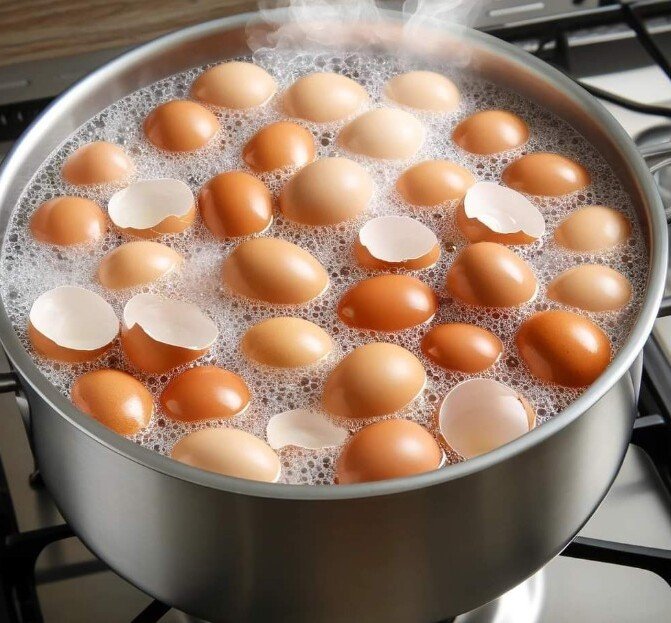
Stop Throwing Them Away: Boil Eggshells and Say Goodbye to These Everyday Problems
Before tossing eggshells, learn how boiling them unlocks simple, natural uses for cleaning, gardening, and household care—safe and practical.
Introduction: The Kitchen Scrap You’re Probably Wasting
Most people crack eggs, cook breakfast, and toss the shells without a second thought.
But if you boil eggshells instead of throwing them away, you can turn what looks like trash into a surprisingly useful household resource. No gimmicks. No miracle claims. Just practical, low-cost solutions that many American households already use—often without realizing how effective they can be.
In this guide, you’ll discover:
-
Why boiling eggshells matters
-
What problems they can help with (naturally and safely)
-
Step-by-step ways to use them at home
-
Common mistakes to avoid
-
Realistic benefits—without hype
Let’s start with the basics.
Why Boil Eggshells First?
Boiling eggshells isn’t about magic—it’s about making them cleaner, safer, and more versatile.
When boiled:
-
Residual egg material is removed
-
Odors are reduced
-
The shells become easier to process
-
They’re safer for reuse around the home and garden
This simple step makes eggshells far more practical.
What Boiled Eggshells Are Made Of (Simple Breakdown)
Eggshells are primarily composed of:
-
Calcium carbonate
-
Trace minerals
-
A porous structure that absorbs and interacts with its environment
This composition is why eggshells have been used for generations in household and gardening practices.
Everyday Problems Boiled Eggshells Can Help Address
1. Weak or Nutrient-Poor Garden Soil
One of the most common uses for boiled eggshells is in home gardening.
How they help:
-
Add minerals to soil over time
-
Improve soil structure
-
Support healthy plant growth
Real-life example:
Many home gardeners crush boiled eggshells and mix them into soil for tomatoes, peppers, and herbs.
Important note: Eggshells work gradually. They’re not instant plant food—but they contribute over time.
2. Unwanted Garden Pests (Without Chemicals)
Crushed eggshells are often used as a physical deterrent in gardens.
Why this works:
-
Sharp shell edges discourage crawling pests
-
No sprays or harsh substances needed
This method is popular among gardeners who prefer low-intervention solutions.
3. Lingering Odors in Containers
Boiled eggshells can help absorb odors in:
-
Food containers
-
Garbage bins
-
Refrigerators
Simply place clean, dried shells in a small breathable container and let them do their job.
4. Gentle Scrubbing for Pots and Pans
Eggshells have a mild abrasive texture.
When crushed finely, they can be used to:
-
Scrub cookware
-
Remove stuck-on residue
-
Clean without harsh chemicals
This works especially well for cast iron and heavy-duty cookware (avoid delicate surfaces).
5. Compost Enhancement
Eggshells are compost-friendly when prepared properly.
Boiling helps by:
-
Speeding up breakdown
-
Reducing unwanted smells
-
Making shells easier to crush
Crushed shells integrate more efficiently into compost piles.
Step-by-Step: How to Boil and Prepare Eggshells Properly
Step 1: Rinse the Shells
Remove any remaining egg white or yolk.
Step 2: Boil
-
Place shells in water
-
Boil for 5–10 minutes
Step 3: Dry Completely
Air-dry or use a low-temperature oven.
Step 4: Crush or Grind
Depending on use:
-
Coarse for garden beds
-
Fine for cleaning or compost
What Boiled Eggshells Will Not Do
Let’s clear up common misconceptions.
❌ They do not instantly fix soil problems
❌ They are not a medical treatment
❌ They won’t replace fertilizer or professional cleaners
❌ They don’t work overnight
Their value lies in simple, steady usefulness.
Common Mistakes People Make With Eggshells
Mistake 1: Skipping the Boiling Step
➡️ Increases odor and contamination risk.
Mistake 2: Using Whole Shells
➡️ They break down very slowly.
Mistake 3: Expecting Immediate Results
➡️ Eggshell benefits are gradual.
Mistake 4: Applying Too Much at Once
➡️ Balance matters—especially in gardens.
Practical Use Cases in American Homes
Apartment Dwellers
-
Odor control
-
Container plant soil support
Home Gardeners
-
Soil enrichment
-
Pest deterrence
Eco-Conscious Families
-
Reduced waste
-
Fewer chemical cleaners
Pros and Cons of Reusing Eggshells
Pros
-
Reduces household waste
-
Free and accessible
-
Multipurpose
-
Environmentally friendly
Cons
-
Requires preparation time
-
Benefits are slow and subtle
-
Not suitable for every surface or plant
FAQs: People Also Ask About Eggshell Uses
1. Do eggshells really help plants?
Yes, gradually, when crushed and mixed properly.
2. Why boil eggshells before use?
For cleanliness, safety, and odor control.
3. Can eggshells replace fertilizer?
No, but they can supplement soil health.
4. Are eggshells safe for compost?
Yes, especially when boiled and crushed.
5. Do eggshells stop all pests?
They may deter some crawling pests, not all.
6. Can I use eggshells indoors?
Yes, for cleaning and odor control.
7. How long do eggshells take to break down?
Crushed shells break down much faster than whole ones.
8. Do eggshells smell after boiling?
No, when properly cleaned and dried.
Why More Households Are Reusing Eggshells
-
Rising interest in low-waste living
-
Desire to reduce chemical exposure
-
Simple, cost-effective solutions
-
Practical sustainability
This trend isn’t about perfection—it’s about small improvements that add up.
Actionable Tips You Can Try Today
-
Save eggshells from your next meal
-
Boil and dry them once a week
-
Use crushed shells in one plant pot
-
Try them as a gentle scrub for cookware
Start small. Observe results.
Conclusion: A Small Habit With Practical Benefits
Boiling eggshells won’t change your life overnight—but it can change how you think about waste.
What used to go straight into the trash can become a useful, natural tool for your home and garden. No special products. No added cost. Just a smarter way to use what you already have.
Sometimes the simplest habits are the most satisfying.
Your Turn
Have you ever reused eggshells at home?
Share how you use them, pass this article to someone who hates wasting food, or explore more practical household tips to get more value from everyday items.