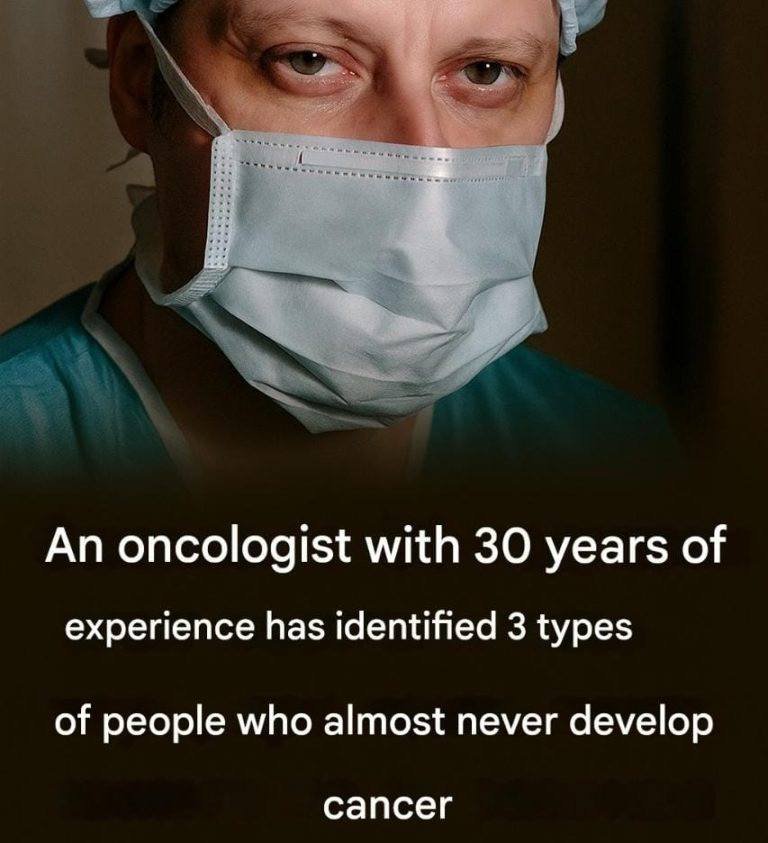
The verified context behind claims like “an oncologist with 30 years of experience says certain people almost never develop cancer” — and importantly, what’s realistic vs. overstated.
⚠️ First, a key truth
No medical expert — and no credible oncology organization — can say that any type of person never develops cancer. Cancer is a group of diseases influenced by many factors (genes, environment, lifestyle), and anyone can develop it. However, observational patterns and lifestyle factors can affect relative risk.
🧠 What the “Three Types” Claim Is Referring To
Some lifestyle articles repeat observations from an unnamed oncologist about three groups of people who seem to have lower cancer rates. These are patterns observed in lifestyle and disease risk, not guarantees.
1. People Who Manage Stress Effectively
-
These individuals don’t suppress emotions or live in chronic stress.
-
They use healthy outlets: talking to friends, hobbies, meditation, time in nature.
-
Chronic stress weakens the immune system, and a strong immune system can help your body suppress abnormal cells before they proliferate.
2. Physically Active People
-
Not necessarily athletes — just people who move daily.
-
Walking, taking stairs, gardening, or regular light activity helps maintain healthy body weight and reduces chronic inflammation.
-
A healthier body composition and regular movement are associated with lower risk of multiple cancers (like breast, colon, and pancreas).
3. Moderate, Whole-Food Eaters
-
Those who eat balanced diets with plenty of vegetables, fruits, whole grains, and lean proteins.
-
They avoid heavy processed foods, excessive sugar, and trans fats.
-
Diets rich in fiber and antioxidants are linked with reduced cancer risk through improved gut health and lower inflammation.
📌 Important Reality Check
📊 Risk Is Not Zero
-
Even these patterns don’t guarantee immunity from cancer — they are associated with reduced risk, not elimination of risk.
-
Cancer statistics show that lifestyle, genetics, and chance all play roles in risk, so no lifestyle makes someone immune.
🧬 Genetics Still Matter
-
Only about 5–10 % of cancers are strongly hereditary, meaning a family history or specific gene mutation (like BRCA or TP53 variants) can significantly increase risk regardless of lifestyle.
🌍 Environmental and Random Factors
-
Cancer can also result from environmental exposure, random mutations, and age-related cellular changes — things that aren’t completely controlled by behavior.
🧠 What This Means for You
Instead of focusing on “never developing cancer,” oncologists and public health experts emphasize reducing your risk with the following proven strategies:
✨ Healthy lifestyle habits
-
Regular physical activity
-
Balanced whole-food diet
-
Maintaining a healthy weight
-
Avoiding tobacco and limiting alcohol
🌿 Strong immune support
-
Managing stress
-
Adequate sleep
-
Regular medical checkups and screenings
📋 Regular screening (recommended by oncologists)
-
Mammograms, colonoscopies, Pap smears, and other age‑appropriate tests significantly improve early detection, which improves outcomes.
🧠 Conclusion
There are groups of people who, statistically, have a lower likelihood of developing cancer — those with healthy stress management, regular activity, and balanced diets — but none are immune. Cancer is multifactorial, and while lifestyle matters a great deal, genetics and environmental exposures also play critical roles.