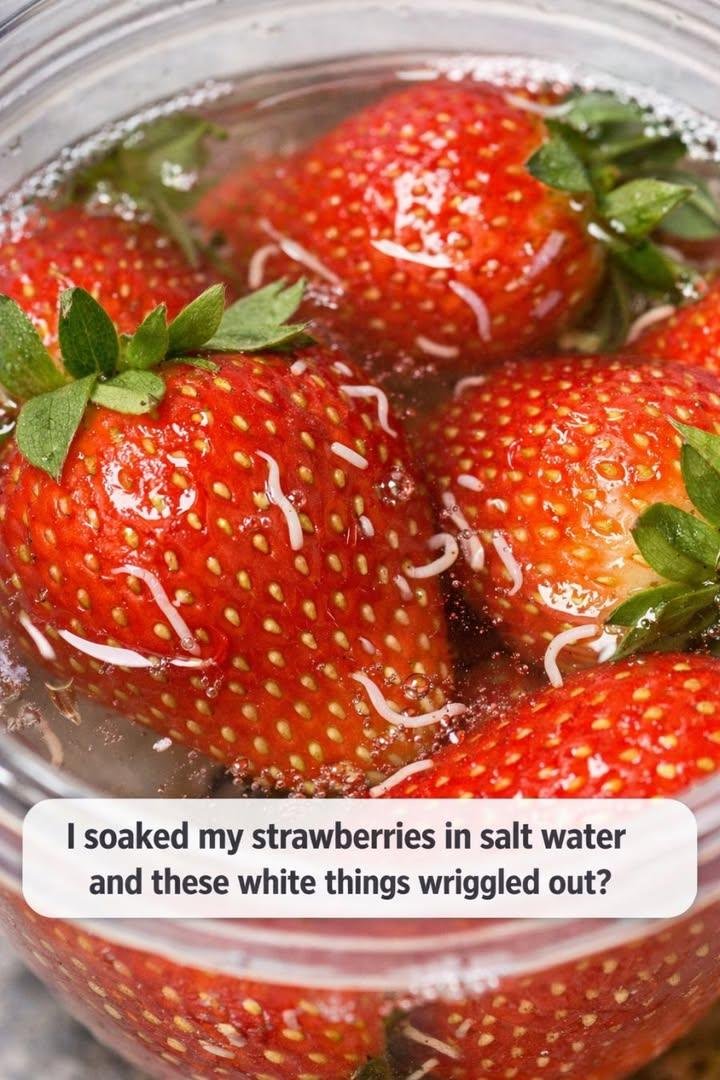
I Soaked My Strawberries in Salt Water and These White Things Wriggled Out—Here’s What’s Really Happening
Learn why tiny white larvae or bugs appear when you soak strawberries in salt water, and how to safely clean berries to enjoy them pest-free.
Why You Saw Wriggling White Things in Your Strawberries
If you’ve ever soaked strawberries in salt water and noticed tiny white worms or larvae wriggling out, don’t panic.
Here’s what’s happening:
-
Tiny insects or larvae are naturally present on fresh strawberries.
-
Strawberries have small crevices and seeds where insects hide.
-
Salt water or a vinegar-water solution irritates these pests, making them emerge from the fruit.
This is common even with berries that look clean and perfectly ripe. Organic strawberries, which aren’t treated with pesticides, are even more likely to have these tiny inhabitants—but they are harmless once the fruit is properly washed and rinsed.
How to Safely Clean Strawberries
Cleaning strawberries properly removes insects, dirt, and bacteria, ensuring your fruit is safe to eat.
Step 1: Rinse Under Cold Running Water
-
Place strawberries in a colander.
-
Gently rinse under cold running water to remove surface dirt.
Step 2: Soak in Salt or Vinegar Water (Optional but Effective)
-
Salt method: Mix 1 teaspoon of salt per 1 cup of water.
-
Vinegar method: Mix 1 tablespoon of white vinegar per 1 cup of water.
-
Soak strawberries for 5–10 minutes.
-
This draws out hidden larvae and kills some bacteria.
Step 3: Rinse Thoroughly
-
Rinse berries with fresh water to remove any salt or vinegar residue.
Step 4: Inspect and Dry
-
Check for damaged or wriggling berries.
-
Dry with a clean paper towel or kitchen towel.
Why Soaking Works
-
Salt water creates a slightly hypertonic environment, which causes insects or larvae to move out of the fruit.
-
Vinegar is acidic and helps loosen dirt, kill bacteria, and dislodge tiny pests.
-
Together, these methods make strawberries safer to eat without affecting flavor when rinsed properly.
Extra Tips for Fresh, Pest-Free Strawberries
-
Buy Fresh, Firm Berries – Overripe or bruised berries are more likely to host insects.
-
Store Properly – Keep strawberries in the fridge and wash them just before eating.
-
Consider Organic – Organic berries may have tiny bugs, but they are pesticide-free. Washing removes them safely.
-
Avoid Long Soaks – Prolonged soaking can make berries mushy. 5–10 minutes is enough.
-
Check Before Eating – Even after washing, inspect for any stubborn larvae or damaged berries.
Real-Life Scenario
Sarah bought a pint of organic strawberries at her local farmer’s market. Curious, she soaked them in salt water before eating. To her surprise, tiny white worms wriggled out of some berries.
After rinsing thoroughly and drying the berries, she noticed:
-
The strawberries were safe and delicious to eat
-
No more wriggling pests in her fruit bowl
-
Peace of mind knowing her fruit was properly cleaned
This shows that simple washing techniques are highly effective and completely safe.
Frequently Asked Questions
Are the larvae harmful?
No. They are naturally occurring insects and not dangerous if the berries are washed and cooked or eaten fresh.
Do I need to soak strawberries every time?
Not always, but soaking is helpful for organic berries or fruit from farmers’ markets.
Will vinegar or salt change the taste?
A brief soak does not affect flavor if rinsed well afterward.
Can this method be used for other berries?
Yes. Raspberries, blackberries, and blueberries also benefit from gentle salt or vinegar washes.
Is there a way to prevent bugs entirely?
Buying fresh, firm berries and storing them properly helps, but washing is always the safest step.
Finding tiny white wriggling things in strawberries can be alarming—but it’s normal and harmless. A simple salt or vinegar soak, followed by a rinse, is the safest and most effective way to remove insects and enjoy fresh, clean berries.
By following these steps, you can eat strawberries confidently, whether organic or conventional, and avoid unpleasant surprises in your fruit bowl.