Found a Mysterious Mushroom-Shaped Object in Your Sewing Tin? Here’s What It Really Is
Discovered a small wooden mushroom in an old sewing tin? Learn how this vintage tool was used for darning socks, gloves, and knitwear, and why it’s a collectible today.
The Mystery of the Mushroom-Shaped Object
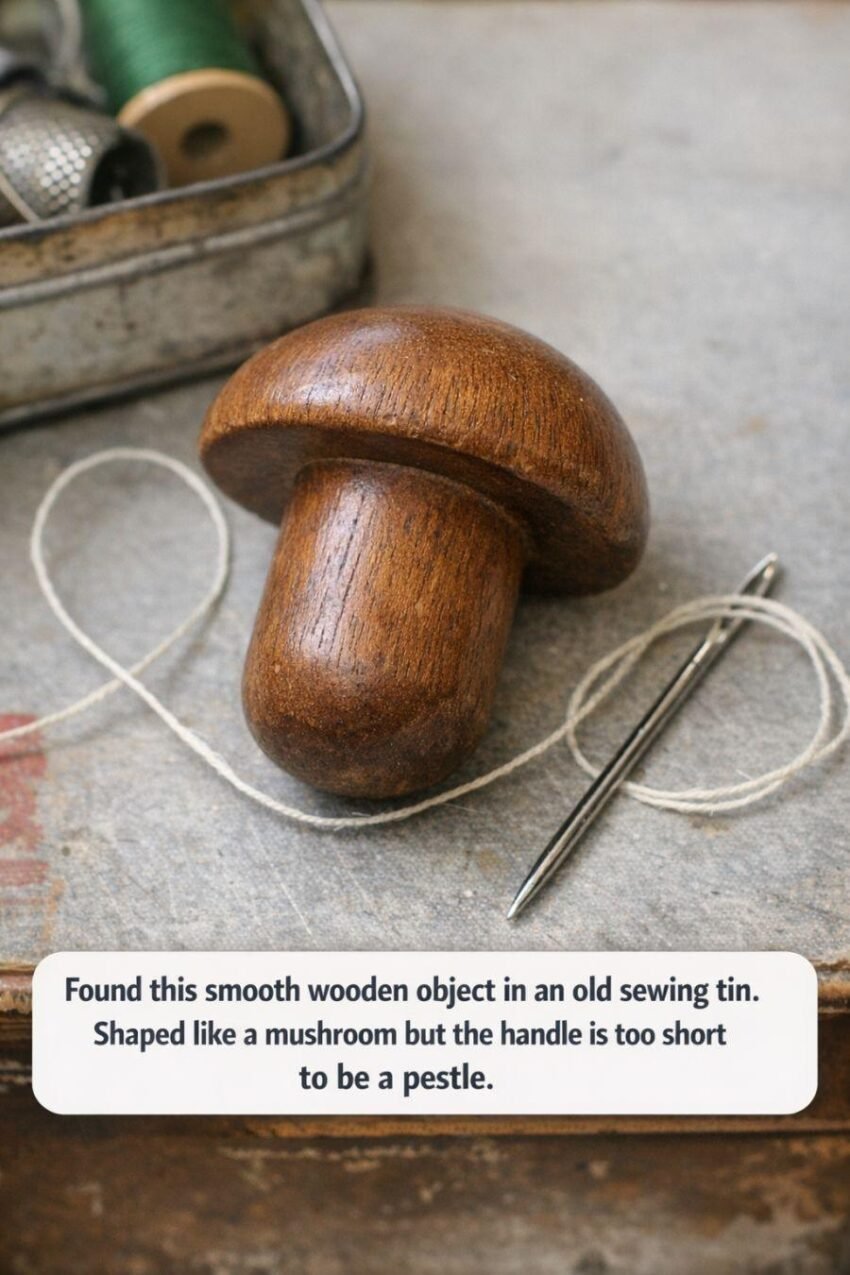
You were cleaning out an old sewing tin and stumbled across a smooth, wooden object shaped like a mushroom. The handle is short, so it doesn’t look like a pestle—but what exactly is it?
If you’ve wondered, you’re not alone. Many people find these little wooden treasures in vintage sewing kits, and they often leave you scratching your head.
Meet the Darning Mushroom (or Darning Egg)
The most likely explanation is that you’ve found a vintage darning mushroom, also called a darning egg.
Purpose:
-
Designed to help repair socks, gloves, and other knitwear.
-
Provides a firm, rounded surface over which fabric can be stretched while stitching holes or worn areas.
How it works:
-
Place the fabric over the rounded “cap” of the mushroom.
-
Use a needle and thread to repair holes or thin spots.
-
The short handle fits comfortably in your hand, letting you rotate or move the mushroom easily.
Material:
-
Typically made of smooth, polished wood for durability and ease of use.
Why the Short Handle Isn’t a Problem
Many people assume that a mushroom-shaped tool with a short handle might be a miniature pestle—but that’s not the case here.
-
The handle is just long enough to hold while you repair fabric.
-
The tool doesn’t need a long handle because it isn’t meant to be pounded or ground—it’s purely for support while sewing.
How to Identify Your Darning Mushroom
Here are a few tips to confirm your find:
-
Size Matters: Most darning mushrooms are 2–3 inches tall.
-
Check the Top: The rounded cap should be smooth and slightly worn if it was used often.
-
Compare Online: Search for “vintage wooden darning mushroom” or “darning egg” to see examples.
A Little History
Darning mushrooms were essential before cheap mass-produced clothing. Socks, gloves, and knitwear were repaired rather than discarded.
-
Found in almost every household sewing kit from the 1800s through mid-1900s.
-
Often handcrafted from wood, sometimes with polished or varnished finishes.
-
Vintage darning mushrooms are now considered collectibles for sewing enthusiasts.
Fun Ways to Use or Display Your Vintage Tool
Even if you don’t sew, your mushroom-shaped tool has charm:
-
Decorative piece: Add it to a vintage sewing display or shadow box.
-
Sewing inspiration: Try traditional darning techniques and see how people extended the life of their clothes.
-
Collector’s item: Vintage sewing tools can be found in antique shops and online auctions.
Frequently Asked Questions
Can I still use it to darn socks?
Absolutely! It’s still perfect for hand-sewing repairs on knitwear.
Is it valuable?
Most vintage darning mushrooms are modestly priced collectibles, but rare handcrafted versions can be more valuable.
Can it be mistaken for anything else?
Some people confuse it with a pestle or small mallet, but the short handle and smooth rounded cap are clues that it’s for darning fabric.
How do I care for it?
Keep it dry and clean, polish with a little natural wood oil if it looks dry, and store in a cool place.
Finding a mysterious mushroom-shaped object in a sewing tin is not a puzzle—it’s a delightful glimpse into the sewing practices of the past.
Your tool is most likely a darning mushroom, used for repairing socks, gloves, and knitwear. Short handle? Perfectly normal. Smooth rounded cap? Essential for stretching fabric while stitching.
Whether you use it, display it, or collect it, your vintage sewing mushroom is a tiny piece of history, connecting you to generations who valued craftsmanship and resourcefulness.