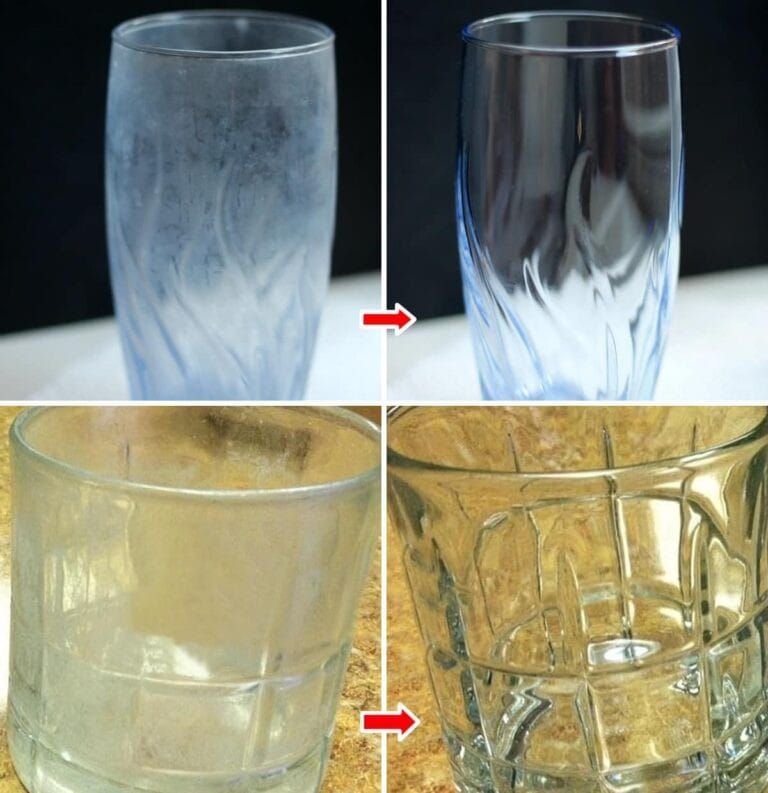
The One Natural Ingredient That Removes Dull Stains from Glasses Instantly (And Restores Crystal-Clear Shine)
Discover the natural ingredient that removes dull stains from glasses instantly. Learn simple, safe methods to restore sparkling clean glassware at home.
Introduction
You wash your drinking glasses carefully.
You rinse them well.
You dry them properly.
Yet somehow, they still look cloudy, dull, and streaked.
Many people assume the glass is permanently damaged or scratched. In reality, the problem is often much simpler — and surprisingly easy to fix.
That hazy film you see on glassware is usually caused by mineral deposits from hard water, detergent residue, or tiny buildup from repeated dishwasher cycles.
The good news?
There’s a natural household ingredient that can cut through that cloudy buildup in minutes and bring back the sparkle.
It’s inexpensive, safe, and probably already sitting in your kitchen.
In this guide, you’ll learn:
-
The natural ingredient that removes cloudy stains instantly
-
Why glasses become dull in the first place
-
A simple step-by-step cleaning method
-
Mistakes that make glassware look worse
-
Expert tips to keep glasses crystal clear long-term
Let’s restore your glassware to that fresh-out-of-the-box shine.
The Natural Ingredient That Removes Dull Glass Stains
The ingredient is simple:
White vinegar.
White vinegar is one of the most effective natural cleaners for removing mineral deposits and cloudy film from glass surfaces.
Why Vinegar Works
Vinegar contains acetic acid, which helps dissolve mineral buildup left behind by hard water.
Those cloudy stains on glassware are often caused by:
-
Calcium deposits
-
Magnesium residue
-
Soap film
-
Dishwasher detergent buildup
The mild acidity of vinegar breaks down these deposits quickly, leaving the glass clear again.
Unlike harsh chemical cleaners, vinegar is:
-
Non-toxic
-
Affordable
-
Widely available
-
Safe for kitchen use
That’s why many professional cleaners and home care experts rely on it.
Why Glasses Become Cloudy Over Time
Before cleaning, it helps to understand what causes the problem.
Not all cloudy glasses are the same.
There are two common causes.
1. Hard Water Deposits
In many areas across the United States, tap water contains minerals such as:
-
Calcium
-
Magnesium
-
Limestone particles
When water evaporates during drying, these minerals remain behind and create a chalky white film.
This type of cloudiness can usually be removed.
2. Glass Etching
Sometimes the cloudiness isn’t residue.
It’s microscopic damage to the glass surface caused by:
-
Excessively hot dishwasher cycles
-
Strong detergents
-
Long-term dishwasher wear
Unfortunately, etched glass cannot be reversed.
But the good news is that most cloudy glasses are simply coated with mineral buildup.
Simple Test: Is It Stain or Permanent Etching?
Before cleaning, try this quick test.
-
Dip a cloth in white vinegar.
-
Rub it on the cloudy area.
-
Wait one minute.
If the glass becomes clear — it’s a removable mineral deposit.
If the haze remains, it may be permanent etching.
Most of the time, vinegar will noticeably improve the clarity within seconds.
Step-by-Step: How to Remove Cloudy Stains from Glasses
This method takes less than five minutes.
Step 1: Warm Vinegar
Pour about one cup of white vinegar into a bowl.
Warm it slightly in the microwave for 20–30 seconds.
Warm vinegar works faster at dissolving minerals.
Step 2: Soak the Glass
Place the cloudy glass in the vinegar or pour vinegar inside the glass.
Let it soak for 3–5 minutes.
Step 3: Gently Scrub
Use a soft sponge or microfiber cloth to gently scrub the surface.
Avoid abrasive pads that could scratch the glass.
Step 4: Rinse with Warm Water
Rinse thoroughly to remove the vinegar and loosened deposits.
Step 5: Dry Immediately
Use a lint-free towel to dry the glass and prevent new water spots.
Your glass should now look clear, shiny, and refreshed.
Alternative Natural Ingredients That Also Help
While vinegar is the most effective solution, a few other natural options can assist.
Lemon Juice
The citric acid in lemons also dissolves mineral deposits.
Benefits include:
-
Fresh scent
-
Natural grease-cutting properties
-
Safe for kitchen surfaces
Baking Soda
Baking soda works as a gentle scrubbing agent.
It can help remove stubborn residue without damaging the glass.
Salt
Salt combined with vinegar creates a mild abrasive cleaner useful for stubborn spots.
Quick Comparison of Natural Glass Cleaners
| Natural Ingredient | Best For | How It Works |
|---|---|---|
| White vinegar | Hard water stains | Dissolves minerals |
| Lemon juice | Light residue | Citric acid breaks buildup |
| Baking soda | Stubborn grime | Gentle scrubbing action |
| Salt + vinegar | Tough spots | Mild abrasion + acid |
Among these options, white vinegar remains the fastest and most reliable solution.
Common Mistakes That Make Glassware Look Worse
Many people accidentally make cloudy glasses worse while trying to clean them.
Avoid these mistakes.
Using Too Much Dishwasher Detergent
Excess detergent leaves behind residue that dries into a dull film.
Overloading the Dishwasher
Crowded racks prevent proper rinsing.
Using Extremely Hot Water
Very high temperatures can accelerate glass etching.
Air Drying Glassware
Allowing water to evaporate naturally often leaves mineral spots behind.
Instead, dry glasses immediately with a soft towel.
Expert Tips to Keep Glasses Crystal Clear
Cleaning cloudy glasses once is helpful — but prevention keeps them looking new longer.
1. Add Vinegar to the Dishwasher
Place a small cup of vinegar on the top rack during a wash cycle.
It helps reduce mineral buildup.
2. Use Rinse Aid
Rinse aids help water slide off surfaces instead of leaving spots.
3. Reduce Detergent
Try slightly less dishwasher detergent if you notice residue.
4. Hand Wash Delicate Glassware
Wine glasses and thin crystal benefit from gentle hand washing.
5. Dry Immediately
A quick towel dry prevents mineral deposits from forming.
Real-Life Scenario: The Dishwasher Cloudy Glass Problem
Many homeowners notice cloudy glasses after moving to a new city.
This often happens in areas with harder water supplies.
For example, a family in Texas might find their glasses becoming hazy within weeks.
After soaking them in vinegar for just a few minutes, the mineral film dissolves — revealing clear glass underneath.
Situations like this are extremely common and easily solved with natural cleaning methods.
2025 Cleaning Trends: Why Natural Solutions Are Popular Again
Across the United States, more households are moving toward natural cleaning methods.
Reasons include:
-
Reduced chemical exposure
-
Lower costs
-
Environmental concerns
-
Simpler household routines
White vinegar remains one of the most widely recommended natural cleaners because it works across many surfaces, including:
-
glassware
-
windows
-
coffee makers
-
dishwashers
Its versatility makes it a staple in many modern homes.
Frequently Asked Questions
Can vinegar damage glassware?
No. Vinegar is safe for glass and commonly used for cleaning it.
How often should I clean cloudy glasses with vinegar?
Only when buildup appears. For prevention, occasional vinegar rinses help maintain clarity.
Can vinegar remove permanent glass etching?
No. Etching is surface damage and cannot be reversed.
Is vinegar safe for dishwasher use?
Yes, small amounts of vinegar can help reduce mineral buildup during wash cycles.
Why do glasses get cloudy after the dishwasher?
This usually happens because of hard water minerals or detergent residue.
Should I use baking soda on glass?
Yes, but only gently. It works best for stubborn stains.
Can lemon juice replace vinegar?
Yes. Lemon juice can dissolve mineral buildup, though vinegar is typically stronger.
How can I prevent cloudy glasses in the future?
Use less detergent, rinse properly, add rinse aid, and dry glasses immediately.
Action Checklist: Restore Clear Glassware
Use this quick checklist to remove dull stains from glasses:
✔ Test cloudiness using vinegar
✔ Soak glasses in warm white vinegar
✔ Gently scrub with a soft cloth
✔ Rinse with warm water
✔ Dry immediately with a lint-free towel
✔ Use vinegar occasionally to prevent buildup
Conclusion
Cloudy glasses can make even a clean kitchen feel dull.
But the solution is surprisingly simple.
With nothing more than ordinary white vinegar, you can dissolve mineral buildup and restore glassware to its original clarity in just minutes.
No harsh chemicals.
No expensive cleaning products.
Just one natural ingredient that works quickly and reliably.
Most dull or cloudy glasses aren’t damaged — they’re simply coated with mineral residue.
A quick soak in white vinegar can remove that buildup and bring back a crystal-clear shine.
If this guide helped you rescue your glassware, share it with someone who might be struggling with cloudy dishes — or try the method today and see the difference yourself.