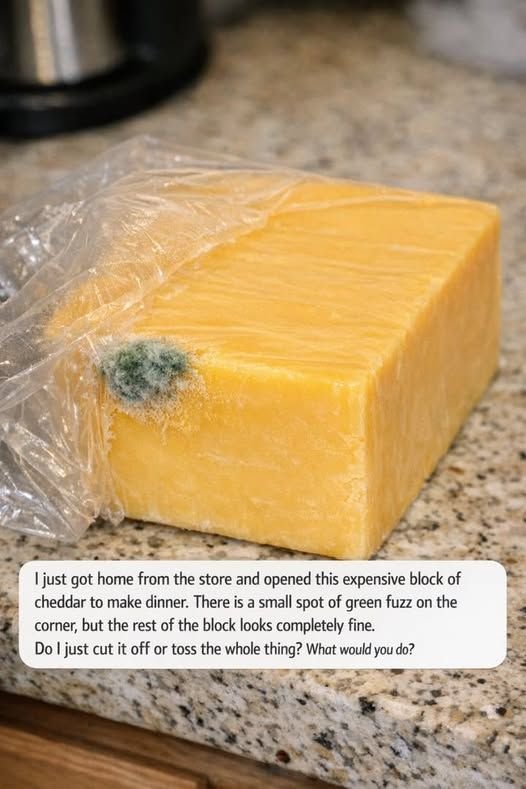
I Opened My Expensive Cheddar… and Found Green Fuzz. Here’s What You Should Do
The Relatable Kitchen Moment
You know that feeling when you finally get home from the grocery store after a long day, unpack your bags, and start prepping dinner with excitement?
That was me the other evening.
I had just bought a beautiful, slightly expensive block of cheddar, the kind you save for a cozy homemade meal — creamy mac and cheese, melty grilled sandwiches, maybe even a rich soup. I opened the wrapper, grabbed my knife, and then… paused.
Right there on the corner of the cheese was a tiny patch of green fuzz.
Not a big patch. Just a small, suspicious-looking dot.
Suddenly the questions started racing through my mind:
Is the whole block ruined?
Do I have to throw this expensive cheese away?
Is it safe to eat if the rest looks fine?
If you’ve ever experienced this moment, you’re definitely not alone. Let’s break down what that green spot means, whether your cheddar is safe to eat, and exactly what to do next.
Why Mold Appears on Cheddar Cheese
Mold can appear on cheese for several reasons, even if you just bought it.
Common causes include:
• Small temperature changes during transport
• Tiny air leaks in packaging
• Exposure to moisture
• Natural mold spores in the air
• Slightly longer storage before purchase
Hard cheeses like cheddar are actually less vulnerable to mold spreading quickly, which is why a small spot doesn’t always mean disaster.
But the type of cheese matters a lot.
Is Cheddar With a Small Mold Spot Safe to Eat?
The short answer: Yes, in many cases it can be safe.
Hard cheeses like cheddar have low moisture and a dense texture, which slows the spread of mold.
According to food safety guidelines, if you see a small patch of mold on hard cheese, you can usually cut away the mold and still use the rest of the block.
However, there’s an important rule to follow.
The Safe Way to Handle Moldy Cheddar
If you notice a small spot of mold on cheddar, here’s what food safety experts recommend.
Step 1: Don’t Touch the Mold
Avoid rubbing or scraping it with your fingers.
This can spread spores across the cheese.
Step 2: Cut Around the Mold
Use a clean knife and cut at least 1 inch (2.5 cm) around and below the mold spot.
Think of it like removing a cube around the mold.
Discard that section.
Step 3: Keep the Knife Away From the Clean Cheese
Make sure the knife doesn’t drag mold spores across the rest of the cheese.
Cut outward, not through the mold into the good portion.
Step 4: Rewrap the Cheese Properly
Wrap the remaining cheese in:
• wax paper
• parchment paper
• then loose foil or a container
This helps it breathe and prevents new mold growth.
When You Should Throw the Cheese Away
Sometimes mold means the cheese isn’t safe anymore.
Discard the cheese if:
• Mold appears throughout the block
• It smells strongly sour or rotten
• The texture becomes slimy or sticky
• It’s a soft cheese (like brie or cream cheese)
• The mold color is black, pink, or orange
Soft cheeses allow mold to spread invisibly inside, so they should always be discarded.
Why Hard Cheeses Are Different
Cheddar belongs to a group of hard or semi-hard cheeses that naturally resist mold penetration.
Other cheeses in this category include:
• parmesan
• romano
• gouda
• asiago
Because they are dense and low in moisture, mold usually stays on the surface instead of spreading through the cheese.
That’s why trimming works.
How to Prevent Mold From Appearing Again
Cheese can mold quickly if stored incorrectly.
Here are a few simple tricks to keep it fresh longer.
Store Cheese in the Right Part of the Fridge
The best place is:
• a vegetable drawer
• the cheese drawer
• a consistent cool section
Avoid the fridge door where temperature fluctuates.
Wrap Cheese Properly
Plastic wrap alone traps moisture.
Instead try:
-
Wrap in wax or parchment paper
-
Then place in a loose plastic bag or container
This keeps cheese from drying out while preventing condensation.
Avoid Pre-Shredding Too Early
Shredded cheese molds faster because more surface area is exposed to air.
Only shred what you need.
Use Clean Utensils
Cutting cheese with a knife that touched other foods can introduce bacteria and mold spores.
Always use a clean, dry knife.
What That Green Fuzz Actually Is
The green patch you saw is likely a common cheese mold species such as Penicillium.
While some Penicillium molds are intentionally used to make blue cheeses, the random mold that appears on cheddar usually comes from airborne spores.
Most of the time it’s harmless when properly trimmed from hard cheese.
Still, never taste mold to test it.
A Quick Rule of Thumb for Moldy Cheese
If you remember nothing else, remember this simple guideline:
Hard cheese: cut away mold and use the rest
Soft cheese: throw it away
It’s one of the easiest food safety rules in the kitchen.
Final Thoughts
Finding mold on a fresh block of cheddar can feel incredibly frustrating — especially when you just spent good money on it and were excited to cook.
The good news?
A tiny spot of green fuzz usually doesn’t mean the whole block is ruined.
With hard cheeses like cheddar, simply cutting away a generous section around the mold is often enough to save the rest safely.
So don’t panic, don’t toss the whole block immediately, and definitely don’t let a tiny speck ruin your dinner plans.
Just trim it properly… and get back to cooking that delicious meal you had in mind.
If you’ve ever had a “mold surprise” in your fridge, you’re definitely not alone.
What did you end up doing — tossing it or trimming it?
Share your kitchen story! 🧀