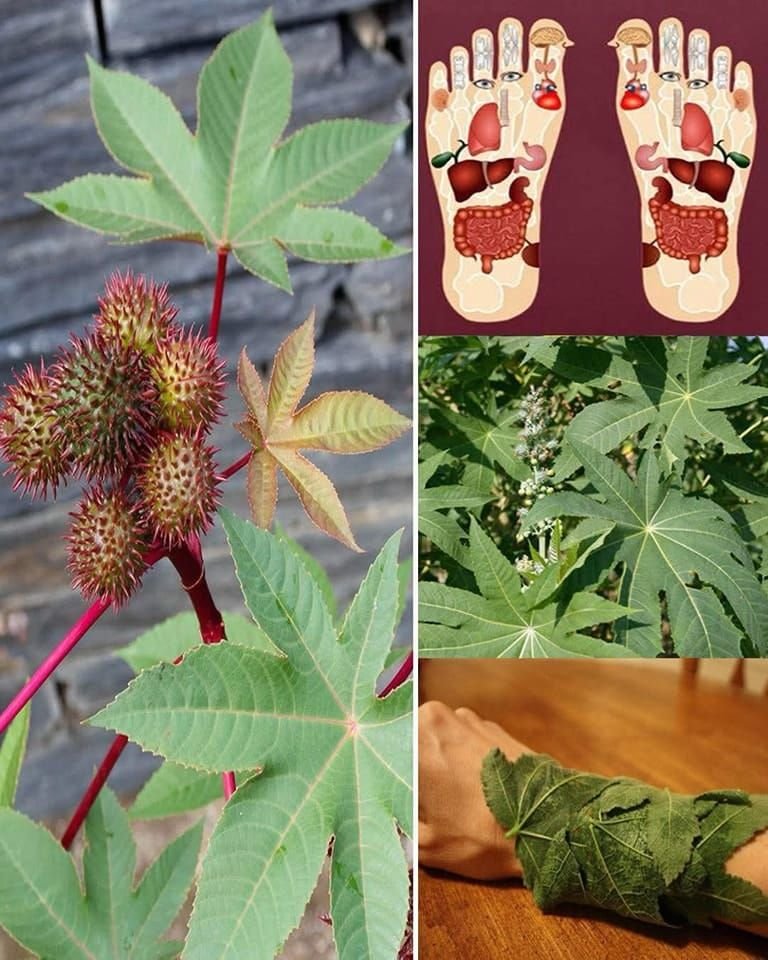
Seeing This Plant Is Like Finding Gold in the Garden: Don’t Throw Away the Castor Plant
The castor plant often grows unnoticed in gardens, yet it has a fascinating history and unique characteristics. Discover why this plant attracts so much attention and why you shouldn’t overlook it.
The Plant Many People Remove Without a Second Thought
It pops up quietly in gardens, empty plots, roadsides, and even near fences.
With its large star-shaped leaves and fast-growing stems, many people assume it’s just another wild plant and pull it out immediately.
But what if that plant is actually the castor plant, scientifically known as Ricinus communis?
Across many parts of the world, this plant has been valued for centuries. Some gardeners even say that finding one growing naturally in your yard is like discovering a hidden treasure.
That’s why experienced growers often advise:
“If you see a castor plant in your garden, don’t throw it away before learning what it is.”
In this article, we’ll explore:
-
What the castor plant is
-
Why it attracts so much attention
-
Its historical and industrial significance
-
Interesting facts about its growth and uses
-
Important safety considerations
What Is the Castor Plant?
The castor plant, Ricinus communis, is a fast-growing tropical plant known for its distinctive appearance.
It belongs to the spurge family (Euphorbiaceae) and can grow as either a shrub or a small tree depending on climate conditions.
Its most recognizable features include:
-
Large, glossy leaves shaped like stars
-
Tall stems that can grow rapidly
-
Spiky seed pods containing castor beans
In warm regions, the plant can grow several feet in a single season, making it one of the most dramatic-looking plants in a garden.
Why Gardeners Find It Fascinating
Even though the castor plant sometimes appears wild or unexpected, many gardeners intentionally cultivate it.
Striking Appearance
The plant’s leaves can grow impressively large, sometimes reaching over a foot across.
Depending on the variety, the leaves may appear:
-
deep green
-
reddish purple
-
bronze
This bold appearance makes the plant popular in ornamental landscaping.
Rapid Growth
Few garden plants grow as quickly as the castor plant.
Under favorable conditions, it can reach 6 to 10 feet in height in a single growing season.
Because of this, gardeners sometimes use it to create natural visual screens or tropical-style landscapes.
The Famous Oil Produced by Castor Seeds
One of the main reasons the castor plant gained worldwide recognition is its seeds.
These seeds are used to produce castor oil, a substance known for many industrial and commercial applications.
Castor oil has been used historically in areas such as:
-
lubricants
-
cosmetics
-
soaps
-
traditional remedies
Its unique chemical structure makes it useful in several manufacturing processes.
Today, castor oil continues to be produced in many countries and remains an important agricultural product.
Castor Plants in History
The castor plant has been known for thousands of years.
Ancient records suggest it was used in several early civilizations.
For example:
-
Ancient Egyptians reportedly used castor oil in lamps for lighting.
-
Historical texts describe its use in traditional practices across parts of Africa and Asia.
Over time, the plant spread to many regions around the world due to its adaptability.
Why Some People Compare It to “Gold”
When gardeners describe the castor plant as “gold in the garden,” they usually mean one of two things.
Valuable Agricultural Crop
In some regions, castor plants are cultivated commercially because their seeds are used in the production of castor oil.
Ornamental Value
Even when grown simply as a decorative plant, castor’s dramatic leaves and rapid growth make it visually impressive.
A single plant can transform the appearance of a garden bed or landscape corner.
A Real-Life Garden Scenario
Imagine walking through your backyard after a rainy week.
Near the edge of the fence, you notice a tall plant that wasn’t there before.
Its leaves are wide and star-shaped, spreading like small umbrellas.
At first, you think it’s just another weed.
But once you look closer, you realize it might be a castor plant.
Instead of pulling it out immediately, you decide to leave it for a while.
Within weeks, it becomes one of the most striking plants in your entire garden.
Moments like this explain why some gardeners consider unexpected castor plants a pleasant surprise.
Important Safety Considerations
While the castor plant has interesting uses, it’s important to understand an important fact:
The raw seeds of the castor plant contain a toxic substance called ricin.
Because of this, the seeds should never be consumed and should be handled carefully.
In commercial settings, castor oil is produced through specialized processing that removes harmful substances.
For home gardeners, the main precautions are:
-
avoid ingesting any part of the plant
-
keep seeds away from children and pets
-
handle seed pods carefully
With proper awareness, the plant can still be appreciated safely as an ornamental species.
Benefits of Growing Castor Plants in a Garden
Many gardeners enjoy cultivating castor plants for several reasons.
Visual Impact
The bold foliage creates an almost tropical look even in temperate climates.
Fast Coverage
Because it grows quickly, the plant can provide height and structure in a garden design.
Pollinator Attraction
Like many flowering plants, castor flowers can attract certain insects that support garden ecosystems.
Possible Challenges
Despite its beauty, castor plants can present a few challenges.
Large Size
In smaller gardens, the plant may outgrow its space.
Self-Seeding
In warm climates, seeds may sprout naturally in surrounding areas.
Safety Awareness
Because of the toxic seeds, responsible handling is important.
Understanding these factors helps gardeners decide whether to keep or remove the plant.
Common Misconceptions About Castor Plants
Myth: It’s Just a Weed
In reality, the plant is cultivated worldwide for both ornamental and industrial purposes.
Myth: It Always Grows Huge
Growth size depends on climate, soil, and growing conditions.
Myth: Castor Oil Is Dangerous
Commercial castor oil products are carefully processed and widely used in industry and cosmetics.
Interesting Facts About the Castor Plant
-
The castor plant can grow extremely quickly compared to many garden plants.
-
Its leaves are among the largest of commonly grown ornamental plants.
-
It can thrive in warm climates with relatively little care.
-
Some varieties are specifically bred for decorative landscaping.
These qualities make the plant both intriguing and visually striking.
Frequently Asked Questions
What is the castor plant?
The castor plant (Ricinus communis) is a fast-growing plant known for its large leaves and seed pods used to produce castor oil.
Why do people grow castor plants?
Many gardeners grow them for their dramatic appearance and rapid growth.
Are castor plants safe?
The plant itself can be grown safely in gardens, but the seeds contain toxic compounds and should never be ingested.
How tall can a castor plant grow?
In warm climates, it can grow several feet tall within a single season.
Where do castor plants grow naturally?
They are native to parts of Africa but now grow in many tropical and subtropical regions.
Do castor plants require special care?
They generally grow well in sunny areas with well-drained soil.
Can castor plants grow in cooler climates?
In cooler regions they may grow as annual plants rather than perennials.
Are castor plants used commercially?
Yes. Their seeds are processed to produce castor oil used in various industries.
Simple Tips if You Find One in Your Garden
If you notice a castor plant growing naturally, consider:
✔ Identifying the plant correctly
✔ Observing how it grows in your garden
✔ Deciding whether it fits your landscape design
✔ Practicing safe handling around seed pods
These steps help ensure you can enjoy the plant responsibly.
Conclusion
The castor plant is one of those fascinating species that many people overlook or remove before realizing what it is.
With its bold leaves, rapid growth, and long history of human use, it stands out as one of nature’s more intriguing garden surprises.
Finding one growing unexpectedly can feel like discovering a hidden treasure in your backyard.
If you see a castor plant in your garden, it may not be just another weed.
It could be a striking ornamental plant with a long history and unique characteristics.
Before pulling it out, take a moment to appreciate the remarkable plant that may have quietly appeared in your garden.