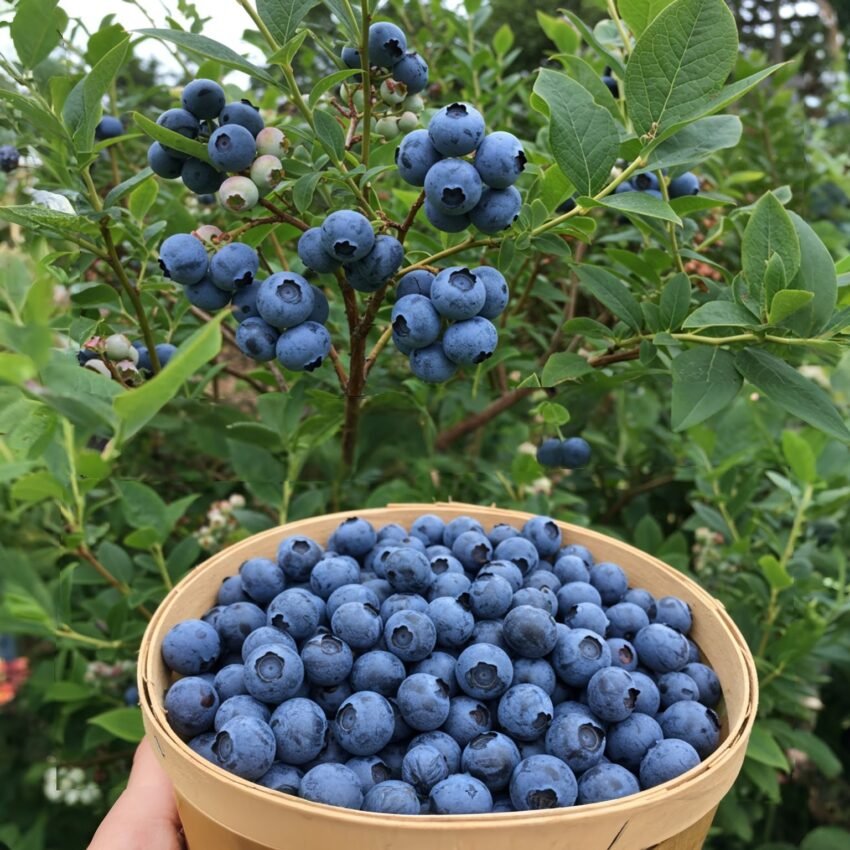
How to Harvest Blueberries All Year Long: The Ultimate Home Growing Blueprint for U.S. Gardeners
Learn how to grow and harvest blueberries year-round at home with proven strategies, seasonal planting tips, and expert advice for U.S. gardeners.
The Secret to Never Running Out of Fresh Blueberries
Fresh blueberries in January? It sounds unrealistic—until you understand how smart home growers stretch their harvest across months.
Most backyard gardeners in the U.S. get just a few weeks of berries in summer. Then it’s over.
But experienced growers quietly use a combination of variety selection, planting strategy, and climate control to enjoy blueberries for 6–10 months—or even year-round in some regions.
If you’ve ever:
-
Been disappointed by a short harvest window
-
Bought expensive, bland store blueberries in winter
-
Wanted a low-maintenance fruit that keeps giving
This guide will show you exactly how to design a continuous blueberry harvest system at home—whether you have a backyard, patio, or just a few containers.
Why Blueberries Are Perfect for U.S. Home Gardeners
Blueberries are one of the most rewarding fruits you can grow in the United States—and not just because of taste.
What makes them ideal:
-
Adaptable across USDA zones 3–10
-
Thrive in containers or in-ground
-
Long lifespan (20–30+ years)
-
High market value (great ROI for home growers)
-
Packed with antioxidants (widely recognized by sources like Harvard)
The real advantage?
Unlike many fruits, blueberries come in early, mid, and late-season varieties, allowing you to stagger harvests naturally.
That’s the foundation of year-round production.
Understanding the Blueberry Harvest Timeline
To extend your harvest, you need to think beyond “planting blueberries” and start thinking in harvest phases.
The 3 Core Harvest Windows
| Season Type | Harvest Time | Example Use |
|---|---|---|
| Early Season | May–June | Kickstart harvest |
| Mid Season | June–July | Peak production |
| Late Season | July–August (or later) | Extend season |
Advanced Strategy: Layering Varieties
Instead of planting one type, experienced growers:
-
Combine 3–5 different cultivars
-
Choose overlapping harvest periods
-
Include everbearing or container varieties for flexibility
This transforms a 3-week harvest into a 3–5 month supply.
Step-by-Step: How to Plant Blueberries for Continuous Harvest
Let’s break down exactly how to do it, even if you’re starting from scratch.
Step 1: Choose the Right Blueberry Types for Your Region
There are four main types in the U.S.:
1. Highbush (Most Common)
-
Best for: Northeast, Midwest
-
Reliable, large berries
-
Requires winter chill
2. Rabbiteye
-
Best for: Southern states (Texas, Georgia, Florida)
-
Heat-tolerant
-
Needs cross-pollination
3. Lowbush
-
Best for: Cold climates (Maine, Minnesota)
-
Smaller berries, intense flavor
4. Southern Highbush
-
Best for: Warm climates (California, Southeast)
-
Lower chill requirements
👉 Pro Tip: Mix at least 2 compatible varieties for better pollination and bigger yields.
Step 2: Master Soil Conditions (This Is Where Most People Fail)
Blueberries are extremely picky about soil.
They require:
-
pH between 4.5 and 5.5
-
High organic matter
-
Excellent drainage
How to get it right:
-
Use peat moss or pine bark mix
-
Add elemental sulfur if pH is too high
-
Avoid regular garden soil unless amended
Reality check: Most U.S. soil is too alkaline—so testing is not optional.
Step 3: Use Containers for Maximum Control
If you want near year-round harvesting, containers are your secret weapon.
Benefits:
-
Control soil acidity precisely
-
Move plants to optimize sunlight
-
Protect from frost or heat waves
Ideal setup:
-
16–20 inch pots
-
Acidic potting mix
-
Drip irrigation or consistent watering
Container growing also allows indoor overwintering or greenhouse extension—key for stretching harvest timelines.
Step 4: Plan Your Harvest Calendar Strategically
Here’s a simple example for a U.S. grower:
-
Early: ‘Patriot’ or ‘Duke’
-
Mid: ‘Bluecrop’
-
Late: ‘Elliott’
-
Bonus (containers): Ever-bearing varieties
By planting these together, you create a rolling harvest from May through September.
Step 5: Extend the Season (The Real Game-Changer)
To push beyond natural seasons:
1. Use Row Covers or Hoop Houses
-
Protect from frost
-
Start season earlier
2. Grow Indoors or in a Greenhouse
-
Especially effective in colder states
-
Allows winter fruiting in some cases
3. Choose Mild-Climate Advantage
-
In places like California, parts of Texas, or Florida, harvesting can span 8–10 months
Real-Life Scenario: Turning a Backyard into a Berry Pipeline
A homeowner in North Carolina planted:
-
2 early-season bushes
-
3 mid-season bushes
-
2 late-season bushes
-
2 container-grown southern highbush
Result?
-
Harvest started in late April
-
Continued through September
-
Small secondary harvest in fall (container plants)
Total yield: 40–60 pounds annually from a small yard
Pros and Cons of Growing Blueberries at Home
Pros
-
Long-term productivity
-
Health benefits
-
High yield per plant
-
Scalable (start small, expand easily)
-
Works in small spaces
Cons
-
Soil preparation is critical
-
Takes 2–3 years for full production
-
Birds love them (you’ll need netting)
-
Requires consistent watering
Common Mistakes That Kill Your Harvest
Avoid these, and you’re already ahead of most beginners.
1. Ignoring Soil pH
Most common failure. Blueberries simply won’t thrive.
2. Planting Only One Variety
Leads to poor pollination and short harvest window.
3. Overwatering or Poor Drainage
Roots rot quickly in soggy soil.
4. Skipping Pruning
Reduces yield dramatically over time.
5. Expecting Instant Results
Blueberries reward patience—not shortcuts.
Expert Tips Most Gardeners Don’t Know
Use Pine Needles as Mulch
They naturally maintain acidity and retain moisture.
Chill Hours Matter More Than You Think
Choose varieties based on your local winter conditions—not just taste.
Birds Will Beat You If You’re Not Prepared
Install netting before berries turn blue.
Fertilize Lightly but Consistently
Use acid-loving plant fertilizers (like those for azaleas).
Rotate Container Plants Seasonally
Move them indoors/outdoors to manipulate growing cycles.
2026 Trends in Home Blueberry Growing
Blueberry growing is evolving fast, especially in the U.S.
What’s trending now:
-
Dwarf blueberry varieties for apartments
-
Smart irrigation systems
-
Organic, pesticide-free growing methods
-
Edible landscaping (front-yard blueberries)
-
Climate-adaptive hybrid varieties
The shift is clear: people want food security + convenience + health benefits—and blueberries check all three boxes.
Future Outlook: Can You Truly Harvest Year-Round?
In most U.S. regions, true year-round harvesting outdoors is unlikely.
But with the right setup:
-
Mild climates → 8–10 months
-
Mixed varieties → 4–5 months
-
Containers + indoor extension → nearly continuous supply
The goal isn’t perfection—it’s maximizing availability while minimizing gaps.
Frequently Asked Questions (People Also Ask)
How long do blueberry plants take to produce fruit?
Typically 2–3 years for significant harvest, though small yields may appear earlier.
Can I grow blueberries indoors year-round?
Yes, with sufficient light and temperature control, though it requires effort.
What is the best month to plant blueberries in the U.S.?
Early spring or fall, depending on your climate zone.
Do blueberries need full sun?
Yes—at least 6–8 hours daily for optimal fruiting.
How often should I water blueberry plants?
About 1–2 inches per week; consistency is key.
Can blueberries grow in pots?
Absolutely—and it’s often the best method for beginners.
Why are my blueberries small or sour?
Usually due to poor soil, lack of sunlight, or insufficient watering.
How do I protect blueberries from birds?
Use netting or garden covers once fruit begins to ripen.
What’s the easiest blueberry variety for beginners?
Highbush varieties like ‘Bluecrop’ are very forgiving.
Your Action Checklist for a Year-Round Harvest
Use this as your quick-start blueprint:
-
✔ Test and adjust soil pH (4.5–5.5)
-
✔ Choose 3–5 varieties with staggered harvest times
-
✔ Use containers for flexibility and control
-
✔ Set up irrigation for consistent watering
-
✔ Add mulch (pine needles or bark)
-
✔ Install bird protection early
-
✔ Prune annually for productivity
-
✔ Consider season extension tools (row covers, greenhouse)
Final Thoughts: Turn Your Garden Into a Reliable Food Source
Growing blueberries at home isn’t just about gardening—it’s about control.
Control over your food quality.
Control over your harvest timing.
Control over something that most people rely on stores for.
Once your system is in place, blueberries become one of the lowest-maintenance, highest-reward crops you can grow in the U.S.
And the best part?
Every season gets easier.
A year-round blueberry harvest isn’t about one trick—it’s about a smart, layered strategy.
Choose the right varieties.
Control your soil.
Extend your seasons.
Do that—and you won’t just grow blueberries.
You’ll build a system that keeps producing year after year.
If you found this helpful, share it with another gardening enthusiast—or drop a comment with your region and setup. I’d love to hear what you’re growing and help you optimize your harvest.