What Do the Red and Yellow Dots on Tires Really Mean? A Simple Guide for Drivers
Ever noticed red and yellow dots on your tires? Learn what they mean, why they matter, and how to properly align them for a smoother, safer ride.
Those Mysterious Dots on Your Tires
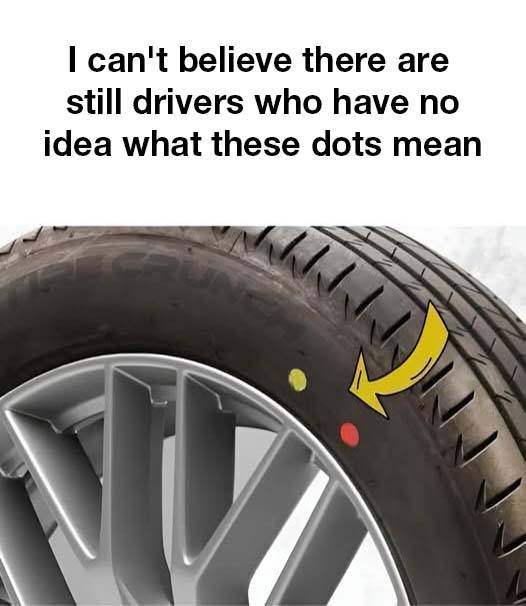
If you’ve ever inspected a new set of tires, you may have noticed small red or yellow dots on the sidewalls or tread.
Most drivers ignore them — but they’re not random. These colored dots serve an important purpose in balancing your tires, improving ride comfort, and even extending tire life.
Here’s everything you need to know.
What the Yellow Dot Means
The yellow dot marks the lightest point of the tire.
Why it matters:
-
Tires aren’t perfectly uniform in weight
-
Mounting the tire with the yellow dot aligned with the heaviest point of the wheel (usually where the valve stem is) helps reduce vibration
-
Results in smoother ride and less need for extra wheel weights
Pro tip: Most tire shops know this and automatically line up the yellow dot with the valve stem when installing tires.
What the Red Dot Means
The red dot indicates the high point for radial runout — the stiffest or tallest point of the tire.
Why it matters:
-
Wheels and tires aren’t perfectly round
-
Some tires have a “high spot” that can create a bumpy ride if misaligned
-
Aligning the red dot with the low point of the wheel can help minimize vibrations
Tip: Not all tires have red dots — some only have yellow. Always check the tire and wheel manufacturer instructions.
When Both Dots Appear
Sometimes a tire can have both red and yellow dots.
-
In general, the red dot takes priority for alignment if both are present
-
Yellow is secondary and should be aligned according to wheel weight if red dot placement is not specified
Why Proper Dot Alignment Matters
-
Improved Ride Comfort – Less vibration and smoother driving experience
-
Reduced Tire Wear – Even distribution of forces prevents uneven wear
-
Better Fuel Efficiency – Balanced tires reduce rolling resistance slightly
-
Less Noise – Misaligned tires can create humming or thumping
Common Misconceptions
-
“The dots are just for decoration.” ❌
They serve a very specific purpose in tire mounting and balance. -
“I can ignore them if my car feels fine.” ❌
Ignoring them may work short-term, but over time can cause uneven wear and increased vibration. -
“All tires must have both dots.” ❌
Some only have yellow, some only red — it depends on the manufacturer and tire type.
How Tire Shops Use the Dots
When mounting tires, technicians usually:
-
Inspect for dots
-
Align the yellow dot with the valve stem if no red dot is present
-
If there’s a red dot, follow the wheel manufacturer’s low point mark
-
Balance the wheel using wheel weights
This ensures optimal ride performance and longer tire life.
DIY Tips for Drivers
-
If installing tires at home, check your wheel for a dimple or mark indicating the lightest spot
-
Align yellow dot with the valve stem unless otherwise instructed
-
If both red and yellow dots exist, check tire manufacturer instructions first
Pro tip: Always inflate your tires to the recommended PSI after installation for the best performance.
Quick Summary Table
| Dot Color | Meaning | Alignment Tip |
|---|---|---|
| Yellow | Lightest point of the tire | Align with wheel valve stem |
| Red | High point / radial runout | Align with wheel low point mark |
| Both | Use red dot priority | Follow red dot placement first |
Final Thoughts
Red and yellow dots on tires are not decorative — they’re tiny markers that help you get the smoothest, safest ride possible.
Proper alignment can reduce vibrations, improve tire longevity, and even enhance comfort on long drives.
Next time you check your tires, notice the dots — now you’ll know exactly what they mean.
-
Yellow dot = light spot, align with valve stem
-
Red dot = high point, align with wheel low point
-
Both dots = follow red dot priority
Even small details like these can make a big difference in your driving experience.
If you’ve ever had vibration or uneven tire wear, take a peek at the dots on your tires — it might be the simplest fix you’ve been missing.