Found Strange Debris on Your Bed? Here’s What It Could Be (And When to Worry About Cockroach Larvae)
Found mysterious debris on your bed? Learn what it could be—including possible cockroach larvae—and how to identify, clean, and prevent it safely.
You Found Something on Your Bed… And Now You’re Concerned
It’s an unsettling moment.
You’re making your bed or getting ready to sleep—and you notice something unusual:
-
Tiny specks
-
Shell-like bits
-
Strange debris that wasn’t there before
Your mind jumps to the worst-case scenario.
Bugs. Infestation. Something crawling where you sleep.
Take a breath.
Not every strange particle on your bed means something serious—but some signs are worth paying attention to.
And yes, in certain cases, it could be related to cockroach activity, including what people sometimes call “larvae.”
This guide will walk you through exactly what you might be seeing, how to tell the difference, and what to do next—calmly and effectively.
First, Let’s Clarify: Do Cockroaches Have Larvae?
Here’s something most people don’t realize:
👉 Cockroaches do NOT have a larval stage.
Instead, they go through:
-
Egg (inside a capsule called an ootheca)
-
Nymph (immature roach)
-
Adult
So if someone says “cockroach larvae,” they usually mean:
-
Newly hatched nymphs, or
-
Shed skins, or
-
Egg casings (oothecae)
What You Might Actually Be Seeing
Let’s break down the most common possibilities.
1. Cockroach Droppings
These are one of the most common signs.
Appearance:
-
Tiny black or brown specks
-
Look like ground pepper or coffee grounds
-
Often clustered
Where found:
-
Mattress seams
-
Bed frames
-
Nearby furniture
2. Shed Skins (Molts)
As roaches grow, they shed their outer layer.
Appearance:
-
Light brown, thin, shell-like
-
May resemble a hollow bug
-
Slightly translucent
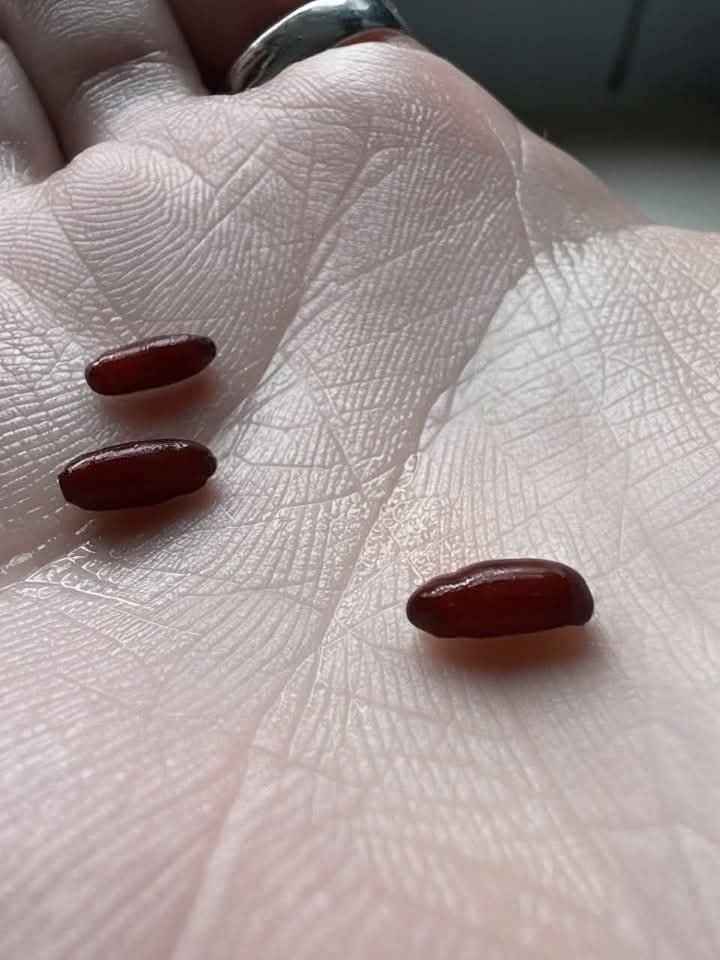
3. Egg Casings (Oothecae)
This is often mistaken for “larvae.”
Appearance:
-
Small, oval-shaped capsule
-
Brown or dark reddish
-
About the size of a grain of rice (or slightly larger)
4. Baby Cockroaches (Nymphs)
These are small but visible.
Appearance:
-
Tiny, wingless insects
-
Light brown to dark brown
-
Move quickly when disturbed
Other Possibilities (Not Cockroaches)
Before assuming the worst, consider these common alternatives:
Dust and Fabric Debris
-
Lint buildup
-
Pillow stuffing
-
Clothing fibers
Food Crumbs
-
Especially if you eat in bed
-
Can attract insects later
Bed Bug Signs (Important to Rule Out)
-
Rust-colored stains
-
Tiny black dots (fecal spots)
-
Small shed skins
Dead Skin and Environmental Particles
-
Completely harmless
-
Often mistaken for something living
Why This Matters (Especially in U.S. Homes)
In many American households:
-
Central heating creates warm environments year-round
-
Urban apartments share walls (allowing pests to travel)
-
Food storage and waste habits can attract insects
Cockroaches, in particular, are drawn to:
-
Warmth
-
Moisture
-
Food residue
Your bed might not be the source—it could just be where evidence shows up.
Step-by-Step: What To Do Right Now
Step 1: Don’t Panic
Finding debris doesn’t automatically mean infestation.
Step 2: Take a Closer Look
Use your phone flashlight.
Check:
-
Mattress seams
-
Bed frame joints
-
Headboard
-
Nearby walls
Step 3: Clean the Area Thoroughly
-
Remove all bedding
-
Wash in hot water
-
Vacuum mattress and surrounding area
-
Dispose of vacuum contents immediately
Step 4: Check Nearby Areas
Focus on:
-
Nightstands
-
Under the bed
-
Closets
-
Baseboards
Step 5: Eliminate Possible Attractants
-
Remove food from bedroom
-
Clean spills
-
Seal trash
Real-Life Scenario: A Common Misinterpretation
A homeowner notices tiny black specks on their sheets.
They assume the worst.
After inspection:
-
Turns out to be lint + crumbs
-
No movement, no patterns, no additional signs
Lesson: Not everything is infestation—but careful checking matters.
When It Might Be Cockroach Activity
Look for multiple signs together:
-
Droppings + odor
-
Shed skins
-
Live insects
-
Egg casings
If you see more than one indicator, it’s time to act more seriously.
Pros and Cons of Early Action
| Action | Benefit | Drawback |
|---|---|---|
| Immediate cleaning | Removes possible contaminants | Time-consuming |
| Inspection | Identifies real issue | Requires attention to detail |
| Calling pest control | Professional solution | Cost |
| Ignoring it | Saves effort short-term | Risk of bigger problem |
Common Mistakes to Avoid
Ignoring Early Signs
Small problems grow quickly.
Overreacting Without Evidence
Leads to unnecessary stress.
Using Random Chemicals
Can be unsafe and ineffective.
Not Checking Surrounding Areas
The source is rarely just the bed.
Expert Tips Most People Don’t Know
1. Roaches Rarely Live in Beds
They prefer kitchens and bathrooms.
2. Your Bed Is a “Signal,” Not the Source
Debris often travels from nearby areas.
3. Light Inspections Matter
Roaches avoid light—check at night for activity.
4. Consistency Beats Intensity
Regular cleaning is more effective than one deep clean.
2026 Trend: Smarter Home Hygiene Awareness
More households are:
-
Monitoring indoor cleanliness more closely
-
Using minimal, safe pest control methods
-
Focusing on prevention over reaction
Awareness is increasing—and unnecessary panic is decreasing.
Frequently Asked Questions
1. Are cockroach larvae real?
No—cockroaches have nymphs, not larvae.
2. Can cockroaches live in beds?
Rarely—but they may pass through.
3. Are droppings dangerous?
They can trigger allergies but aren’t immediately harmful.
4. How do I know if it’s roach-related?
Look for multiple signs, not just one.
5. Should I throw away my mattress?
Usually not necessary.
6. Do I need pest control immediately?
Only if signs are consistent and widespread.
7. Can cleaning solve the issue?
Often yes—if caught early.
8. Are these signs always visible?
Not always—inspection helps.
9. What’s the fastest way to be sure?
Professional inspection if uncertainty remains.
Action Checklist
✔ Inspect the debris closely
✔ Clean bedding and mattress
✔ Vacuum surrounding areas
✔ Remove food sources
✔ Monitor for repeated signs
✔ Act if multiple indicators appear
Conclusion: Stay Calm, Stay Smart
Finding something unusual on your bed is unsettling—but it doesn’t automatically mean something serious.
Yes, it could be related to cockroach activity—but more often, it’s something far less alarming.
The key is simple:
Observe carefully. Clean thoroughly. Act logically.
That approach protects both your home—and your peace of mind.
Strange debris doesn’t equal infestation—but it deserves attention.
Identify it, clean it, and monitor the situation before jumping to conclusions.
If you’ve seen something similar, share your experience—or ask a question below. You might help someone else figure out what they’re dealing with.